Saturday, March 05, 2011

Barnbougle Lost Farm

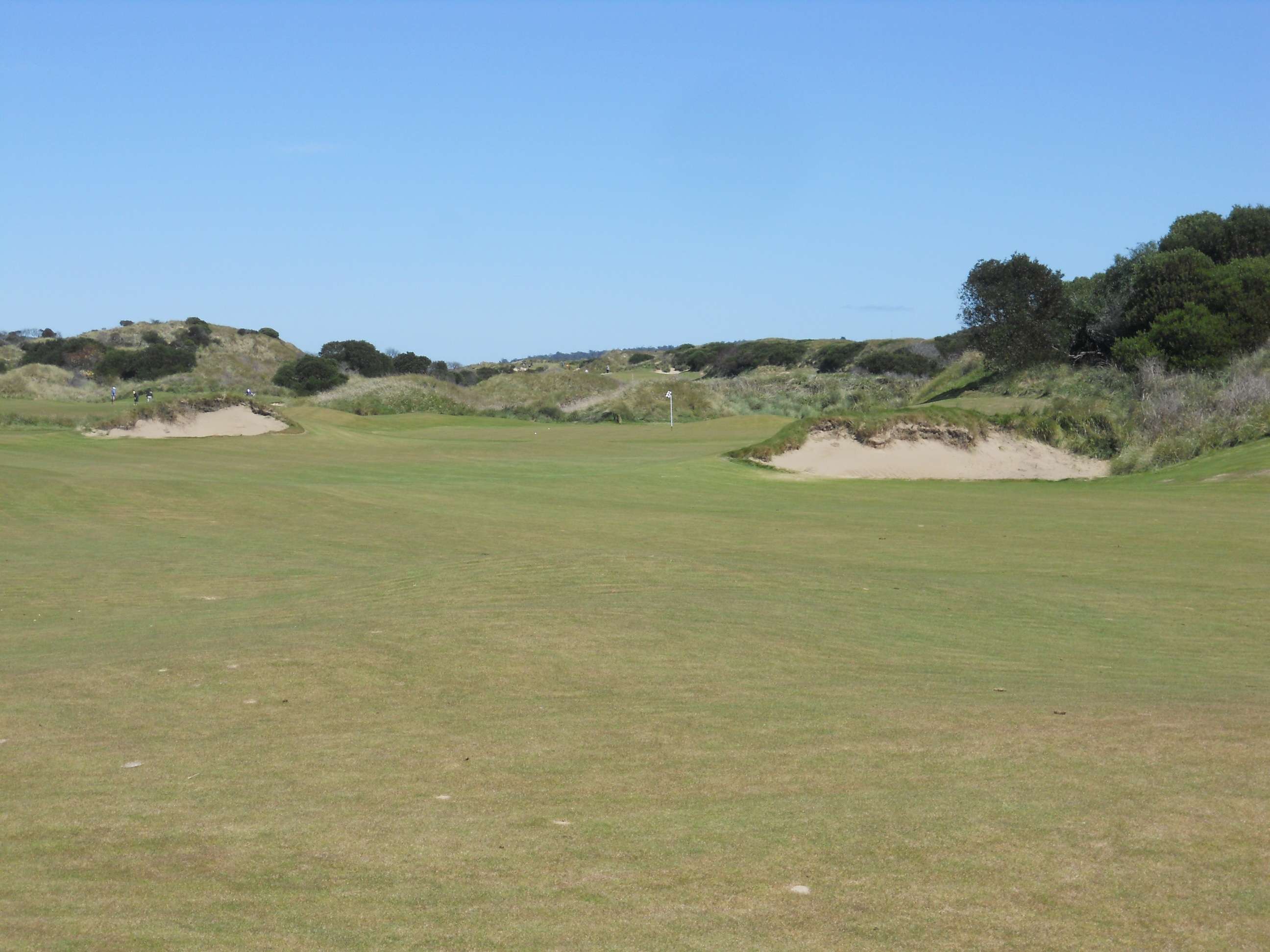
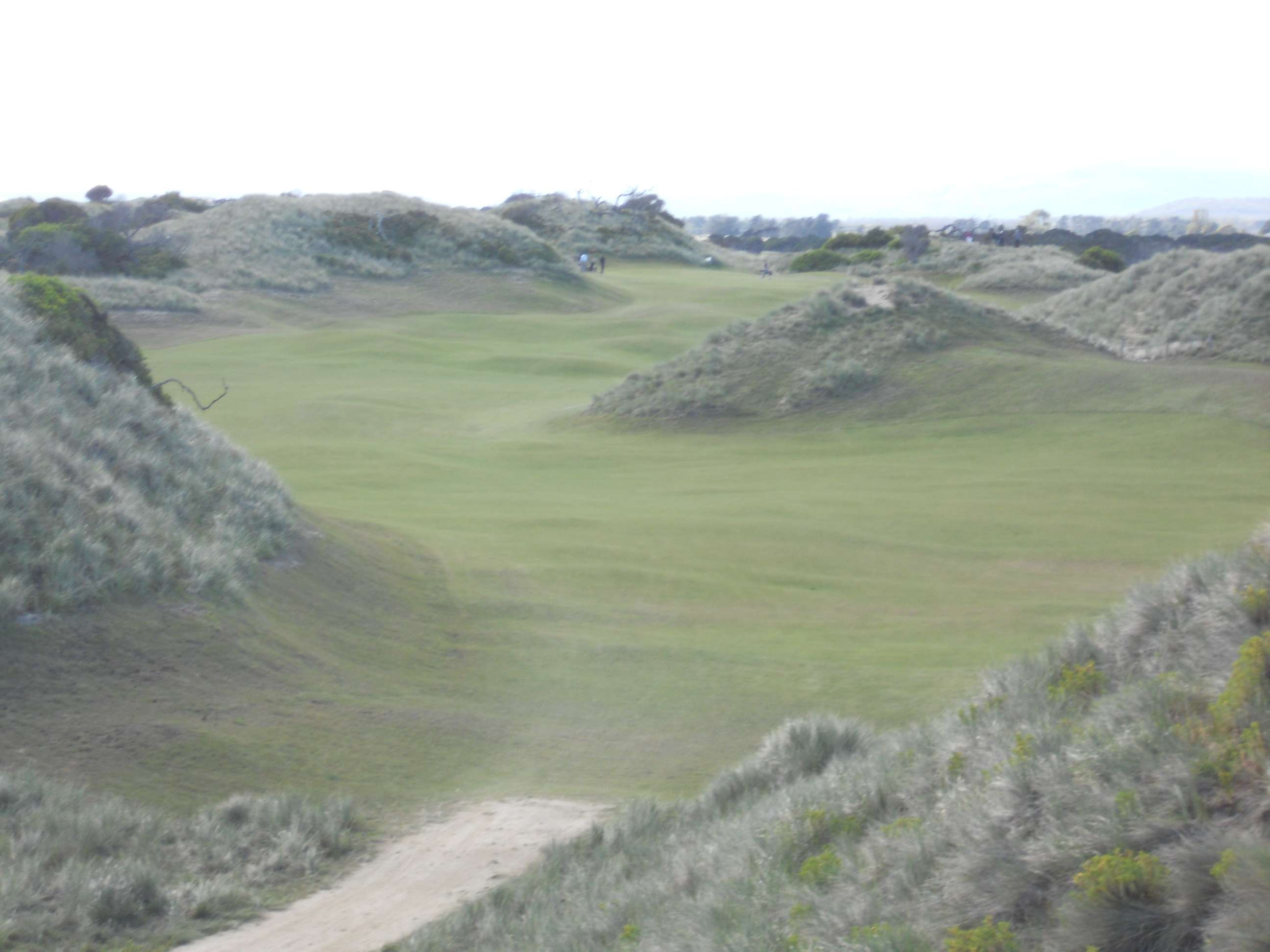
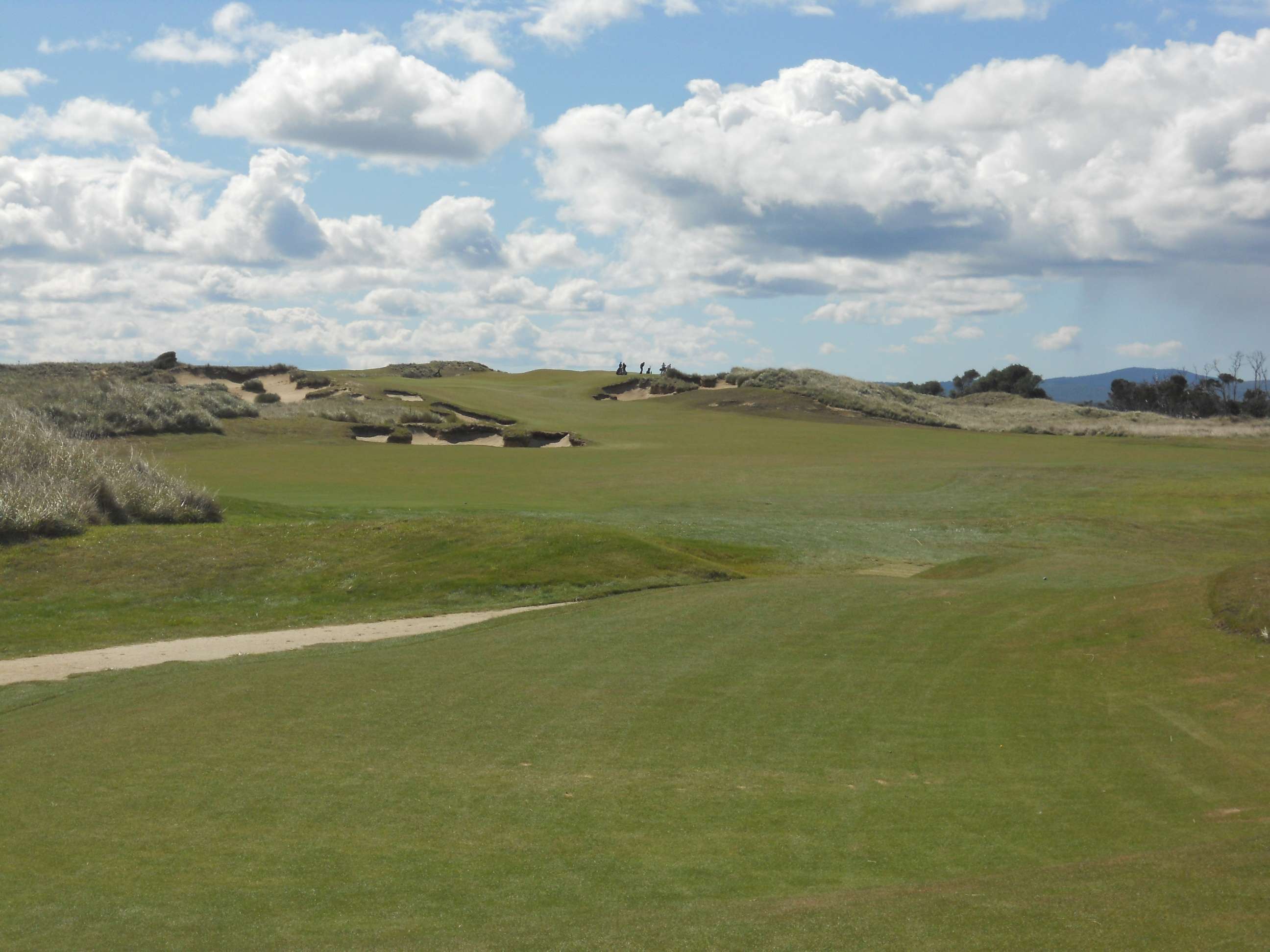
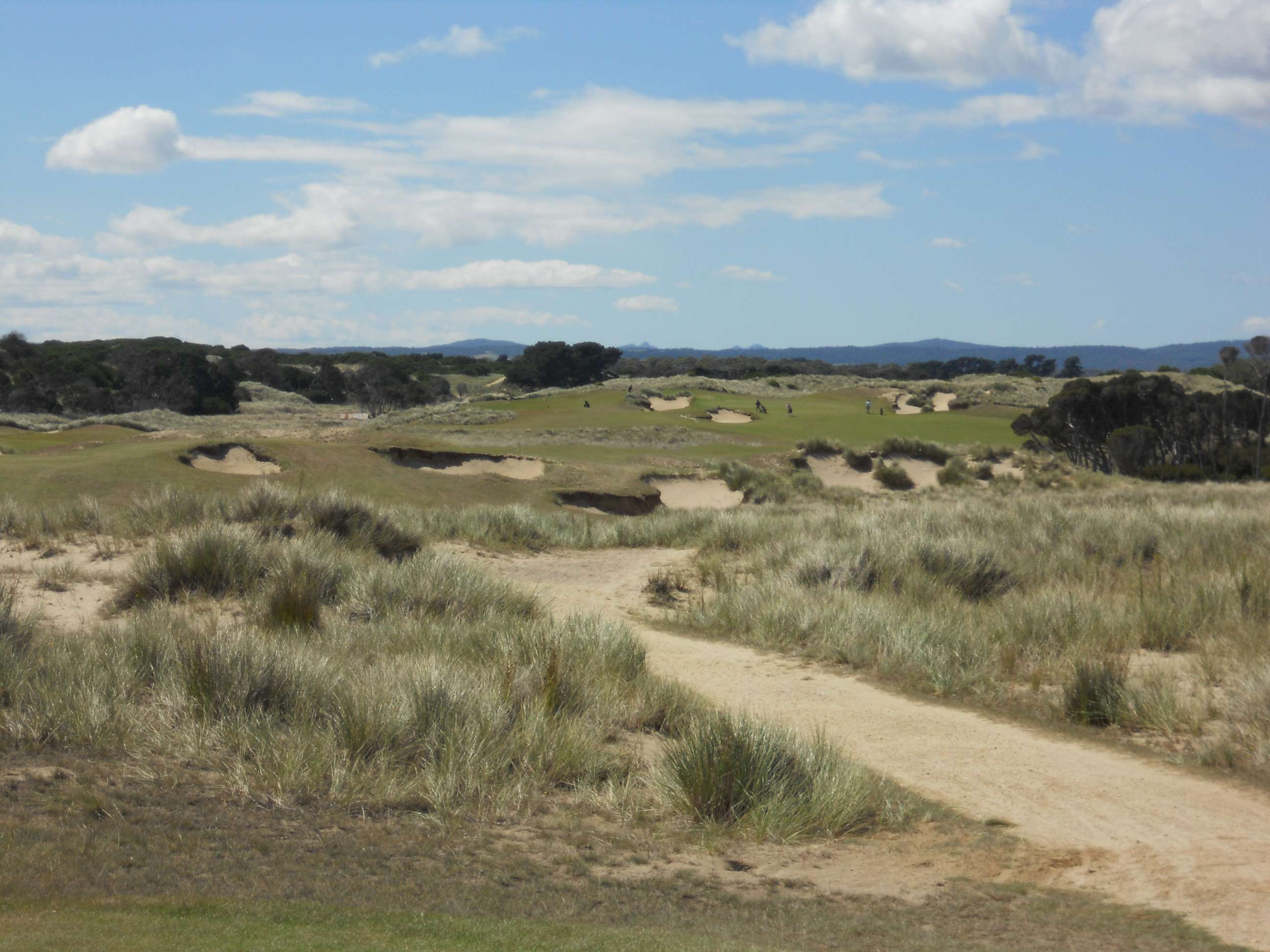
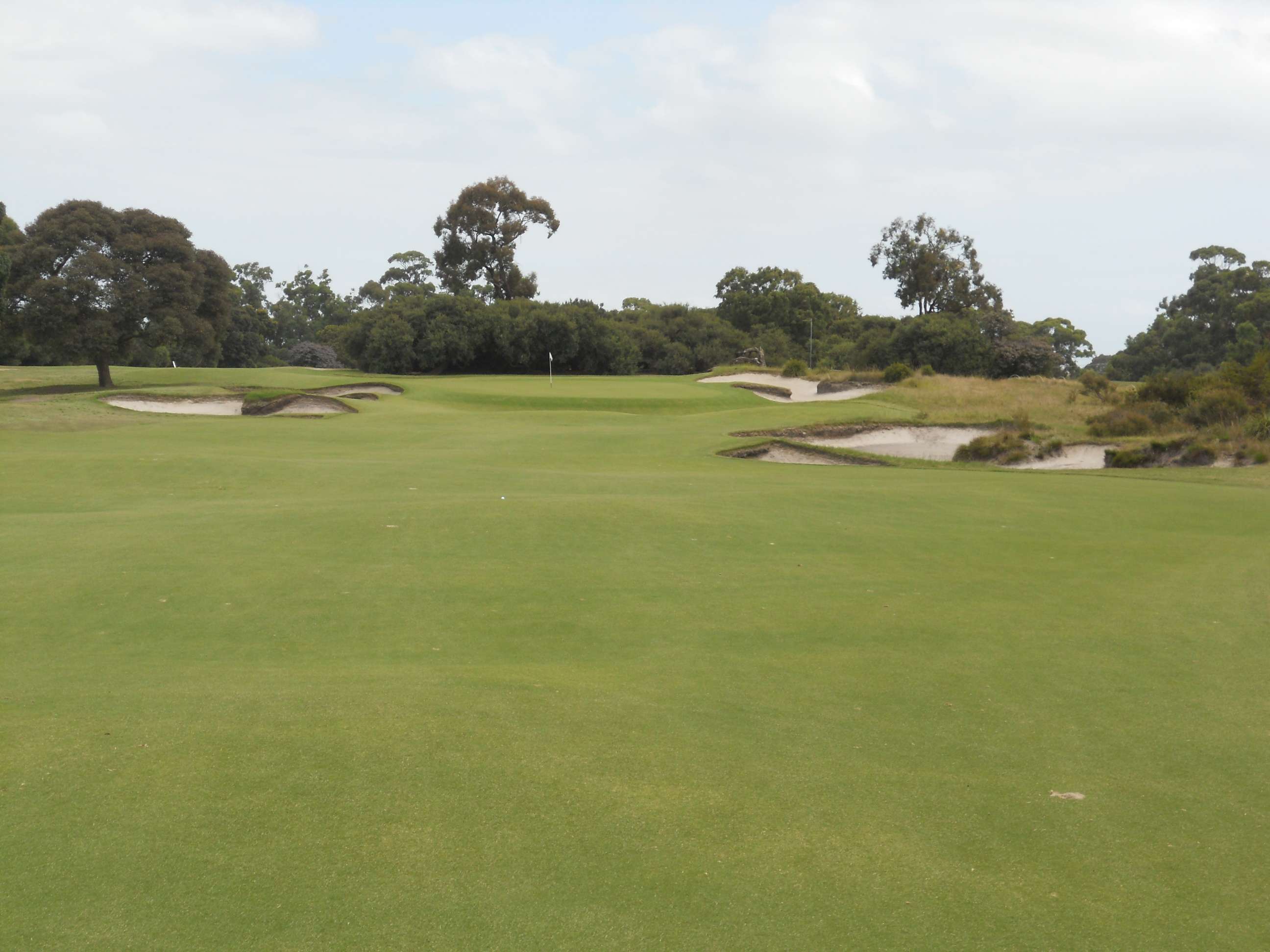
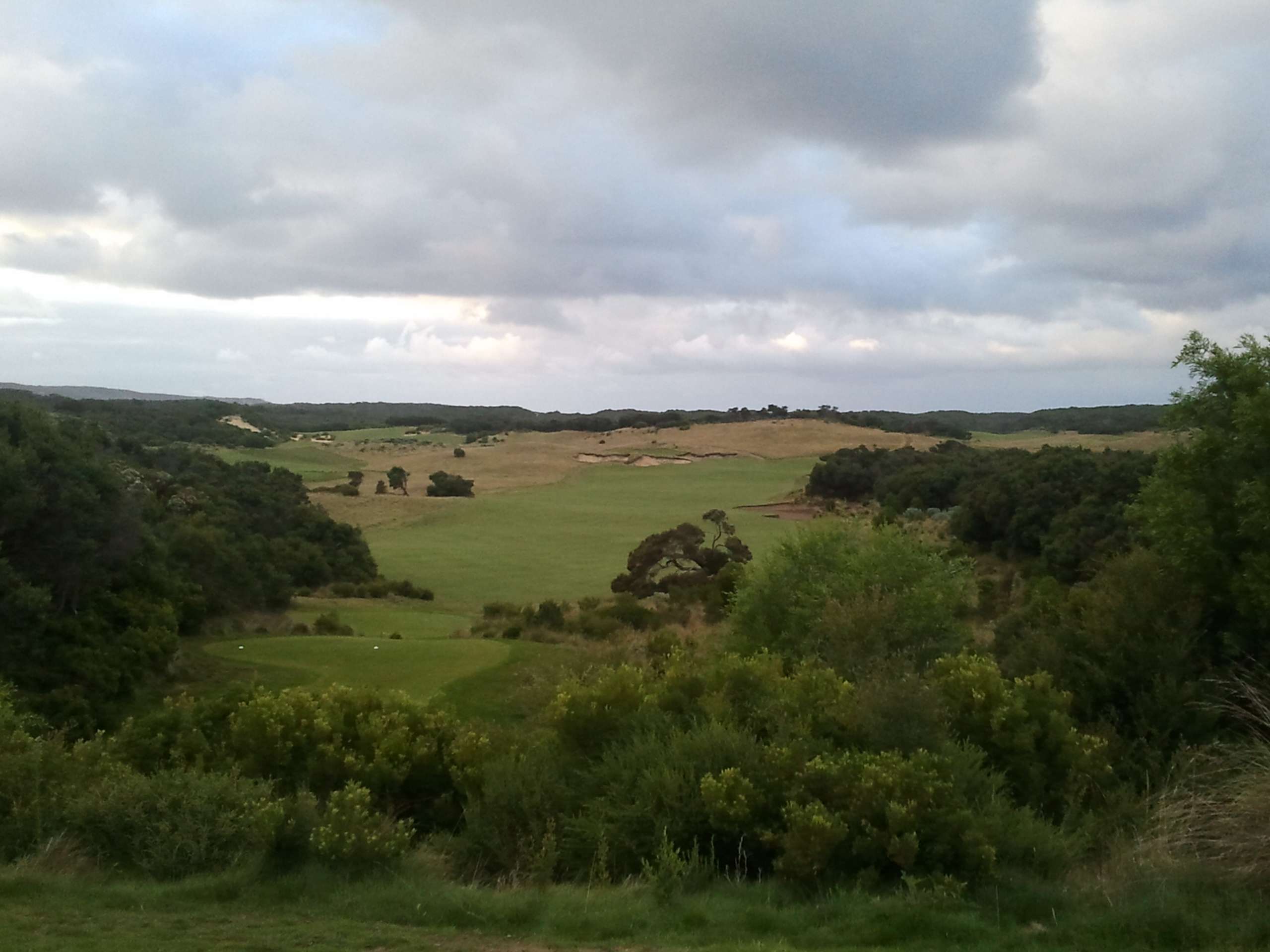
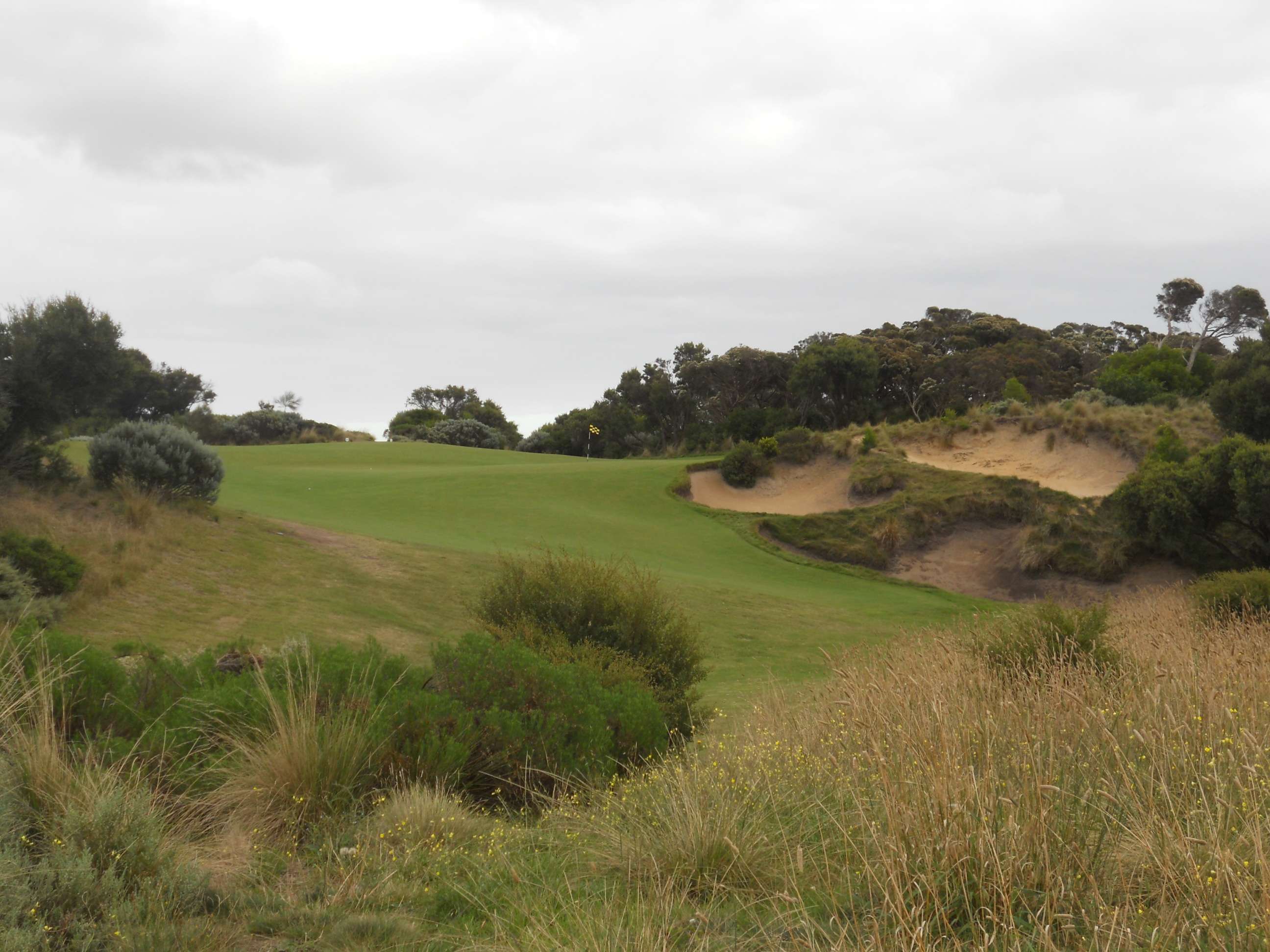
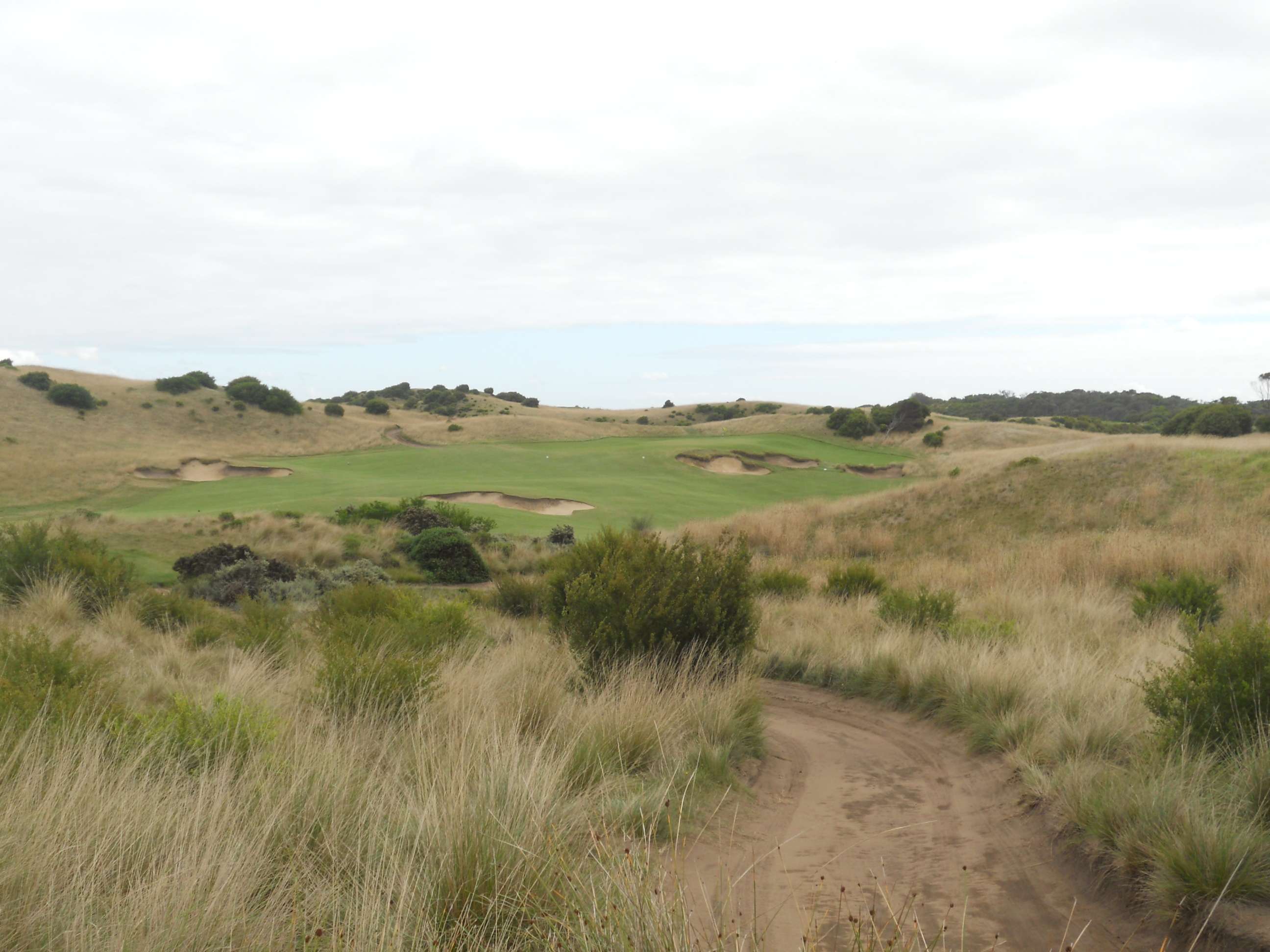
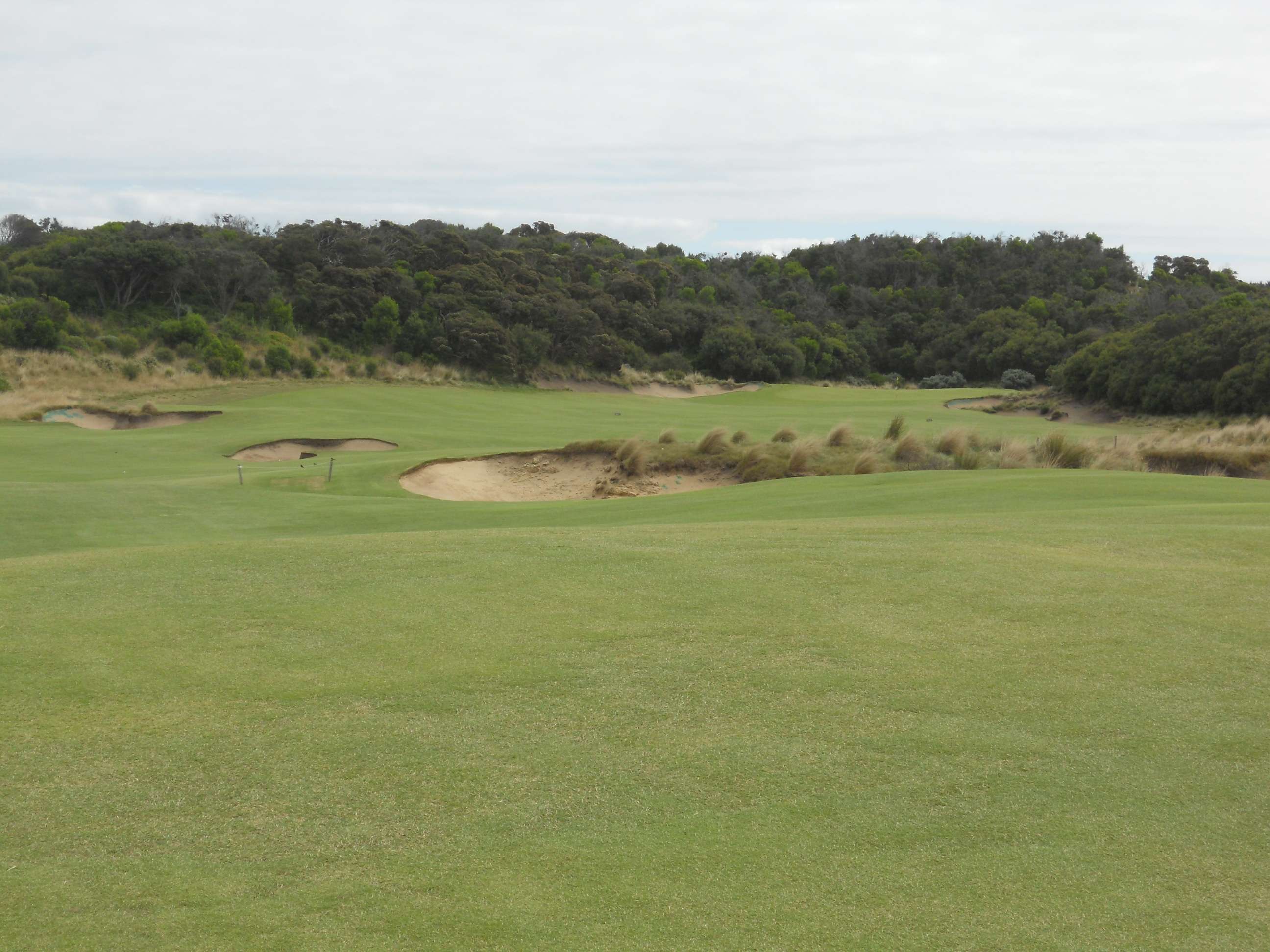
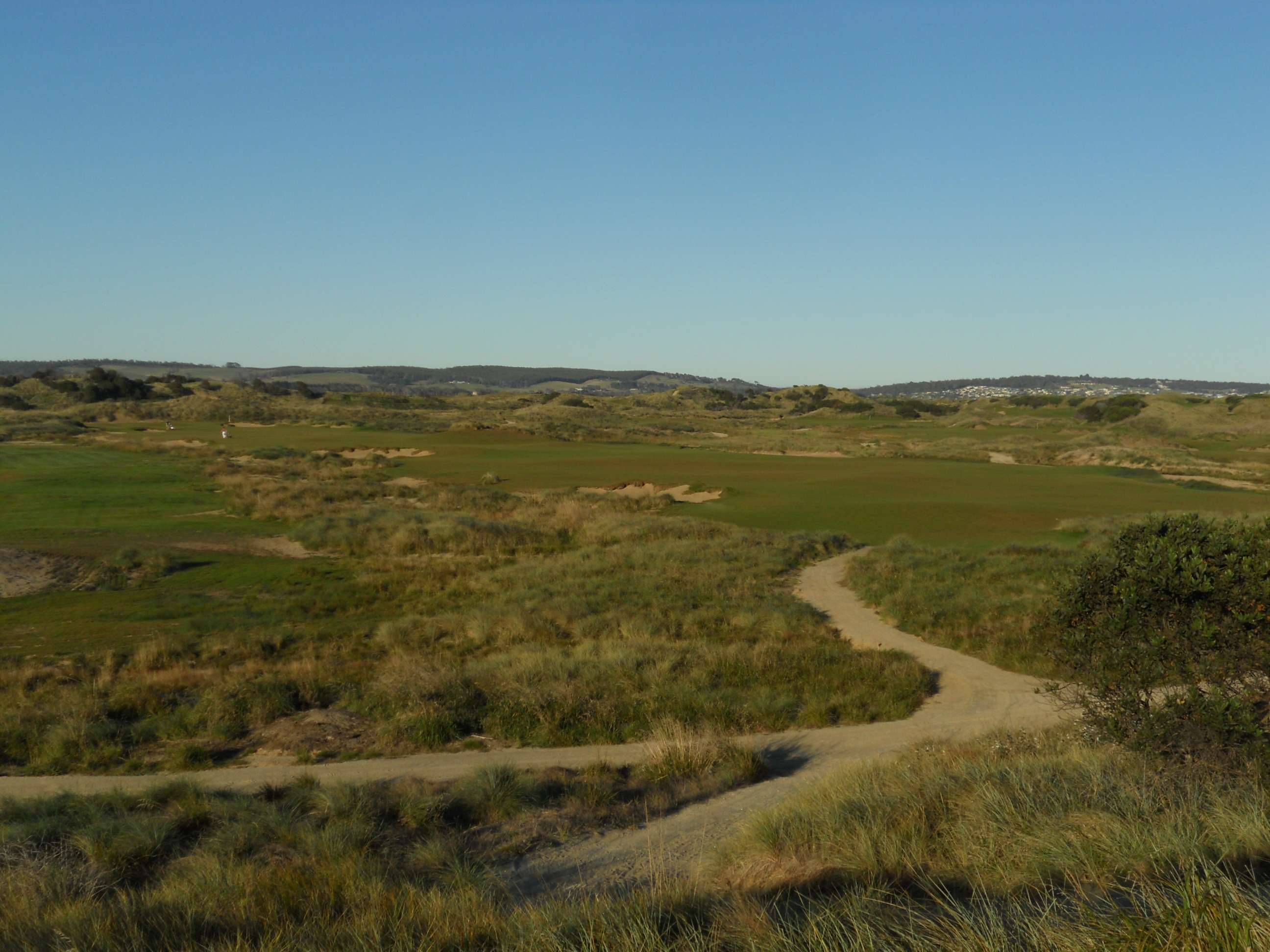
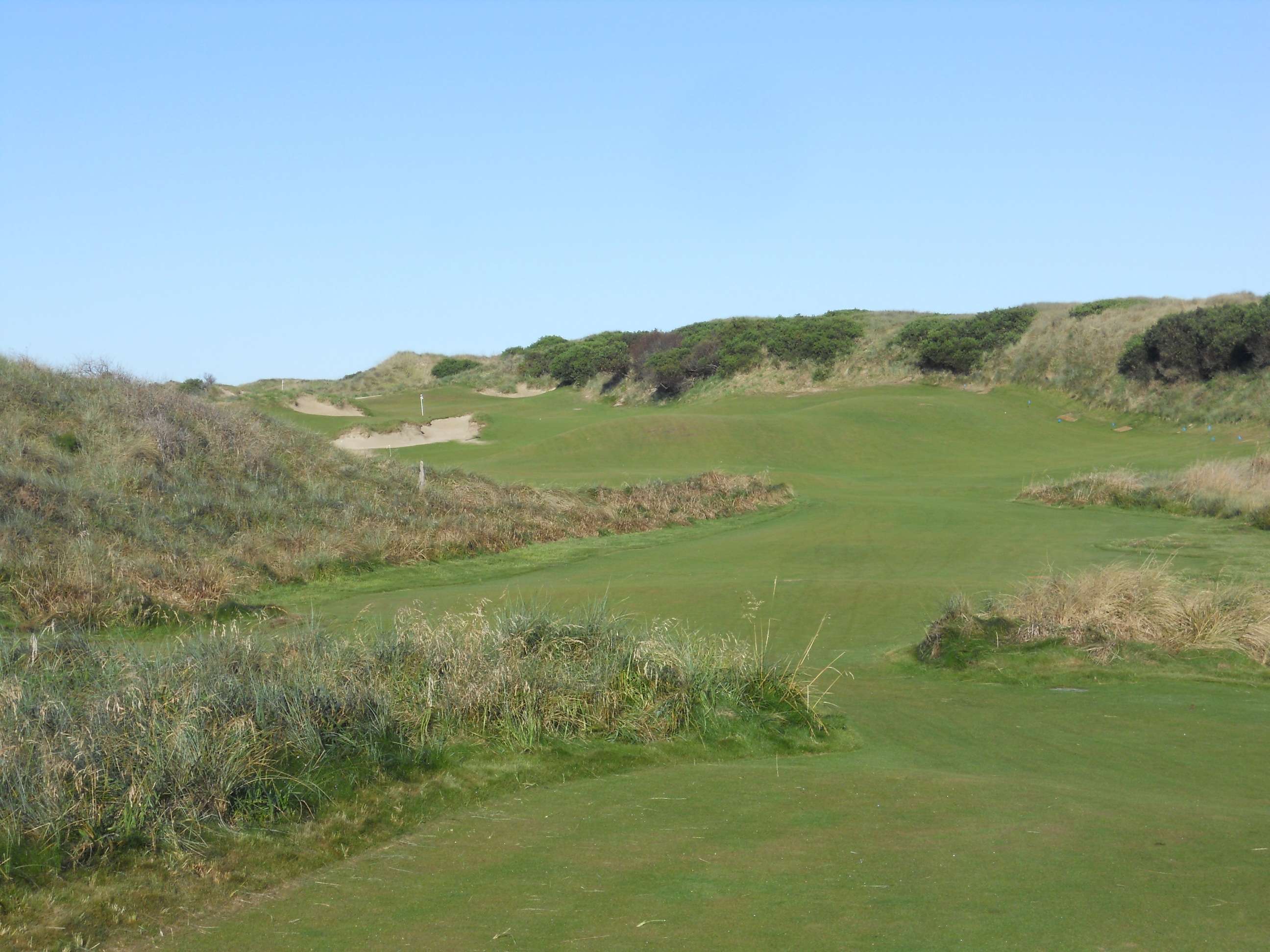
The tremendous width of the 1st fairway is an indication of what's top come


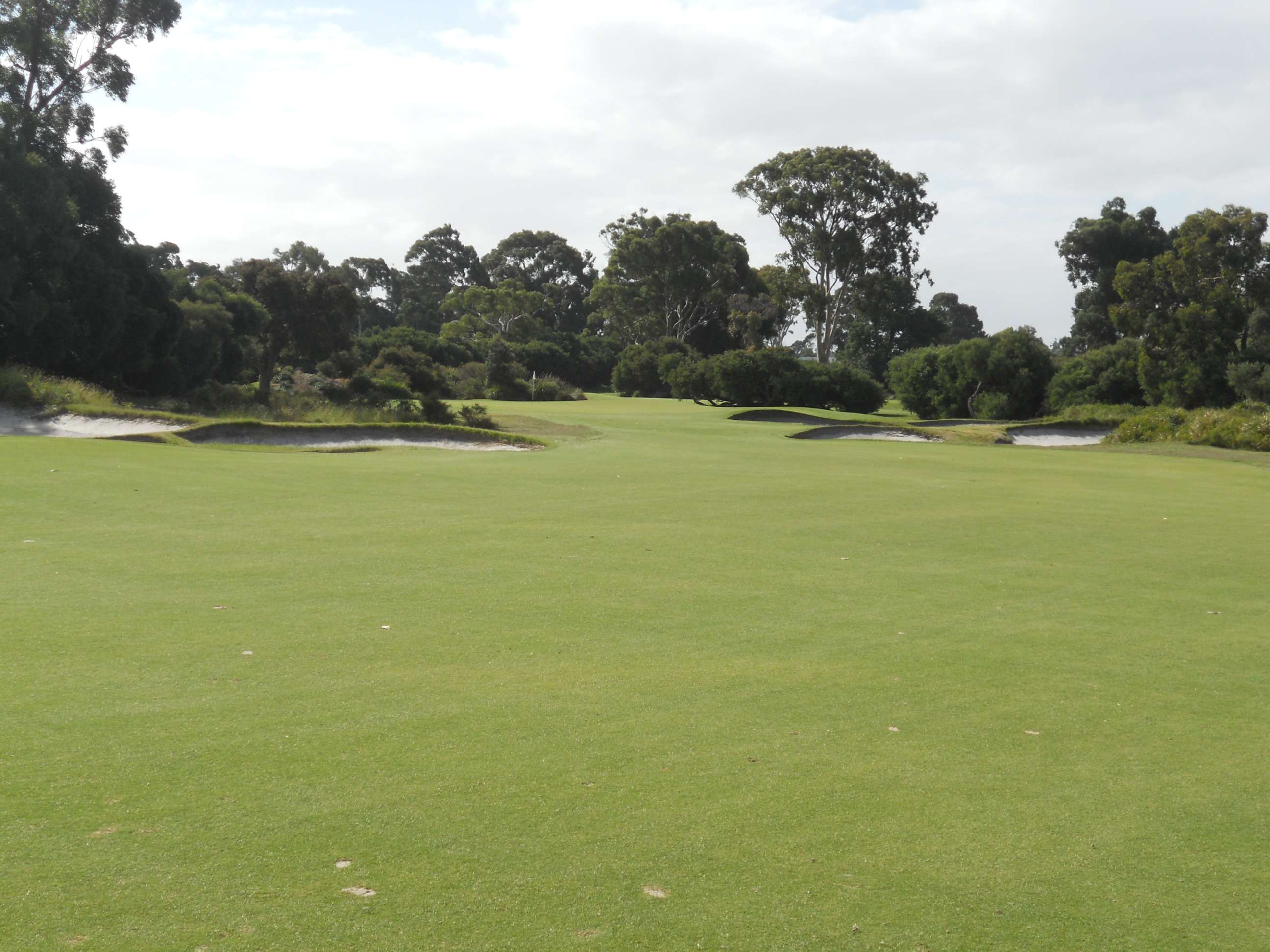
A draw has a good chance of reaching the green at the short par four 3rd
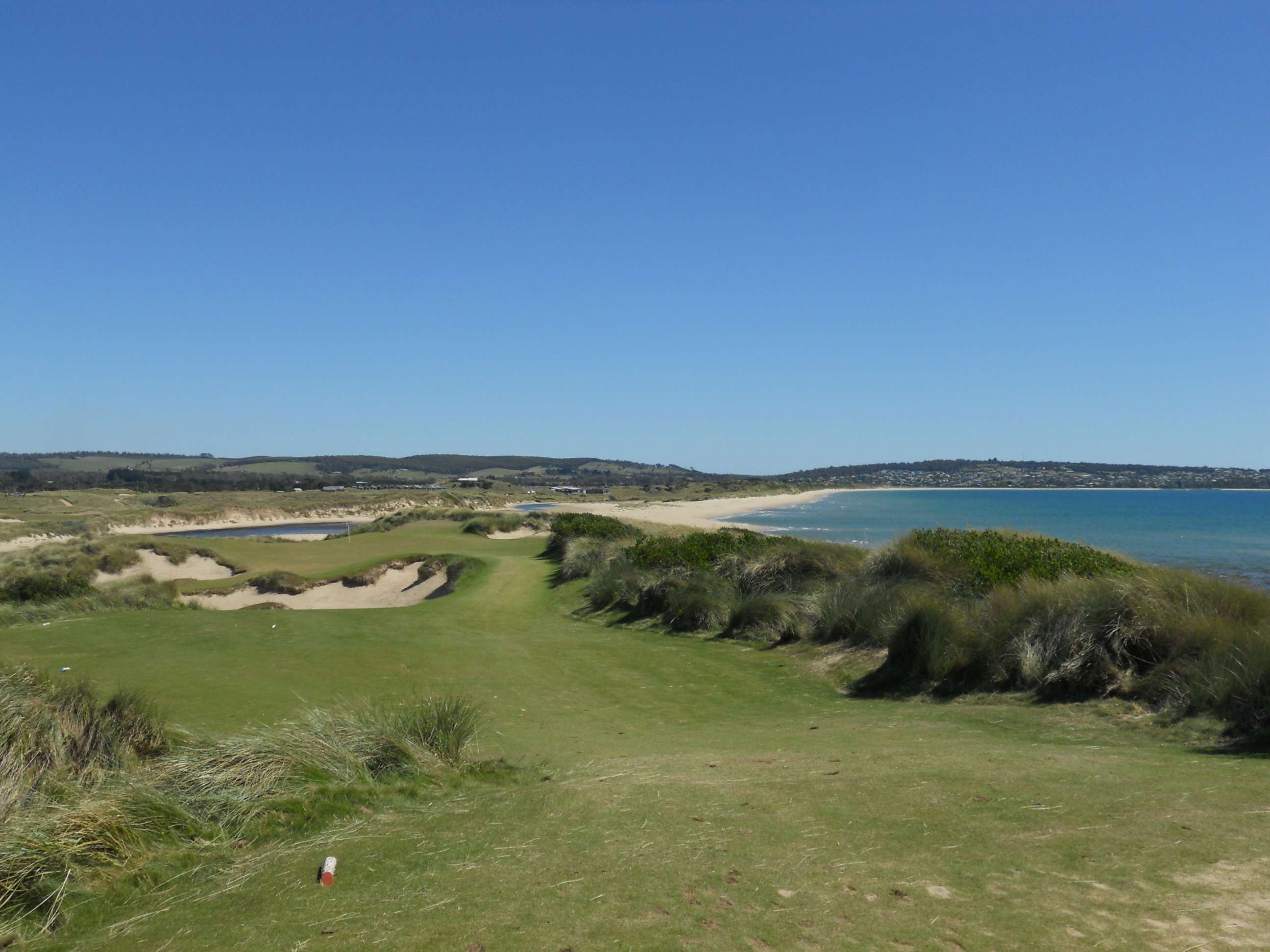
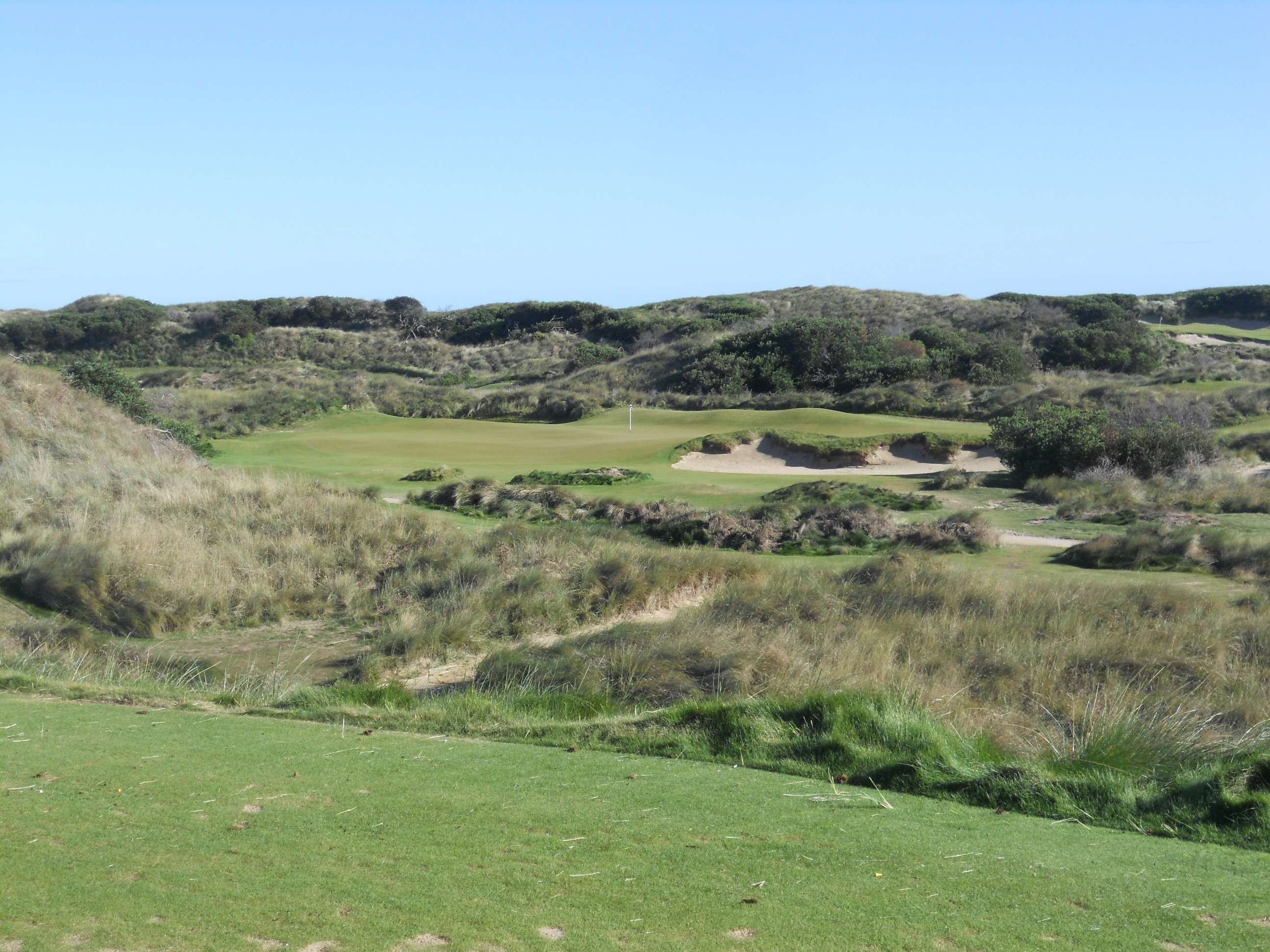
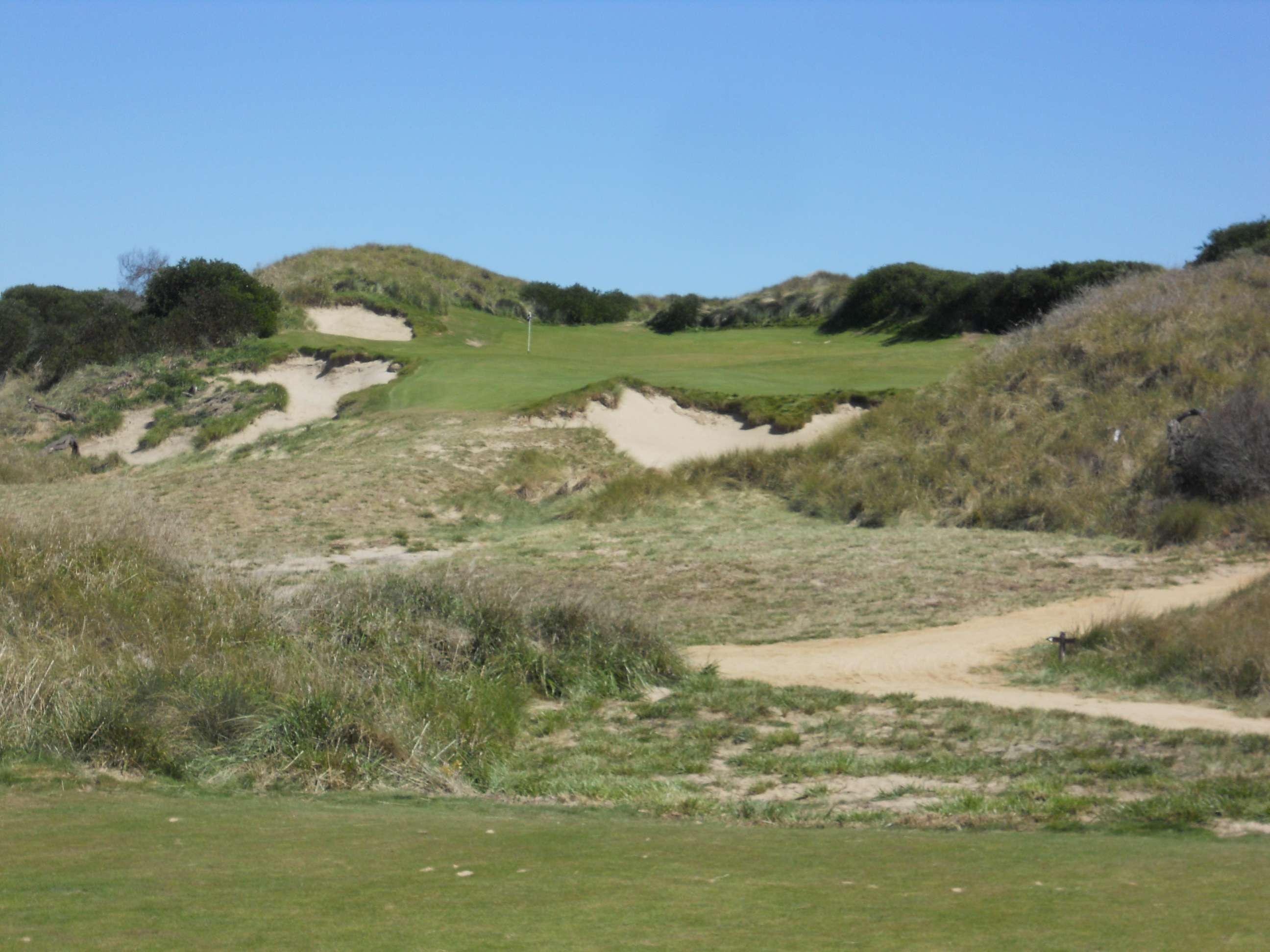
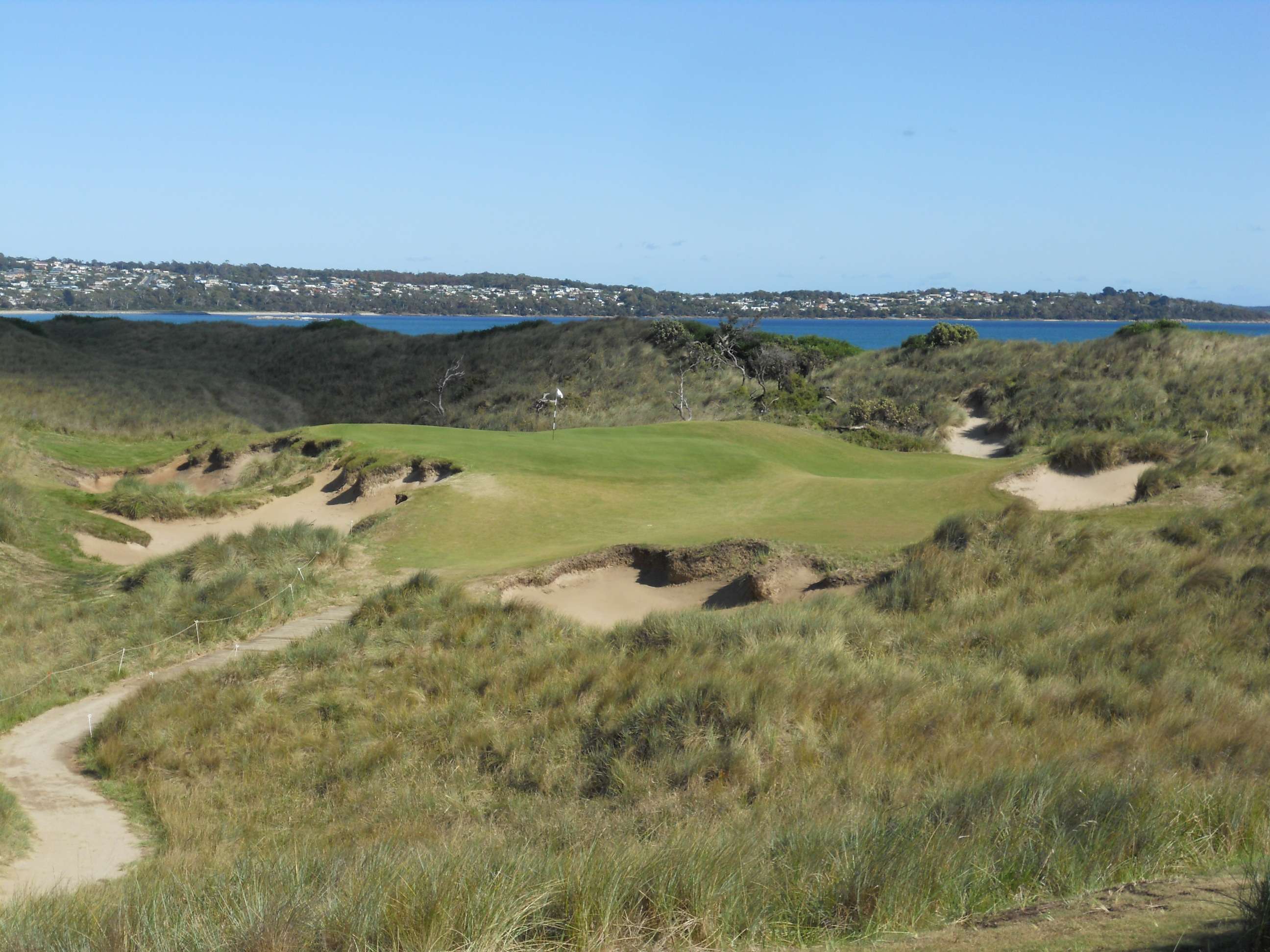
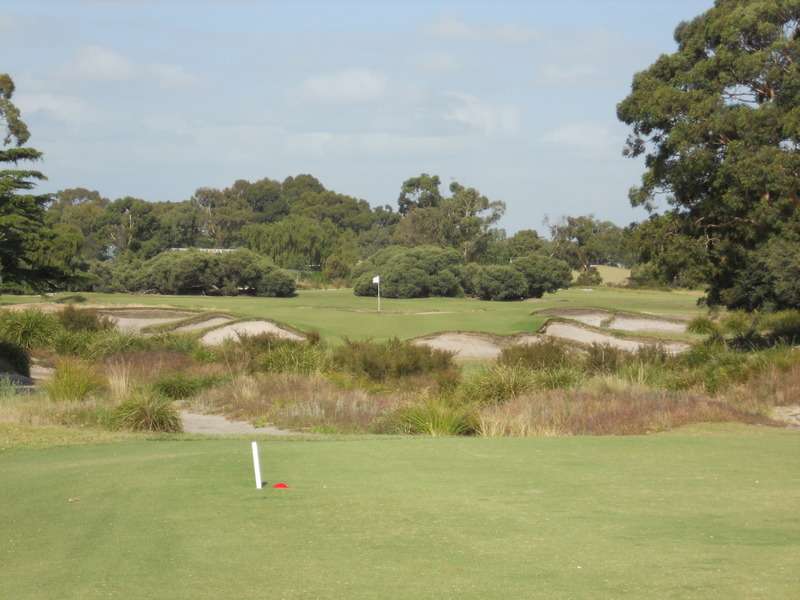
Extremely challenging for its modest length and as picturesque as they come, the par three 4th has it all

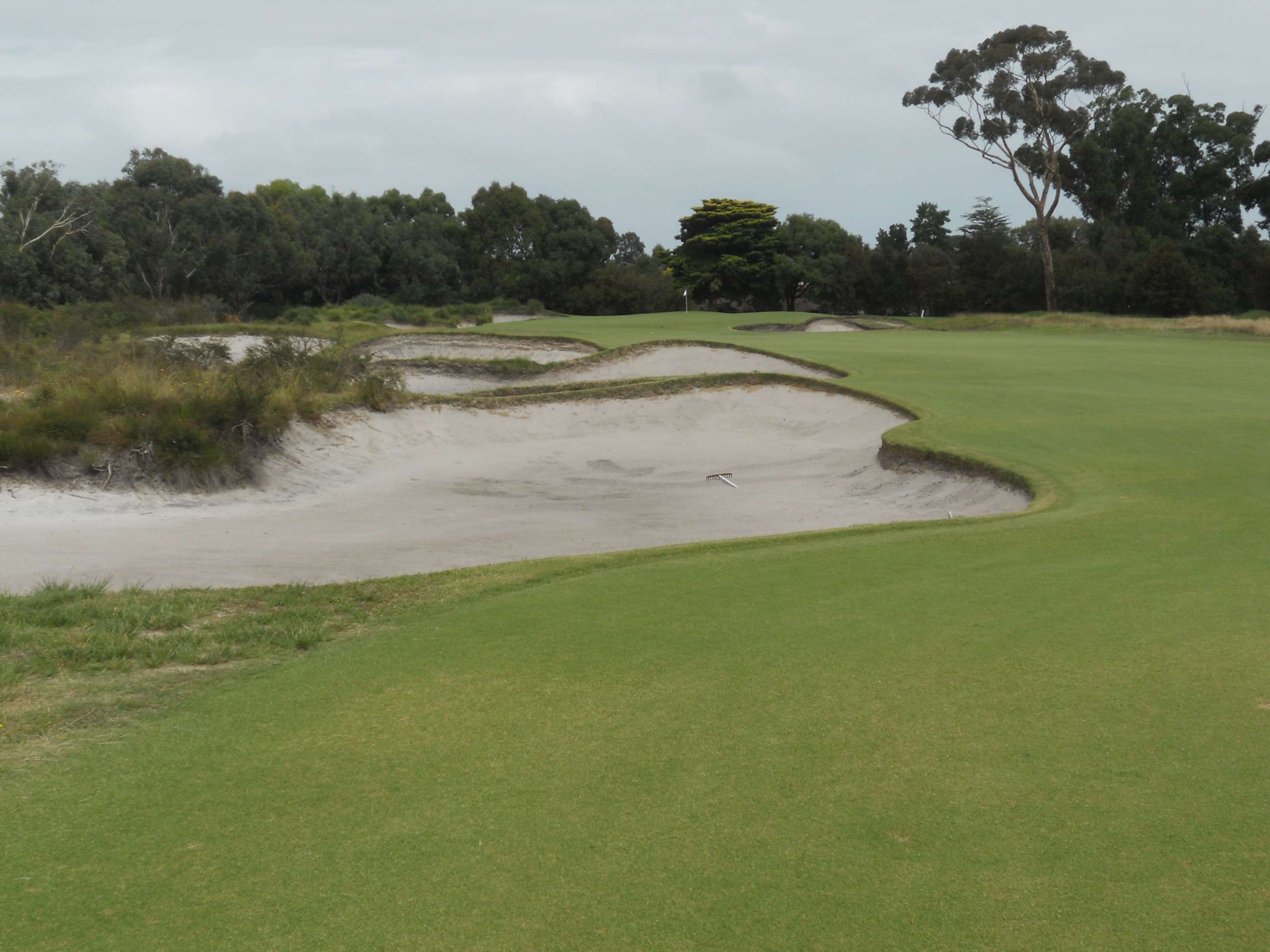
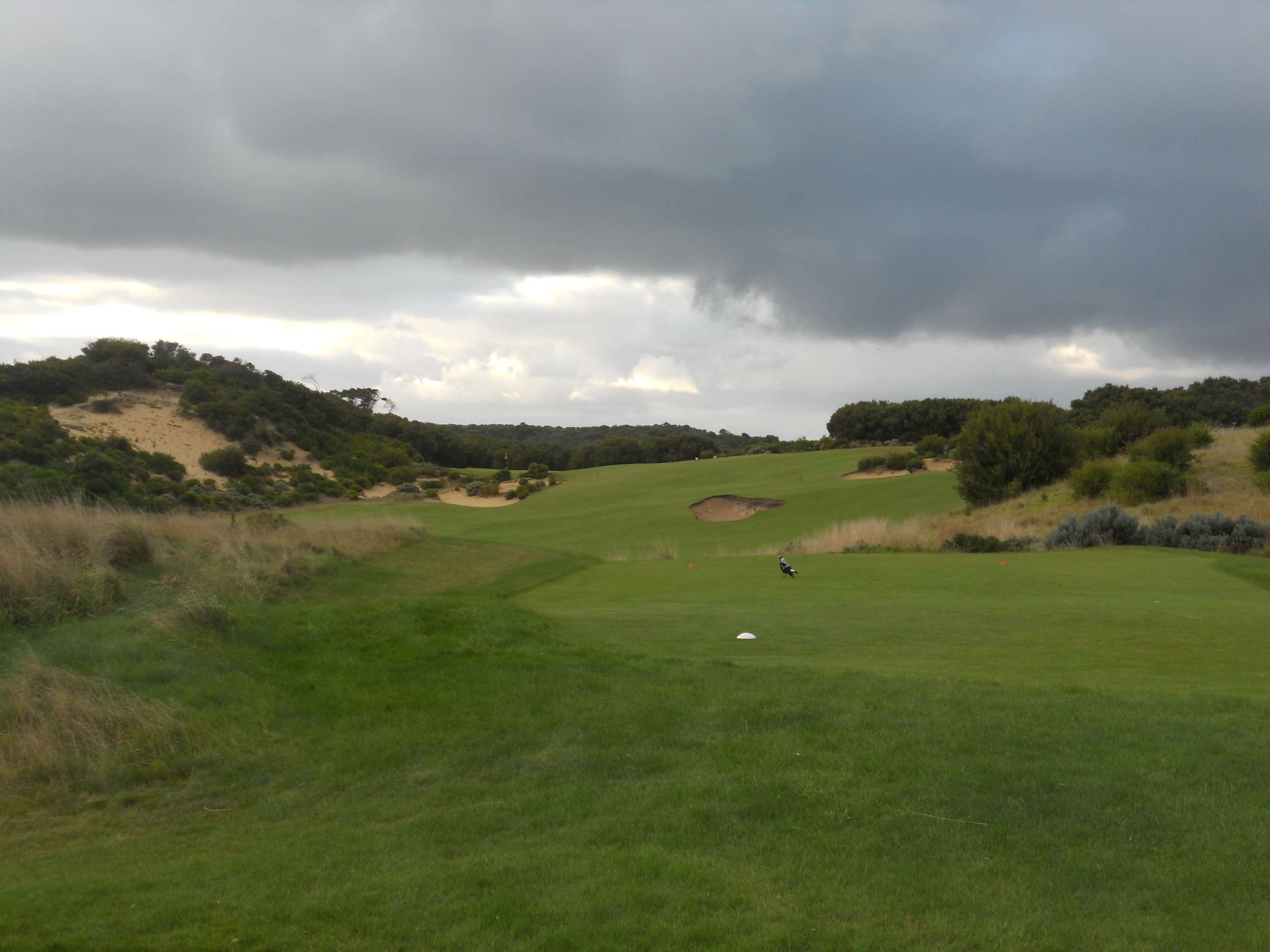
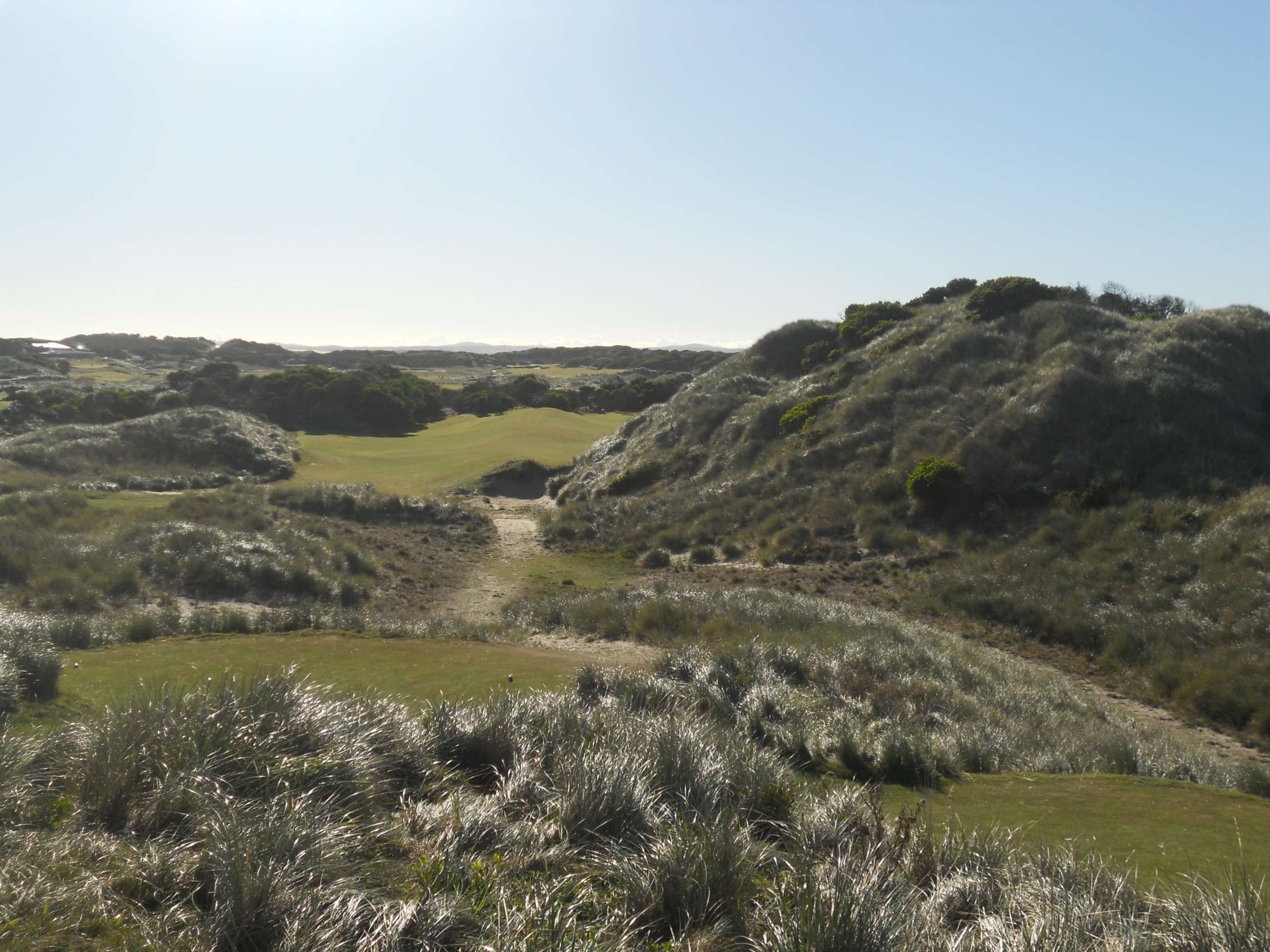
The ridge in the 5th fairway that you want desperately to keep your drive to the right of is visible in this picture - for even a moderately long hitter the choice line is as close to the apex of the dune as your bravery will allow

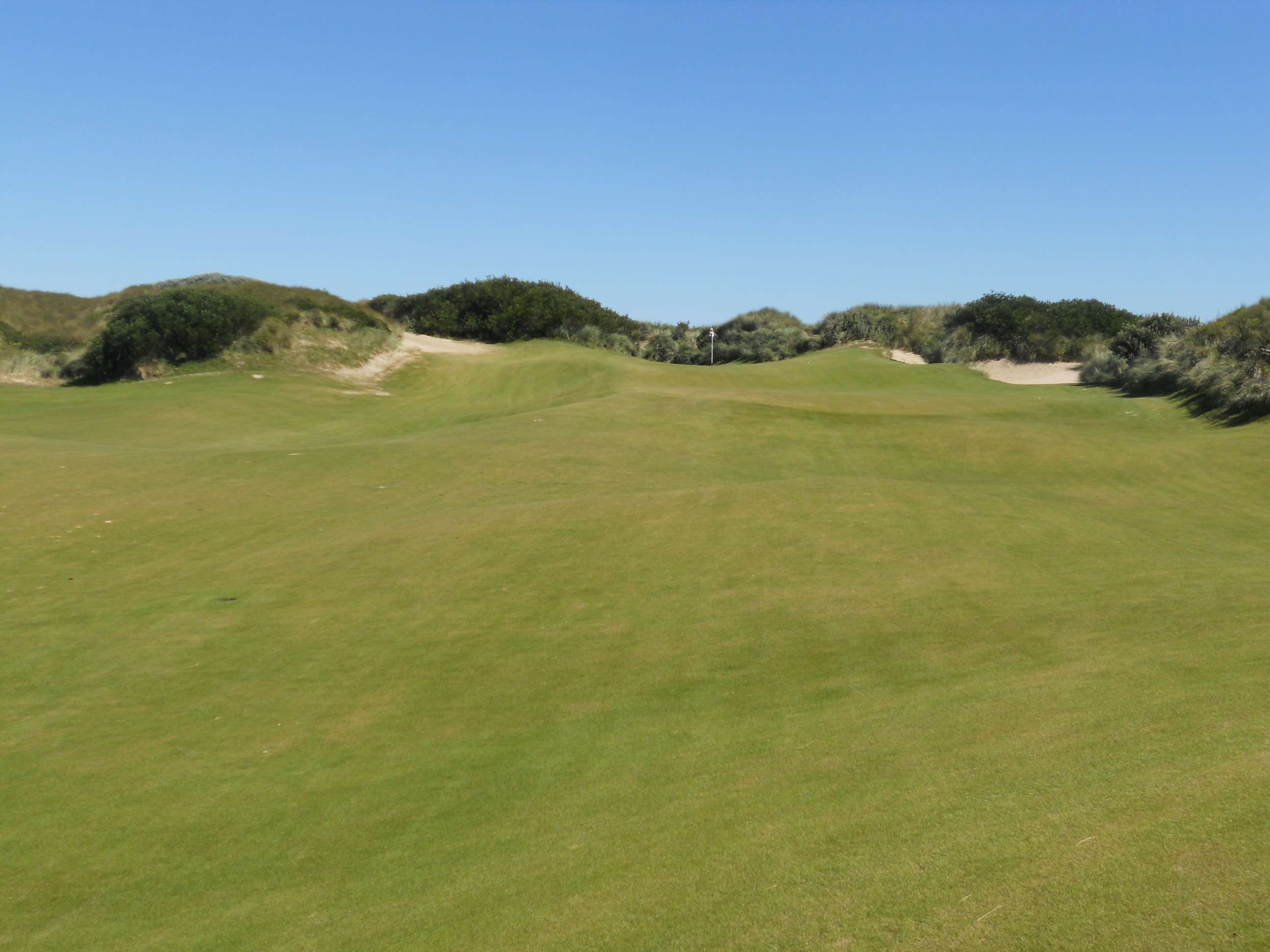
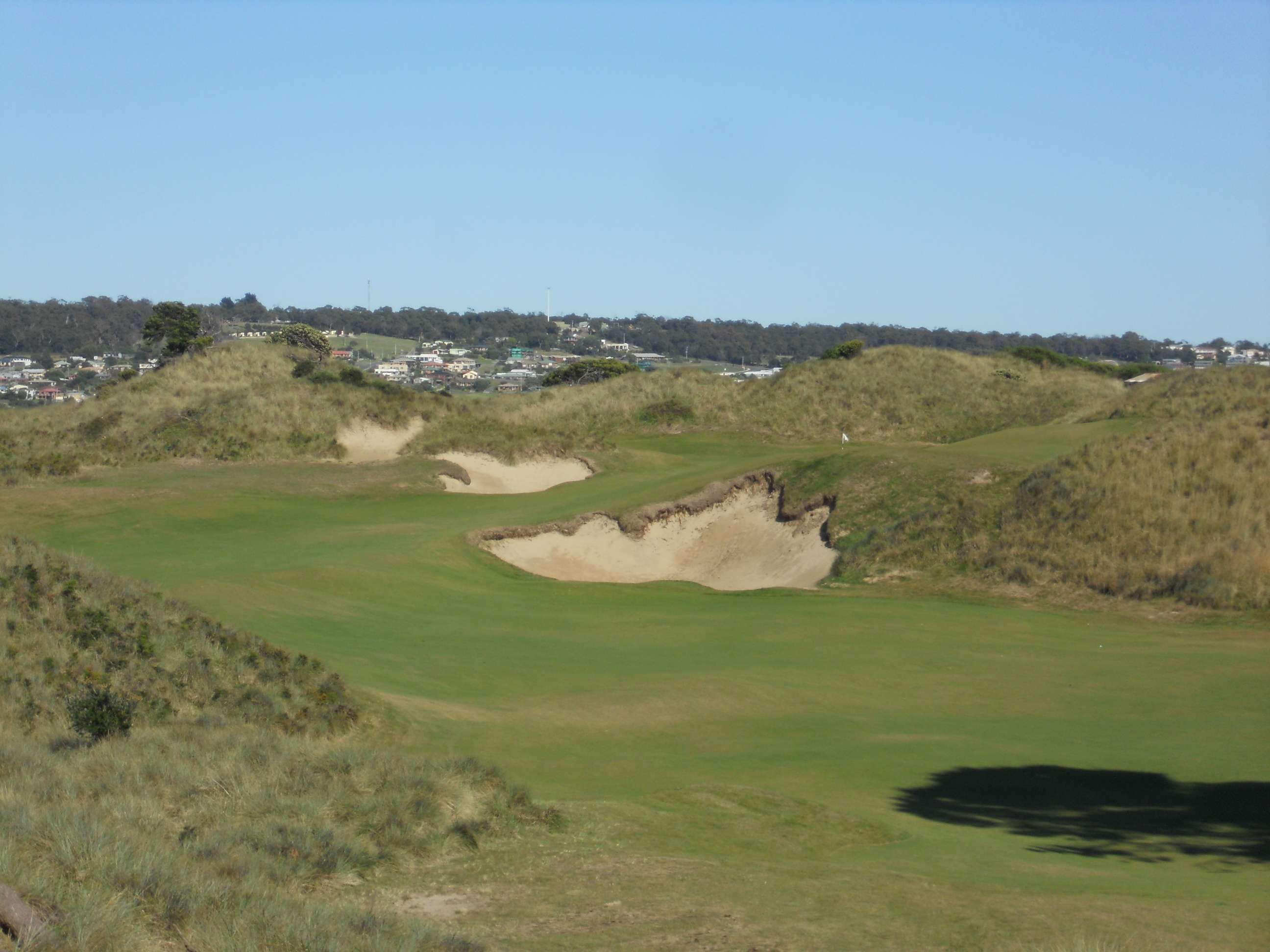
The hump through the green that dominates the strategy of the 6th is far bolder than it appears here, while a large tongue of green is hidden behind the bunker

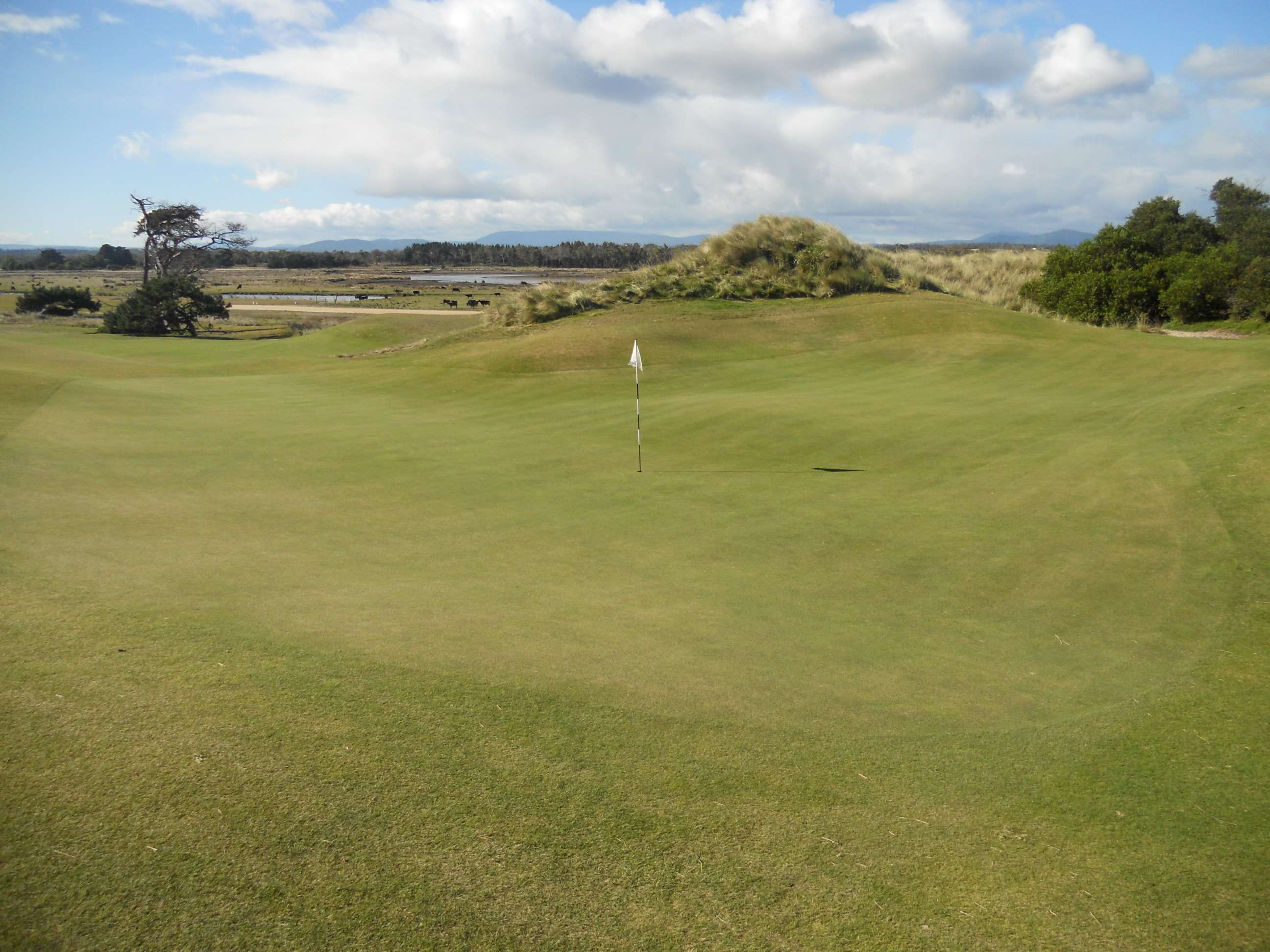
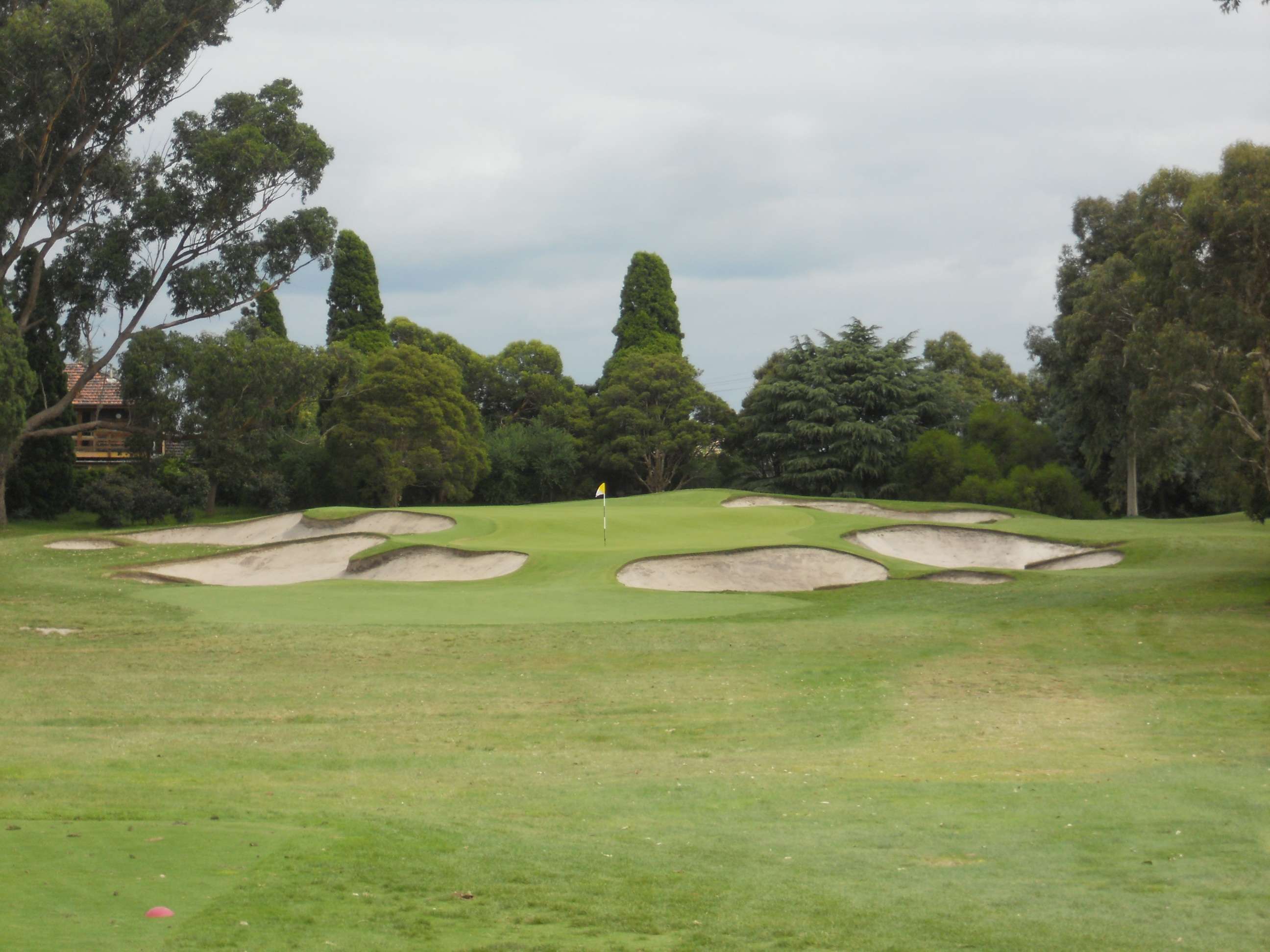
Beware the steep drop to the right of the 8th green

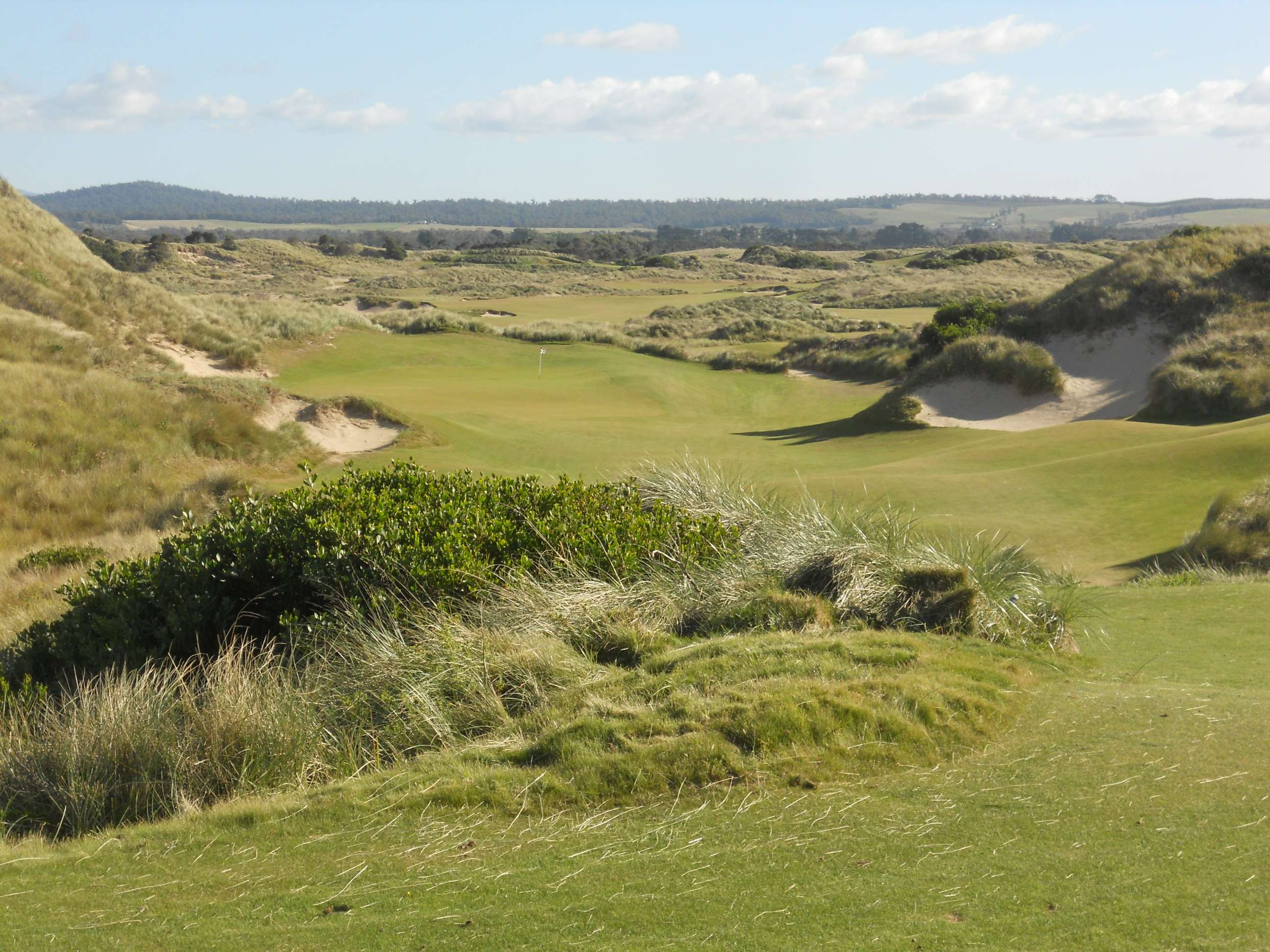
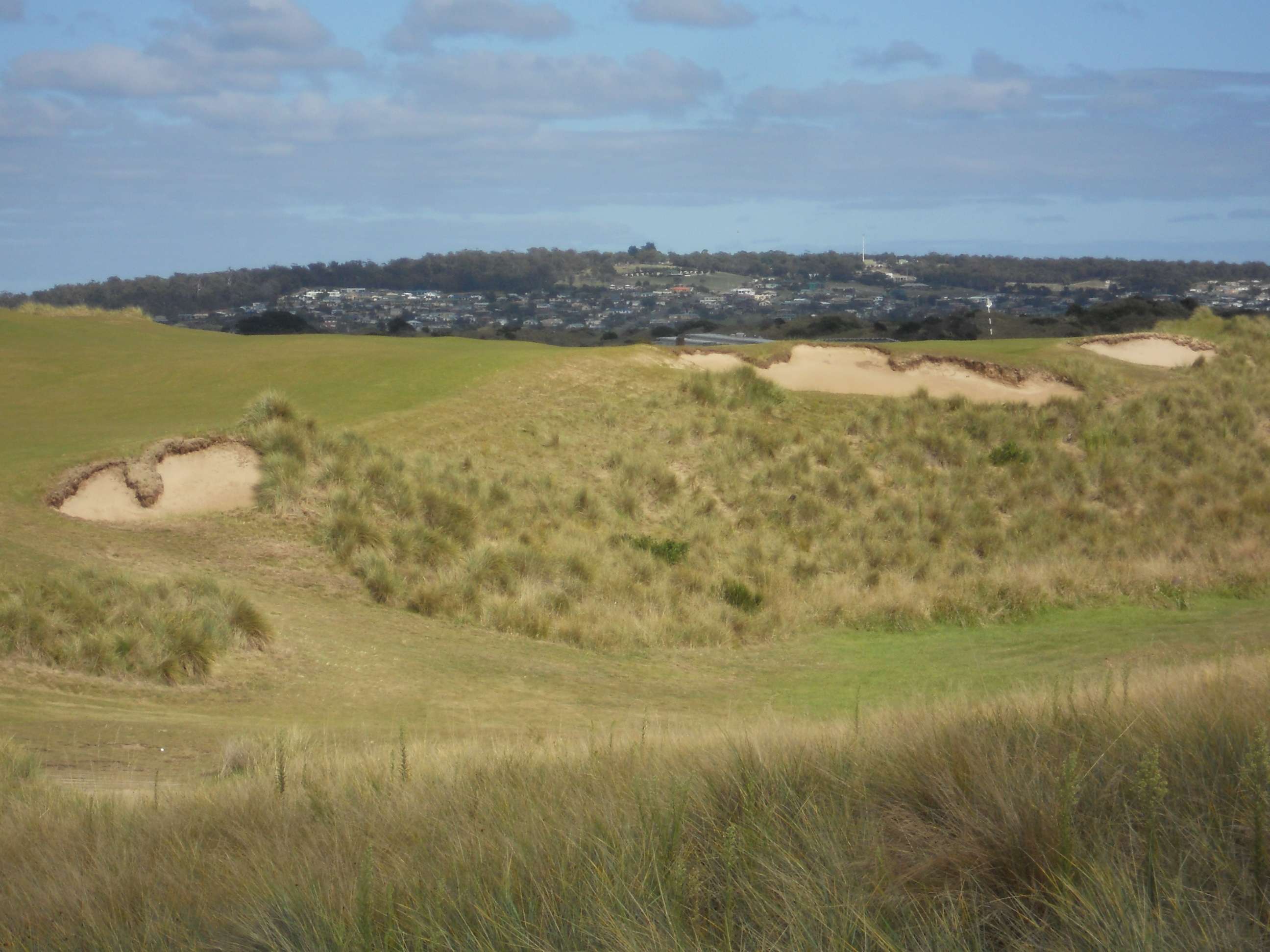
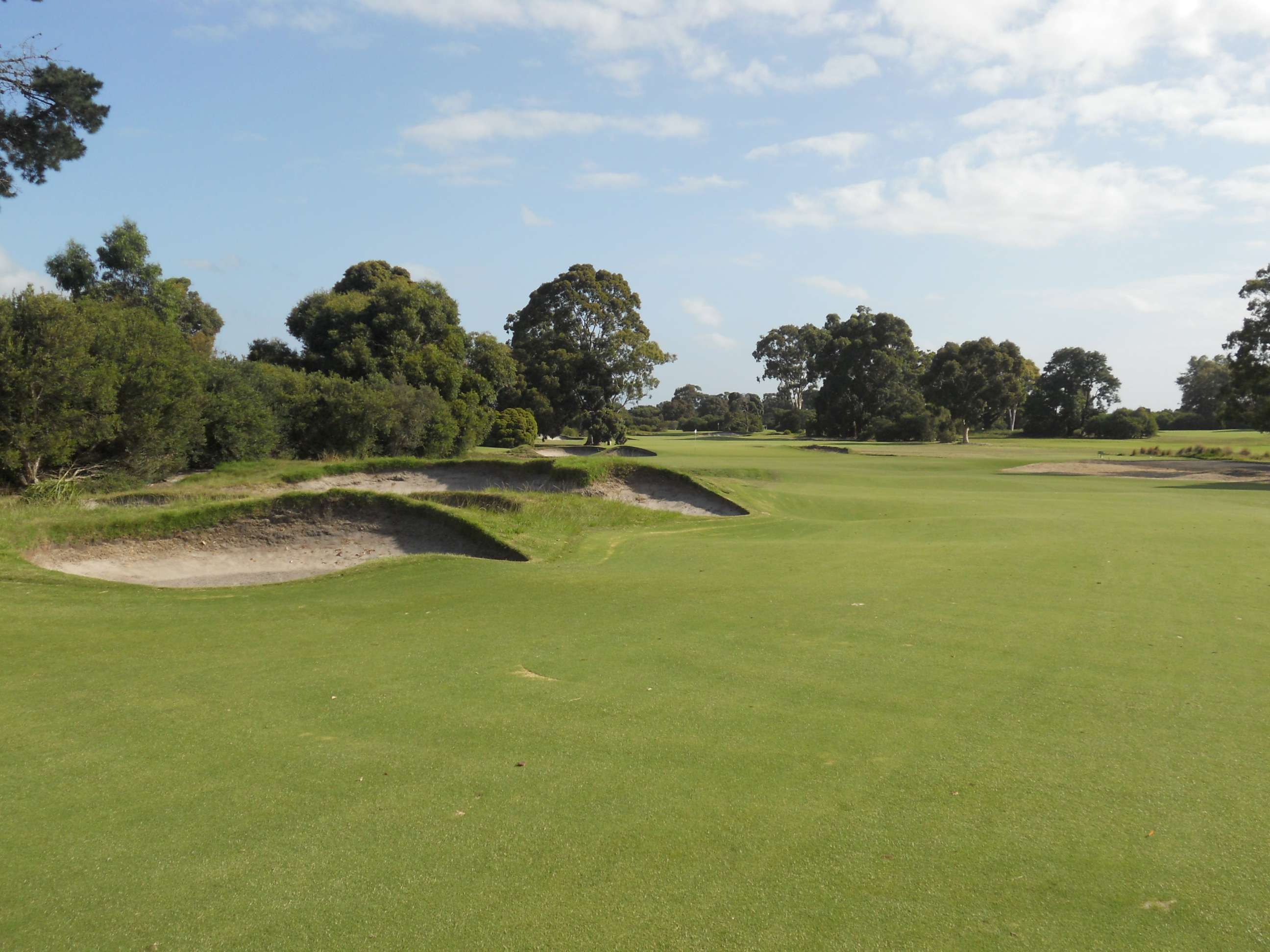
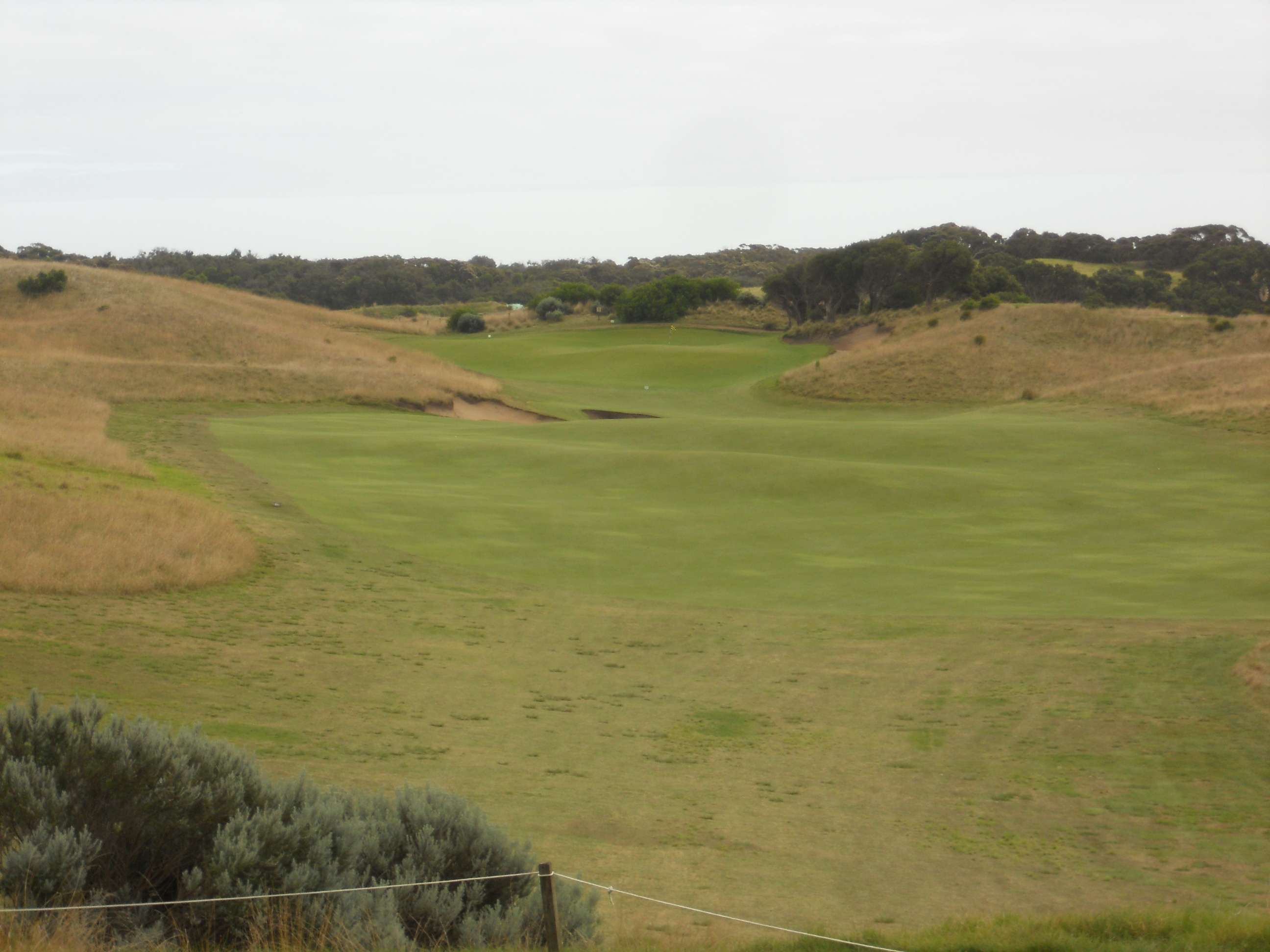
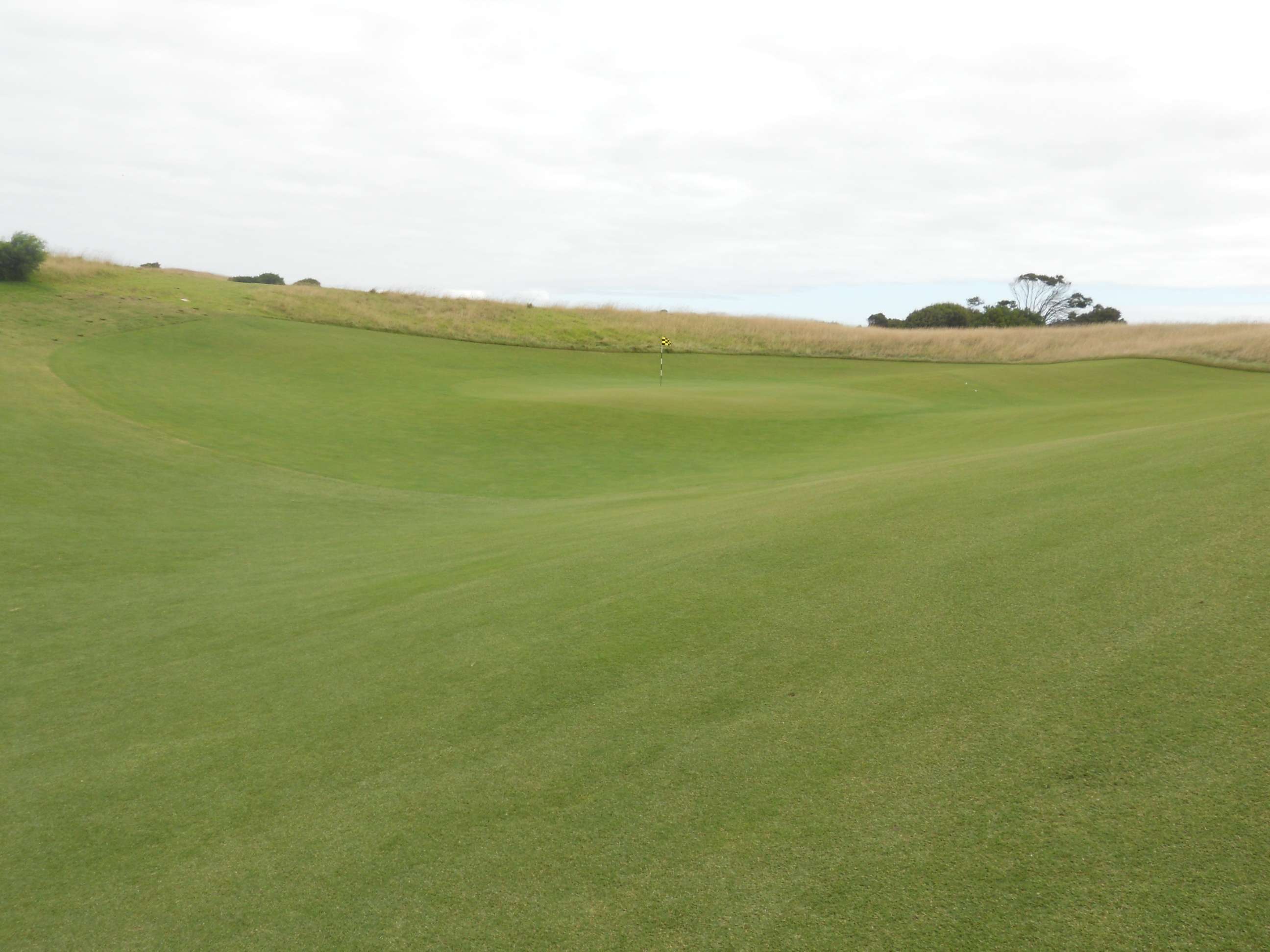
The 14th may be downhill and reachable, but anything played out to the left off the tee will leave a remarkably difficult approach, even if its just a half wedge

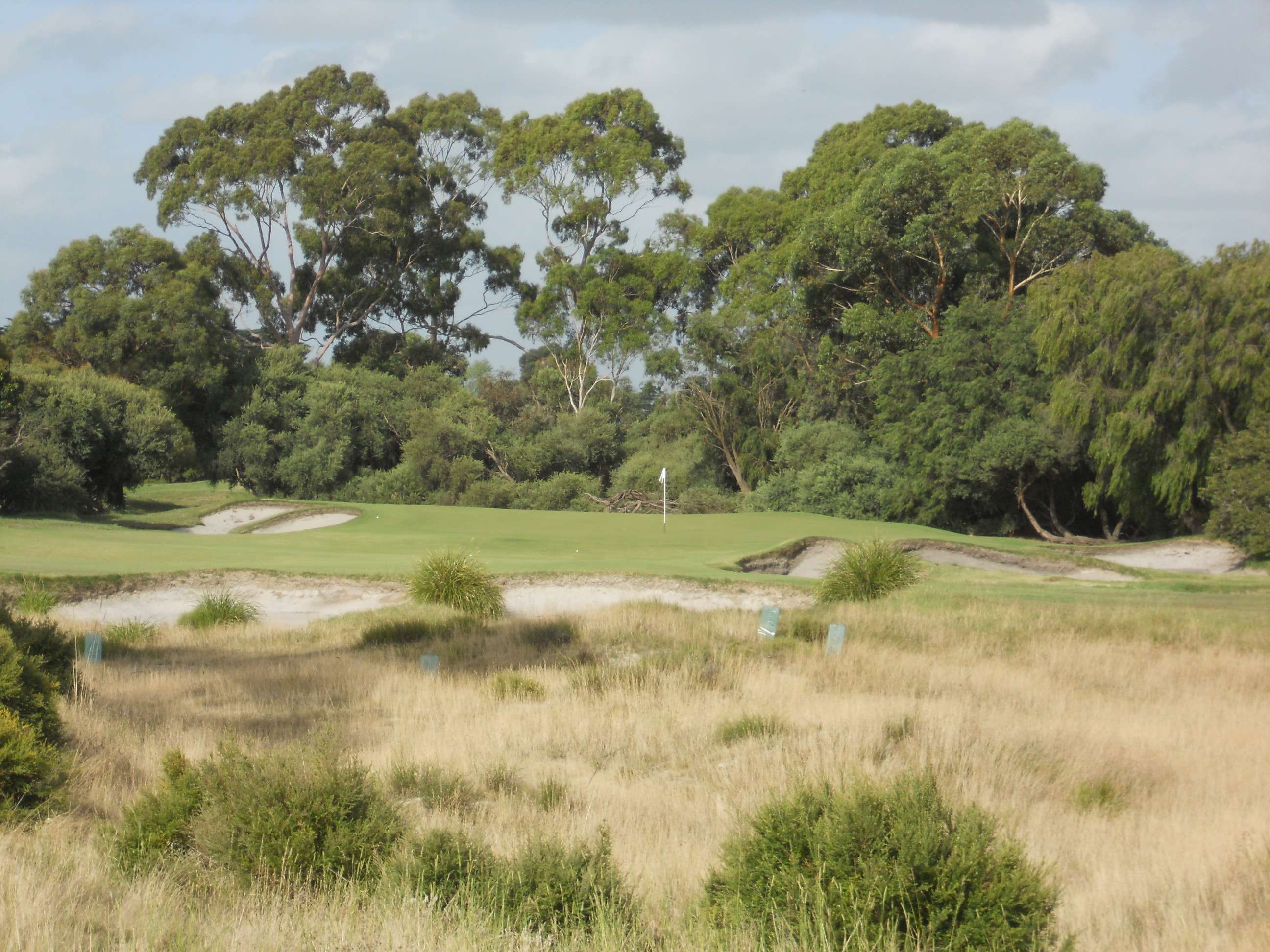
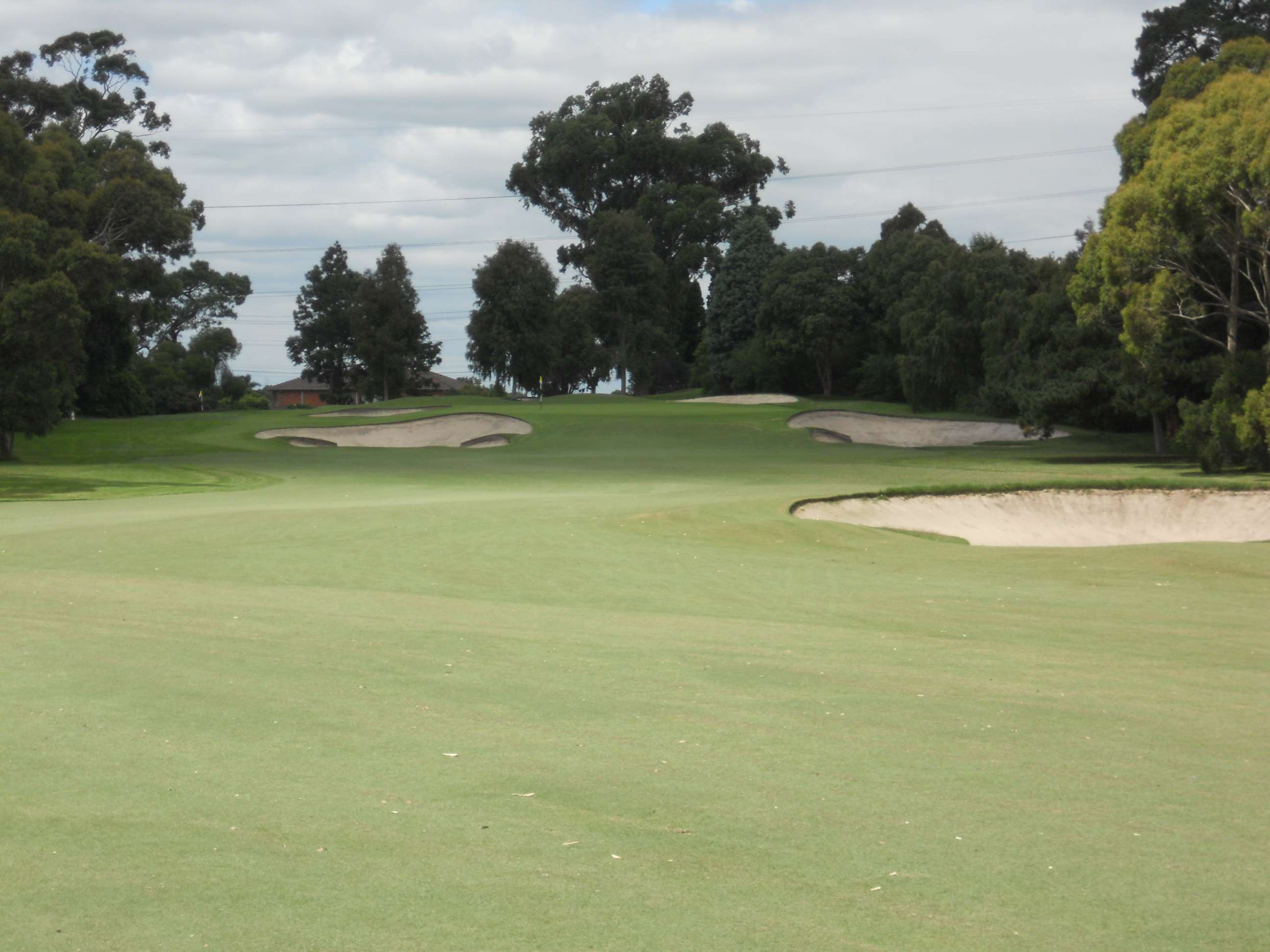
This photo from the prime driving zone short of the 14th green gives some idea how unpleasant the angle in from the right is, particularly to a back pin

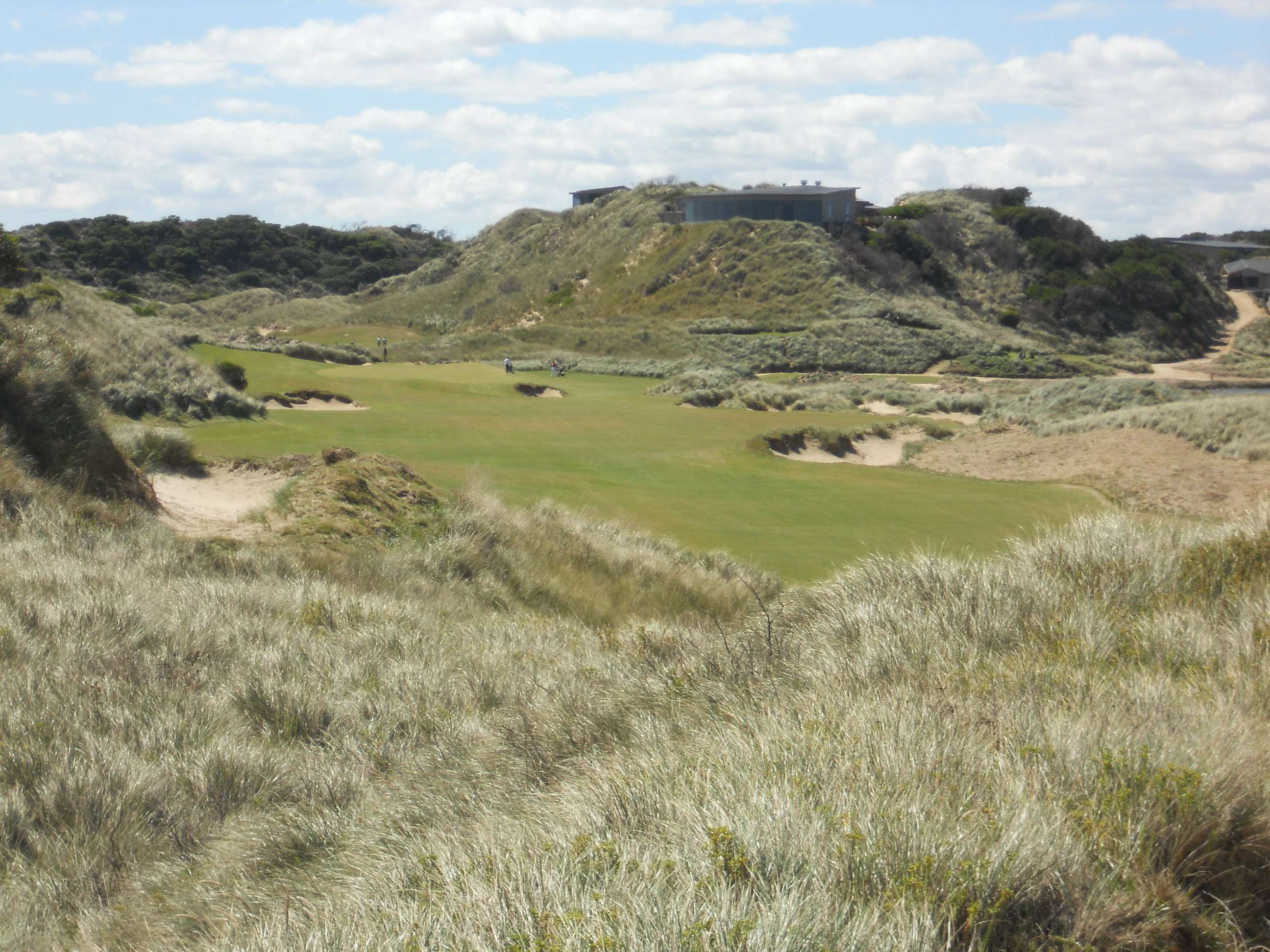
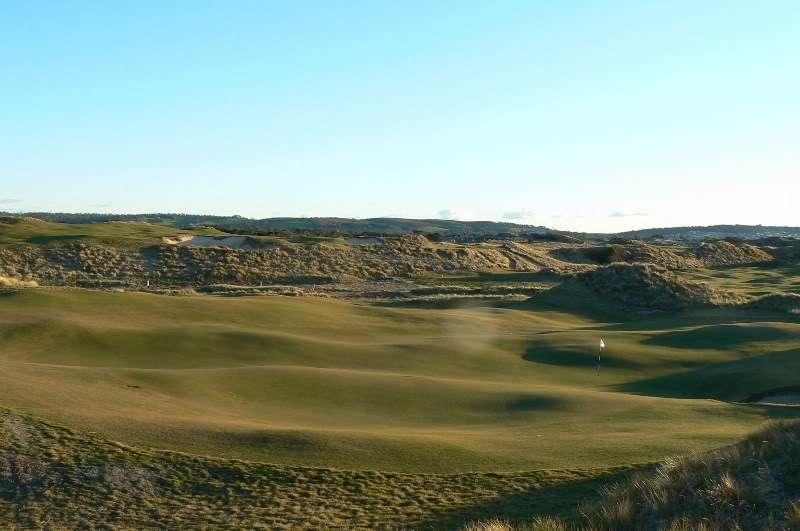
The drop shot par three 15th

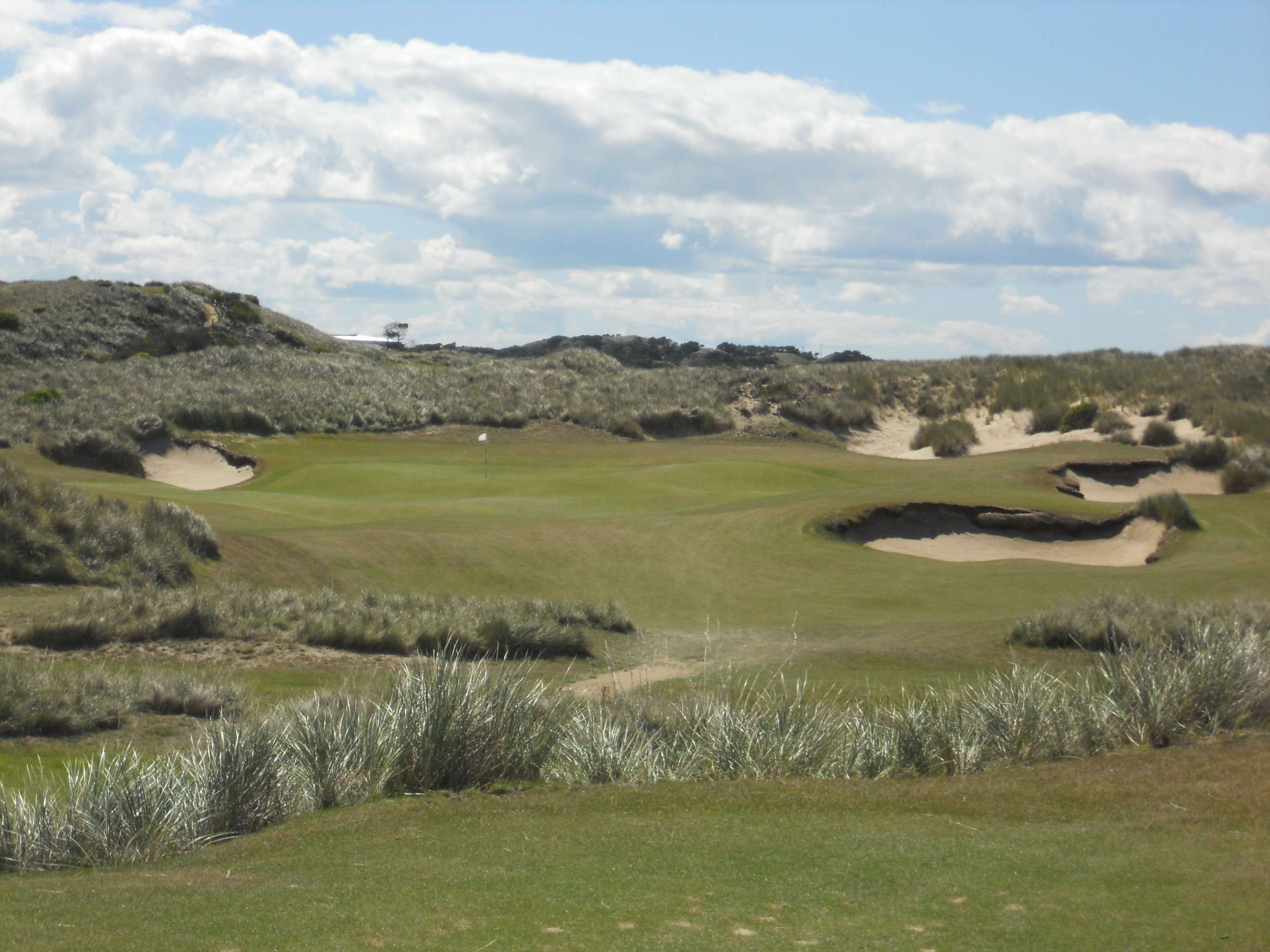
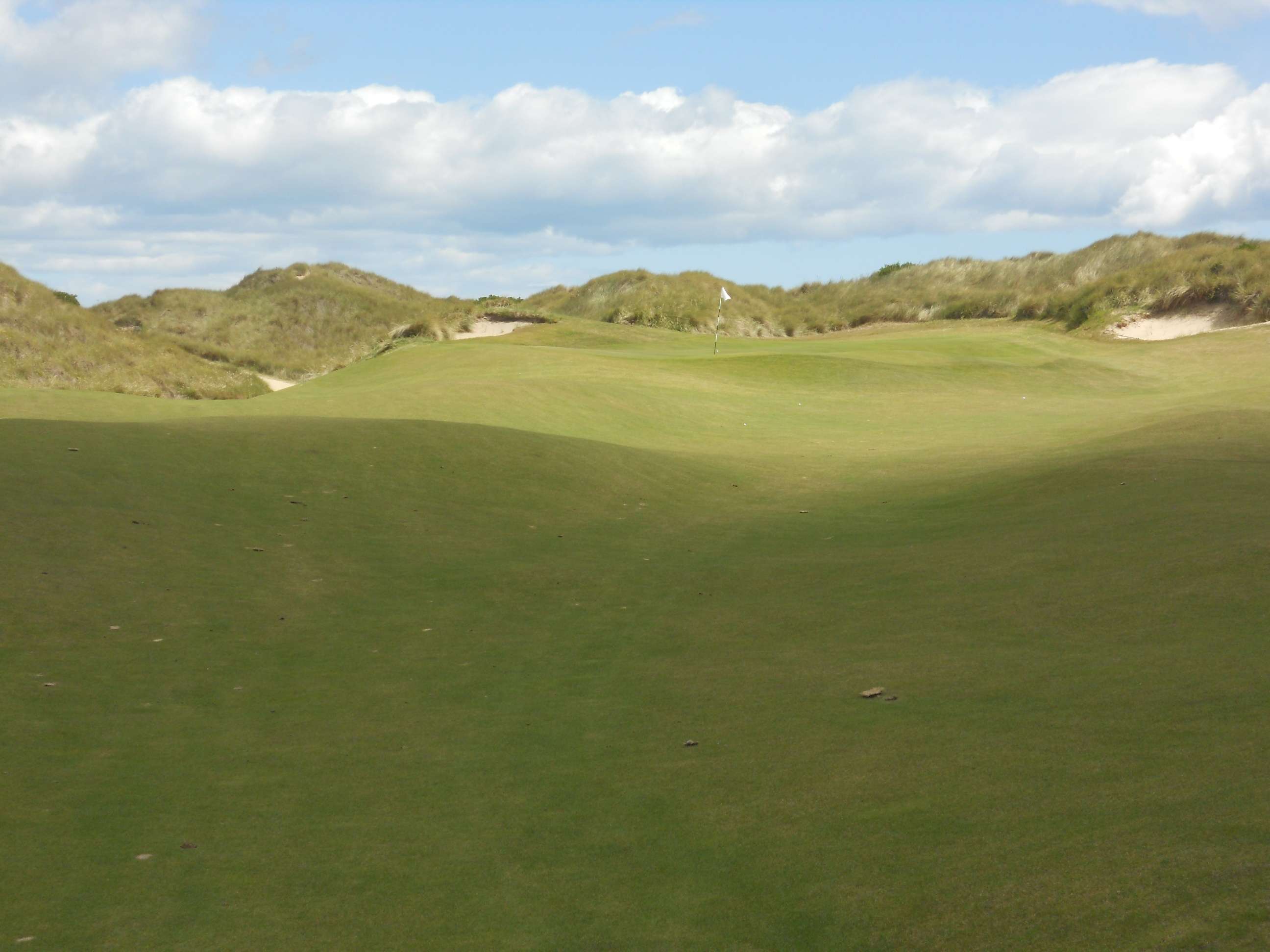
Well defended by both bunkers and the dune, the 16th green demands an approach from the right - which means engaging the fairway bunkering off the tee

Even with a helping wind, the 17th presents one of the most unnerving shots on the course

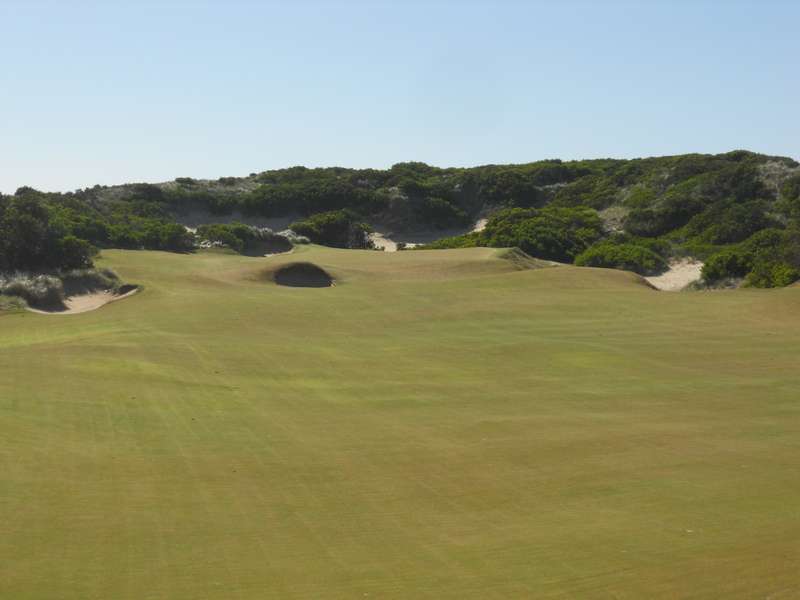
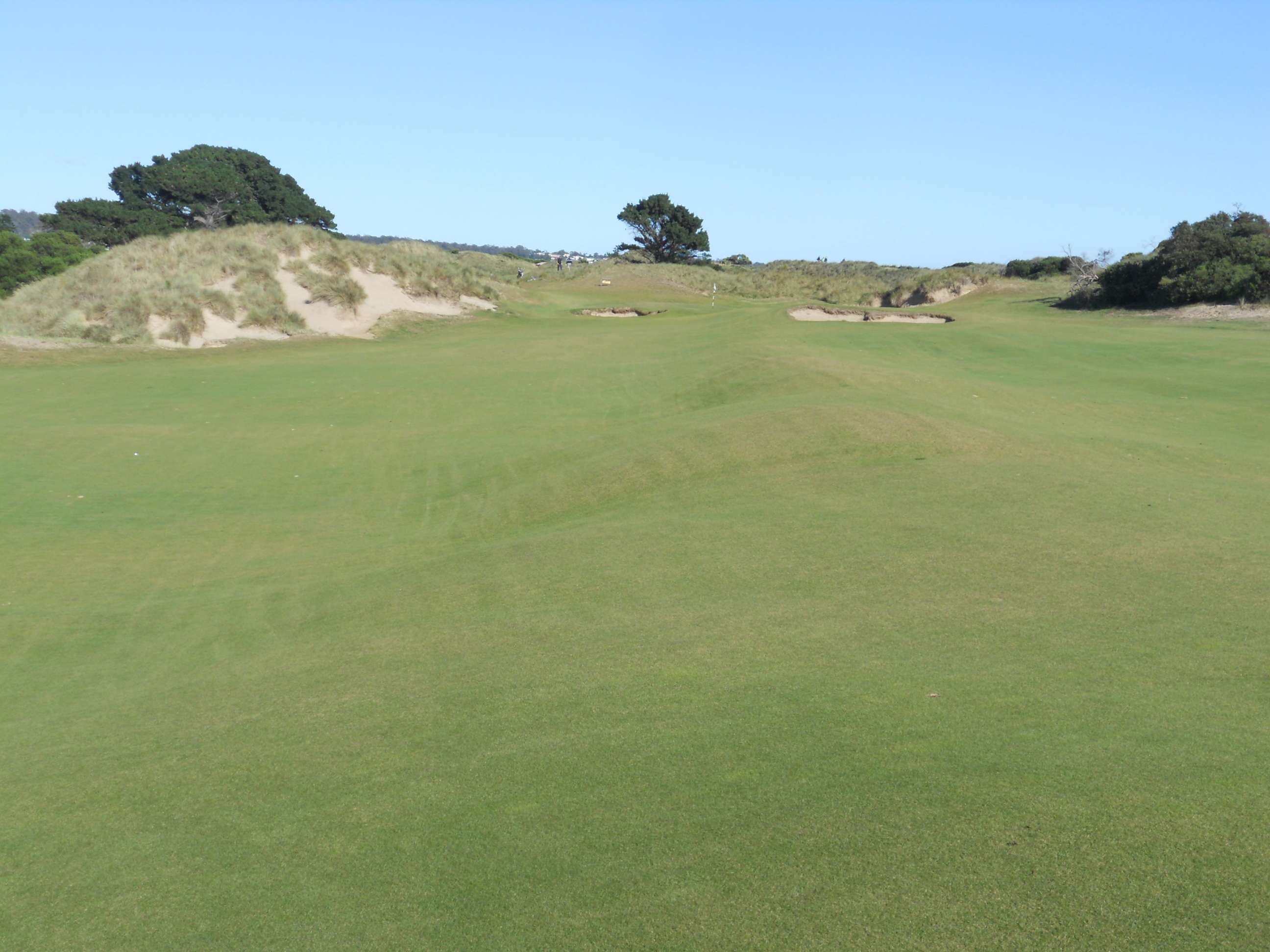
Pars need to be earned at the demanding par four finishing hole, which has one of the narrowest fairways on the course

Course name: Barnbougle Lost Farm
Location: Bridport, Tasmania, Australia
Four Word Course Review: Perfect foil for 'Dunes'

Bill Coore's Barnbougle Lost Farm course may be just across a narrow estuary from Tom Doak and Mike Clayton's Barnbougle Dunes (so close you can hit from one course to the other across the water in a few spots), but it's an entirely different experience in almost every way.

Where Dunes is a figure of eight routing that moves mostly parallel to the coast, Farm's holes change direction regularly. Where the par threes and short fours of Dunes are the star attraction, Farm's par fives and long fours are among the highlights. Where Dunes' wild greens are as bold as you'll find anywhere, Farm's set are much more traditional.

Perhaps the most noticeable difference is the immense width on offer here, which is saying something as Dunes is far from narrow. From the opening tee shot you're aware of how wide the targets are, especially off the tee, with massive benefits for taking on the daring line.

That's especially true on the opening hole, a par five where a drive down the left unlocks a far easier path to the narrow green; at the long par four 5th, where a high dune must be challenged to avoid a steep ridge running diagonally down the fairway; at the three-shot 8th, where a enormous bunker cut into a ridge on the left makes the second shot far tougher for those who bail out on that side from the tee; on the low profile 12th, where erring right adds a surprising amount of length to the hole; the driveable 14th, which demands you heroically challenge the drive bunker if you want anything resembling a simple approach to the dune-top green; and finally at the subtle 16th, its green tucked behind a dune to add great danger to an approach from the right.

Joining those holes (and shots) is a steady stream of stand-out moments.

The short par three 4th occupies a gorgeous spit of land flanking both the ocean and the river and plays downhill to a green that runs off severely at the back, putting a premium on distance control. Wedged between the aforementioned 5th and an easily reachable par four to a well-defended saddle green at the 3rd, it helps to create the first great run of holes on the course.

That solid stretch continues at the mid-length par three 6th, its green dissected by a steep hump (think of a Biarritz green turned upside down and angled from 8 o'clock to 2 o'clock) that ensures few pars will be made by players hitting the wrong side of the green. With the pin cut close to either side of the hump, a chip or putt from the opposite side will almost certainly have to be played off the green and back down the surrounding slopes if it is to finish anywhere near the hole. This green and the 14th green are the closest Lost Farm's putting surfaces come to resembling those across the river.

The 7th is memorable for a rough-covered dune that splits the fairway in half, forcing the golfer to choose a preferred side depending on the day's pin position and wind direction.

After a lull around the turn, the course leaves the dunes for a period as the drive at the 11th is blind over a dune. The green is set in open farmland, its steep slopes softened to the eye by its immense size. The next hole turns left around a dune, but it's the bunkering of the lay-up area that adds interest, especially for those who favour the safe right-hand side off the tee and find themselves needing two more solid strikes to get home.

The 13th offers little other than eye candy for lovers of towering dunes, but the downhill 14th is among the best handful of holes on either course, the diabolical green - tiny and heaving with movement - demanding that even if you cannot carry it, you play towards the drive bunker that lurks only 40m or so short of the green, transitioning into the tall rough that sits to its right. Those that play left will have a bad angle to a green both above them and sloping gently away. In many ways it's a similar prospect to the 3rd hole on the Dunes course.

Similarity to superior holes across the river is a shame for the drop shot par three 15th - as is the spectre of the restaurant and spa towering over it to the left.

The 16th - described above - makes strong use of some flat land, before the imposing uphill par three 17th provides one of the course's most knee-trembling moments. Short, right and left will all most likely mean a lost ball and the large green looks tiny from the tee. Given all the prior par threes play downhill, it's a refreshing and unique challenge.

The final hole's downhill drive is to perhaps the narrowest fairway on the course, though there is more room to the left than it appears.

Of course Lost Farm actually has 20 holes - I have not mentioned 13a and 18a until now because I don't feel they really add to the experience. 13a is a strong par three, but it breaks the flow of the back nine, while 18a is a fairly plain short par three that I'd wager will have become a chipping green within a couple of years.

The feeling for me after two plays of Lost Farm was that the challenge grows as you move through the round, both off the tee and into the greens, especially with the constant changes of direction.

The course goes nowhere near offering the sheer adventure of its sister course, but the lateral choices are a lot of fun in their own right and the more subtle greens pose similar challenges without always having the obvious alternatives for working the ball of landforms.

With almost all visitors to Barnbougle looking to play both courses, it's wonderful that they differ so greatly while providing such excellence across the board.

I find myself favouring the Dunes course after a small sample of both, but the Farm feels like the kind of sleeper that could grow on me after more plays in different winds. One thing is certain: Australian golfers really are fortunate to have both tracks at their disposal, and for such cheap rates.

Friday, March 04, 2011

Barnbougle Dunes


A split-level fairway at the 3rd means you earn a double benefit by hugging the right: a flat shot down the length of the green rather than uphill and across it

A brave tee shot at the 4th will most likely yield an eagle putt if successful in carrying the immense drive bunker as the green gathers from almost anywhere directly over the sand

A view of the 4th green from its back right

The brilliant par three 5th, viewed from forward and left of the tee to show how the green is tucked behind the dune on the right

Successfully challenging the pyramid dune down the right unlocks the choice angle into the bunkerless green, its left side tucked behind the tall dune

No hole I have played packs more challenge into each metre than the 7th at Barnbougle Dunes. The small green slopes towards the chipping area at the right, making it a tough proposition to hit and hold from either the tee or the deep greenside bunker
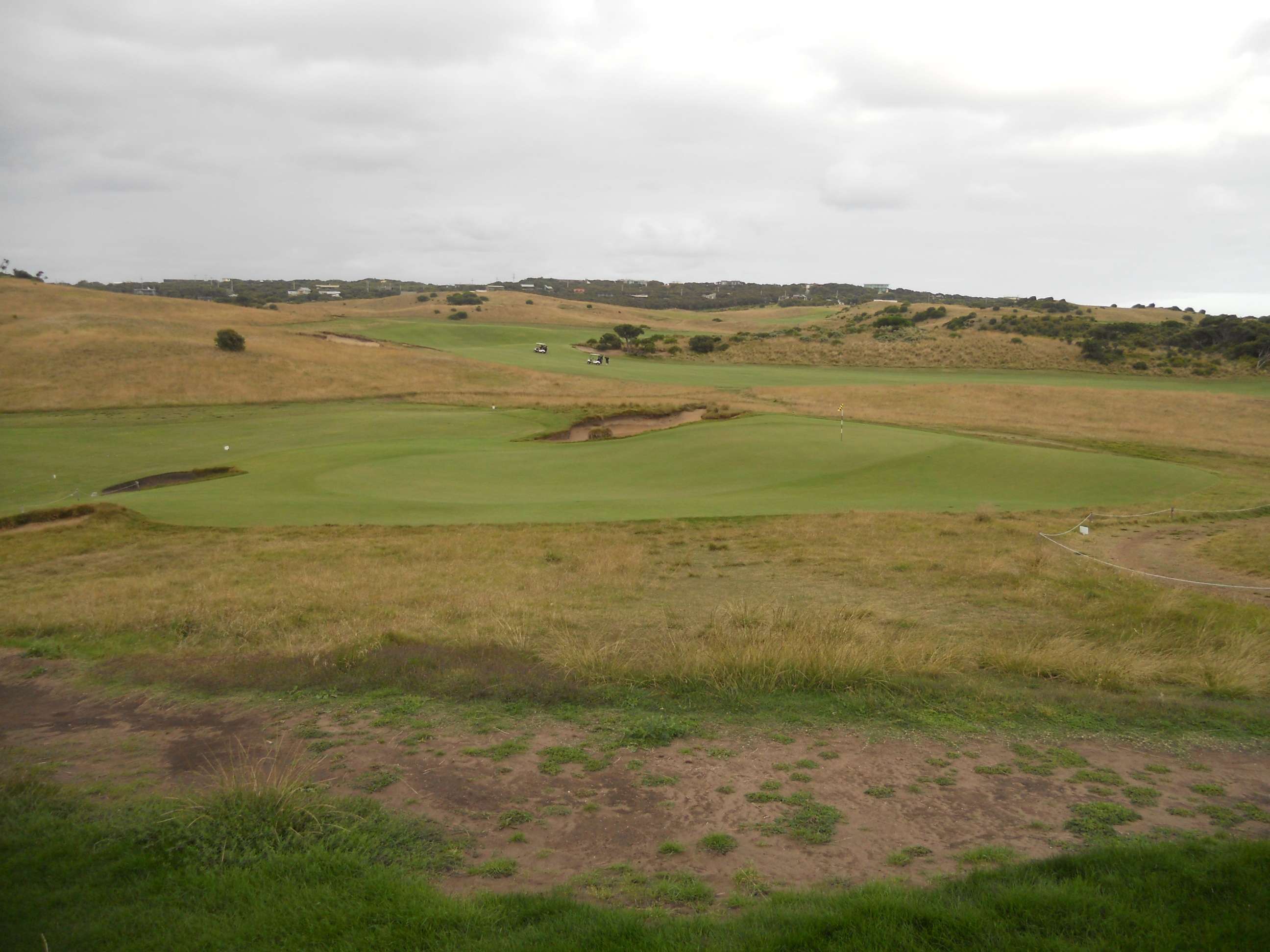
One of the more subtle holes on the course, the 10th is still a fine hole, rewarding the golfer who favours the bunker-strewn left-hand side of the fairway

Safety awaits to the left, but who can resist having a crack at the 12th green from the tee?

This view from the tee cannot to justice to the size and scale of the internal undulations within the green - the pockets are twice as deep as they appear in this shot

This picture from behind the 13th green (courtesy Bryan Izatt) does a much better job of showing what you're faced with should you leave your tee shot anywhere other than the section of the green where the pin is cut

The progressive challenge and reward of the drive bunkers at the 14th are the strength of the hole

Especially if playing from the back tee, the 17th green is a real challenge to hit and hold in two shots

Course name: Barnbougle Dunes
Location: Bridport, Tasmania, Australia
Four Word Course Review: Relentlessly thrilling natural golf

I've played better golf courses than Barnbougle Dunes - not very many, mind you - but I doubt I have played one with more shots as unique and fun - the type of shots you look forward to playing the minute you step onto the 1st tee.

Almost from the outset (the first two holes have great greens but are quite sedate otherwise) you're faced with shots you could play all day with a broad smile on your face, trying different routes to the hole - and the challenge would be completely different and just as fun the following day with the pin moved to a different section of the green.

The 3rd is a bold risk/reward drive and pitch par four with a split-level fairway and the added punishment of an appalling angle to the tiny green if you stray to the lower left-hand side of the fairway.

It would be a highlight of most golf courses, but here it's just the first taste in an incredible five-hole stretch.

Next comes an even shorter par four - a hole where anyone who can carry the ball about 210m is likely to have a good shot at eagle on the boomerang-shaped punchbowl green and anyone who takes the shot on and falls short faces a recovery from a gigantic cave of a bunker, from which bogey becomes a good score.

Following a life-affirming walk along the top of a seaside dune to the 5th tee, you're faced with another punchbowl green, this one on a downhill mid-length par three and yet again imagination is key to working the ball close, with all manner of slopes and ridges to be used on and around the green.

Things are slightly more subtle at the bunkerless par four 6th, where a drive that takes on a pyramid dunes earns a prime angle to the plateau green, before the fascinating 110m par three 7th, a chipping area below the right-hand side of the modest green and the bunker to top all vicious bunkers to the left. It's one of the few holes you'll find where even good plays might regularly be aiming away from the green with a gap wedge in their hand. Par might be unlikely from the right, but from the bunker - with the green sloping against you - it's nigh on impossible.

The pace slows for the controversial split-fairway 8th hole, which leaves many players doubting there's a realistic way to find the green from any distance, before a terrifying tee shot at the 9th (especially from the unofficial back tee to the left of the 8th green!) that makes way for a fun approach where you're again invited to use the slope of the land to work the ball towards the hole.

Not only does every hole on the front side get your attention on the set shots - tee shots and approaches - the greens are as interesting and thrilling to recover to as you'll find anywhere, especially at the 1st, 4th, 5th and 7th. Pure fun.

Heading away from the clubhouse again for the second loop of the figure-of-eight routing, first up is a well-bunkered par four bending left and climbing to a dune-top green reminiscent of the corresponding hole at Brora, the green draped naturally sloping toward the tee.

The par five 11th and 14th holes both offer most of their interest on very different but equally well-bunkered drives. While the greens may not be among the course's best, they are both unlike any other among the set.
That pair of three-shot holes bookend a strong candidate for the best back-to-back holes in Australia.

The driveable 12th snakes right along the top of a towering dune and like the 4th is easily driven by virtue of the short length and greenfront slopes, but any miss, especially one to the right, is heavily penalised. Adding to the challenge is a green that feels the size of a dinner table, but seemingly with 13 different tiers! There's risk in attacking the green from the tee, for sure, but at the same time you don't want to lay too far back and have more than a flick for your second shot.

The 13th hole is a poster child for everything great about Barnbougle Dunes. It might be the wildest green in world golf, a sea of bowls separated by steep slopes that can either be the golfer's friend or foe. In my three plays to date theose slopes have worked my ball to within a foot of the hole and taken what I'd thought was a good shot and worked it 60ft away into guaranteed three-putt territory the following day. It's remarkably advenurous golf most certainly not designed to be played with a card and pencil (I loved writing down '2', it tore me apart to record a '5' after hitting the green from the tee!).

The great risk and reward of many shots on the course make match play the game to play: a well-executed risk can win you the hole, but an error when going for broke won't ruin your day.

Turning for home at the eastern end of the course, the 15th is a drive and pitch hole built around its centreline drive bunker and gorgeous dune-top green. It wasn't among my favourites when I was on site, but in hindsight is among the three or four holes I most look forward to playing again.

The 16th is likely the weakest of the par threes, somewhat like the 5th but a far less interesting hole, while from the back tee the 17th is among the brawniest two-shotters of the bunch, doglegging right around a massive beachside bunker before an approach to a green somwhat like the 15th in its raised nature with few good places to miss.

Like the front nine, the back ends with a slightly blind drive on a substantial par four, but where the 9th green is set on a high-point the 18th is in a slight bowl, angling from left to right. If it's a disappointing finish, that's only because what has gone before is so outstanding.

The sheer abundance of thrilling golf shots on offer at Barnbougle Dunes is hard to match anywhere, in large part due to the amazing land on offer and no doubt also not doubt significantly because the designers weren't shy about building holes as bold as the land they're built on.

When you add to the list of attributes the $130 all day greenfee, this has to be one of the best value courses on the face of the planet and one where the adventurous, fun-loving golfer can have as much fun as his imagination will allow.

Thursday, March 03, 2011

Kingston Heath

Some of the flattest land comes at the 2nd, yet micro-undulations are still present to create awkward stances

The par three 5th, one of only three one-shotters on the course (though the spare hole is also a par three), allows for a long or mid iron to be bounced onto the green

Nestled into the ridge, the 7th green enjoys one of the best greensites on the course, the bunker in the right foreground defending the best line in

Though visually appealing, the downhill, dogleg left 9th doesn't create much drama, with an attempt to drive the green only for the brave or reckless

The short par three 10th, surrounded by bunkers and with a wild green, is something of a sandbelt template, and a great example at that

Clever bunkering adds interest to the lay-up zone of all three par fives - pictured here is the 12th

While the 15th's right-hand-side bunkering looks fearsome, it's the small front left bunker that presents one of the most delicate and difficult recovery shots on the entire course

This fairway bunker at the 18th gives a good example of the intricate shapes that work to make the bunkers look smaller than they really are, breaking up the sea of sand

Course name: Kingston Heath
Location: Melbourne, Victoria, Australia
Four Word Course Review: Little course that could

Flat, shoehorned into about 120 acres, laid out by a rookie designer, tinkered with ad nauseum... you'd not think on the basis of those factors that Kingston Heath could be much of a course.

Instead, here's a fantastic combination of holes, superbly bunkered, that make brilliant use of the movement the site has, provided largely by two large ridges that bisect the 1st, 6th, 8th, 16th and 17th holes and provide fantastic greensites for the 7th and 15th holes.

The scale of the features - the greens and bunkers especially - is fantastic, too. In comparisons with Royal Melbourne (West) it's often said that Kingston Heath is equally a masterclass in scale, but where RM's massive features complement the grand corridors, the seemingly smaller features at Kingston Heath are perfect for the more humble property. I say seemingly, because on much of the course the bunkers are still big and bold, but the more intricate shapes break up the impact of the sand on the eye and create smaller areas of sand separated by the capes and edges, yet it's all contained in one enormous bunker.

Further to that, another strength of the bunkering is how it ties into the native heath, rivalling the best examples from Royal Melbourne in its ability to fuse the prepared surfaces to the heathland in as natural a way as possible.

Of course given Alister MacKenzie designed the course's bunkering (and built the famous par three 15th from scratch) after Dan Souter had laid out the holes, the fact it's so perfect for the site is probably not surprising.

The undulating land is limited, but it's used well to create uncomfortable drives at the 1st, 6th and 16th, an appealing long approach to the 7th, an all-world iron shot to the 15th, a downhill approach at the next hole and a blind strike over the ridge another hole later, completing a stretch of three holes where the same feature has been used to test four very different skills.

Where the land gets flatter, the bunkering comes into its own.

The short par four third is a well-balanced temptation because of its bunkers, the 5th sets up nicely for the mid to long iron shot required, the 10th's bunker-ringed green is a typically effective sandbelt solution to 150m or so of such land, the centreline and flanking bunkers at the 11th and 12th add interest to their tee shots, while a wild green on the closing hole - coupled with the hole's length - make for a difficult finish on the back of the three-hole stretch described above.

Of course with so little undulating land, fantastic greensites are scarce - the 7th and 15th are the only ones that race to mind - but the greens don't suffer too much for that with their smart bunker placement and internal movement making many of them standouts nonetheless. The bunkerless 17th is among the best greens, the simple front-to-back grade level green is ideal for the blind long or mid iron shot required to approach it.

Each of the par fives - the 7th, 12th and 14th, feature interesting bunkering in the lay-up zone, making for a great hole whether you need two shots or three to get to the green.

The absence of temptation to drive at the green on the reachable 9th drops the hole a level below the sandbelt's best short par fours and there are a couple of less interesting shots in the course's flattest central portion, but all things considered there's a good reason this course is so often dissected by way of comparison and contrast with Royal Melbourne (West): it is an entirely different beast, but no less compelling in the range of challenges it presents.

And as a final feather in its cap, Kingston Heath was comfortably in the best condition of the courses I played in Melbourne, with firm greens and tight turf in the fairways, as well as approaches firm enough to allow a deliberate run-up or bounce-on approach shot.

Those firm greens also demand precision when attacking many of the more difficult pin positions and reward a tee shot that finds the fairway, allowing sufficient spin to be imparted on the approach shot. For us mortals who can't generate 10,000rpm from the rough, it's wonderful that those sorts of things still matter!

Metropolitan

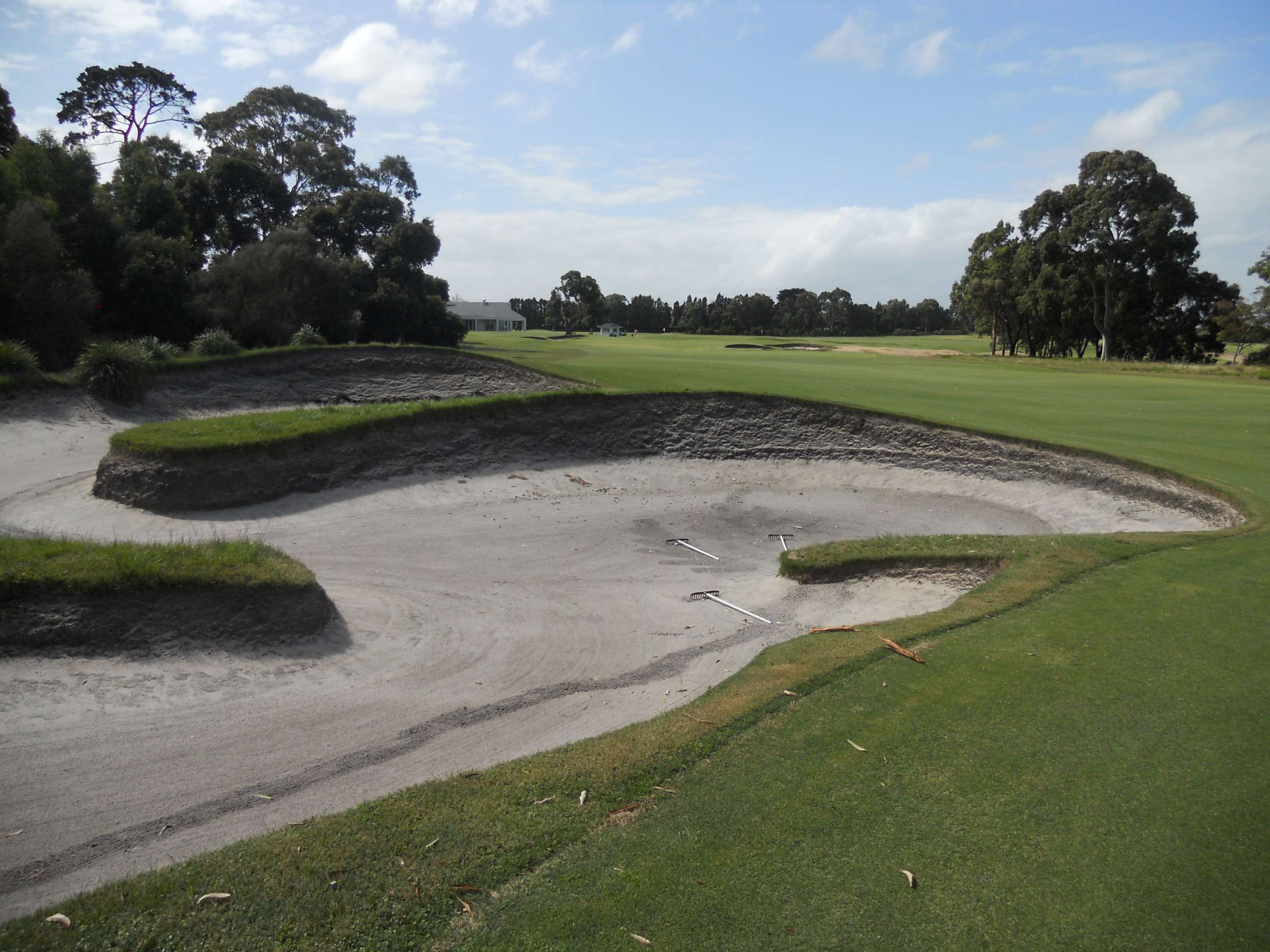
The 1st hole immediately shows the appealing bunker shapes that are a highlight of Metropolitan

The green of the par five 6th is a great example of smart bunkering and some subtle undulation making the most of largely flat land

At the par three 11th, a great example of the Metro green surfaces extending right to the bunker lips

Centreline bunkers in the fairway and at the green at the 12th help to dictate the wise play depending on the pin position

This bunker 40 metres or so short of the 14th green makes for an interesting second shot for the golfer who has successfully taken on the drive bunkers

Love them or hate them, the trees in the 17th fairway are a big part of the hole

Course name: Metropolitan
Location: Melbourne, Victoria, Australia
Four Word Course Review: Compelling despite average land

Metropolitan has a rich history as a major (small 'm') tournament host and World Top 100 member. While I'm not sure I see the course's claim on a World Top 100 spot, it is an enjoyable course with undeniable quality, top notch maintenance and great use of flat land in places.

From the outset, the attractive bunkering is a highlight, the shapes quite low to the ground to match the flat land. The mid-length par four 1st and 3rd holes each reward a drive that flirts with bunkering on the left-hand-side of the fairway before approaches to greens that include some tricky movement.

After the short par five 4th, played to a well-defended green, the 5th is another mid-length four that is characterised by its appealing bunkering.

The 6th continues the high standard of par fives, and another interesting green built on an unspecial site, before the third such hole at the 8th, where a new green has been built surrounded by a dry moat.

The long par four 9th, with an awkward tree-encroached drive ends a front nine that despite the land is full of fun and tempting drives, approaches and recoveries.

Also situated within the front nine is the enjoyable par three 19th/spare hole, slightly uphill to a slick green, the front tongue of the green offering a really testing pin position. While it largely plays as a short one-shotter, there is room behind for a tournament tee to be built that stretches the hole to about 180m.

The back nine doesn't quite match the front, but the shortish, heavily-bunkered par three 11th, with another green that overcomes its site through great internal movement and the 12th - a mid-length par four made by the smart centreline bunker and near boomerang green - are among the better holes.

The 13th was being re-built when I played the course, but the flat par five 14th is great fun for the bunkering on the drive that can be carried and the bunker placed in the lay-up zone. A great example of Metro making a lot out of far from ideal land.

Some unattractive mounding holds the otherwise enjoyable short par four 16th back, while trees in the fairway of the 17th are a love it or hate it feature.

The 18th is a stern finisher, demanding a driver and long iron from most mortals, the land feeding the right-hand fairway bunker.

All in all, Metropolitan makes pretty impressive use of a site that's nowhere near as enviable as either course at Royal Melbourne or Peninsula (North), but it still dishes up quality holes of every par.

A wonderful feature is the green surface continuing right to the lip of the greenside bunkers, meaning balls that might settle in the fringe of other courses' greens will roll unobstructed into the bunkers here. It's a small difference, but one that is noticeable (and looks shmick!).

Some say the conditioning has gone downhill somewhat since the superintendent transferred to Royal Melbourne, but as it is it's quite incredible and adds to the enjoyment of the round.

Wednesday, March 02, 2011

Yarra Yarra

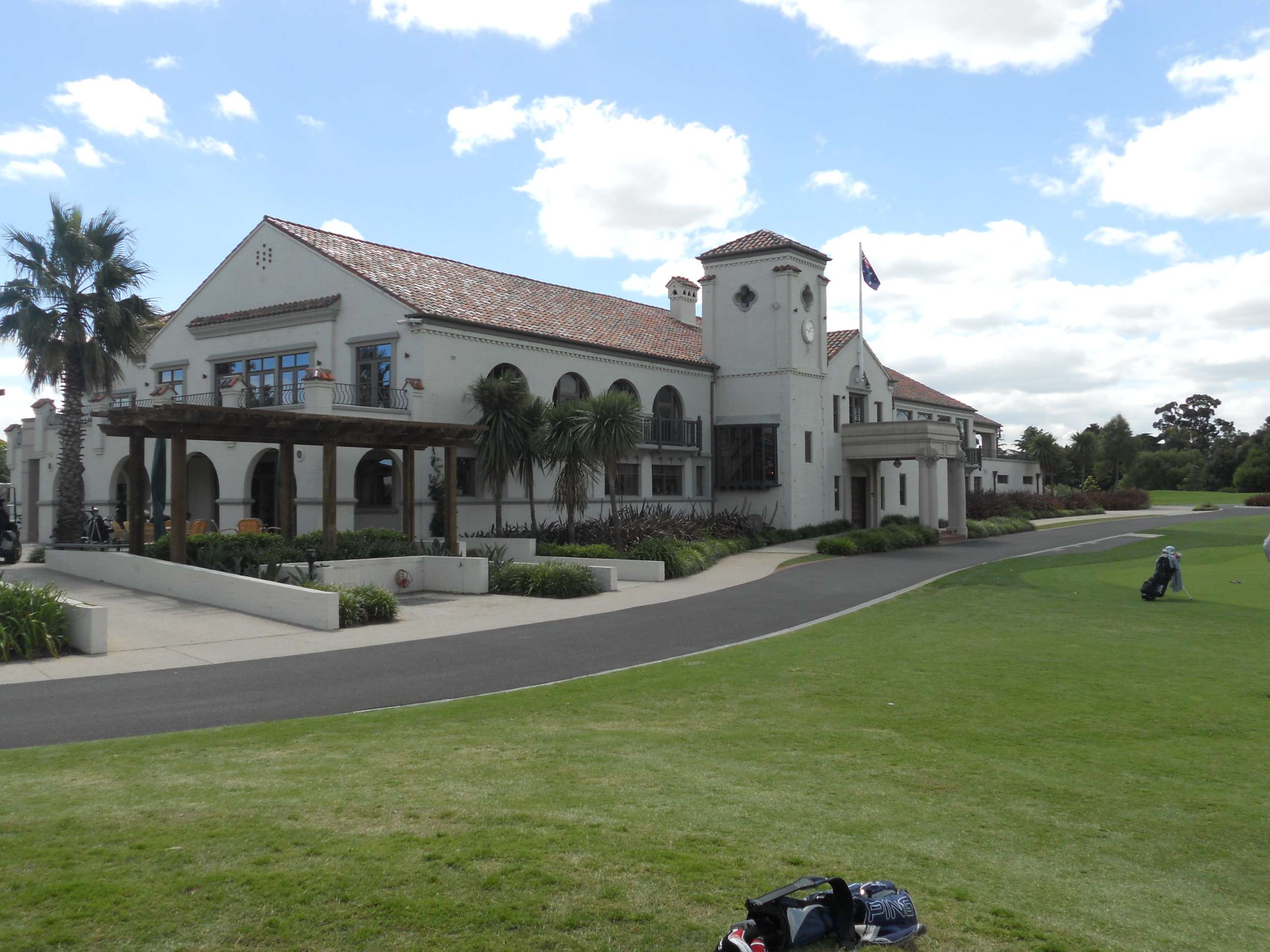
What a clubhouse!

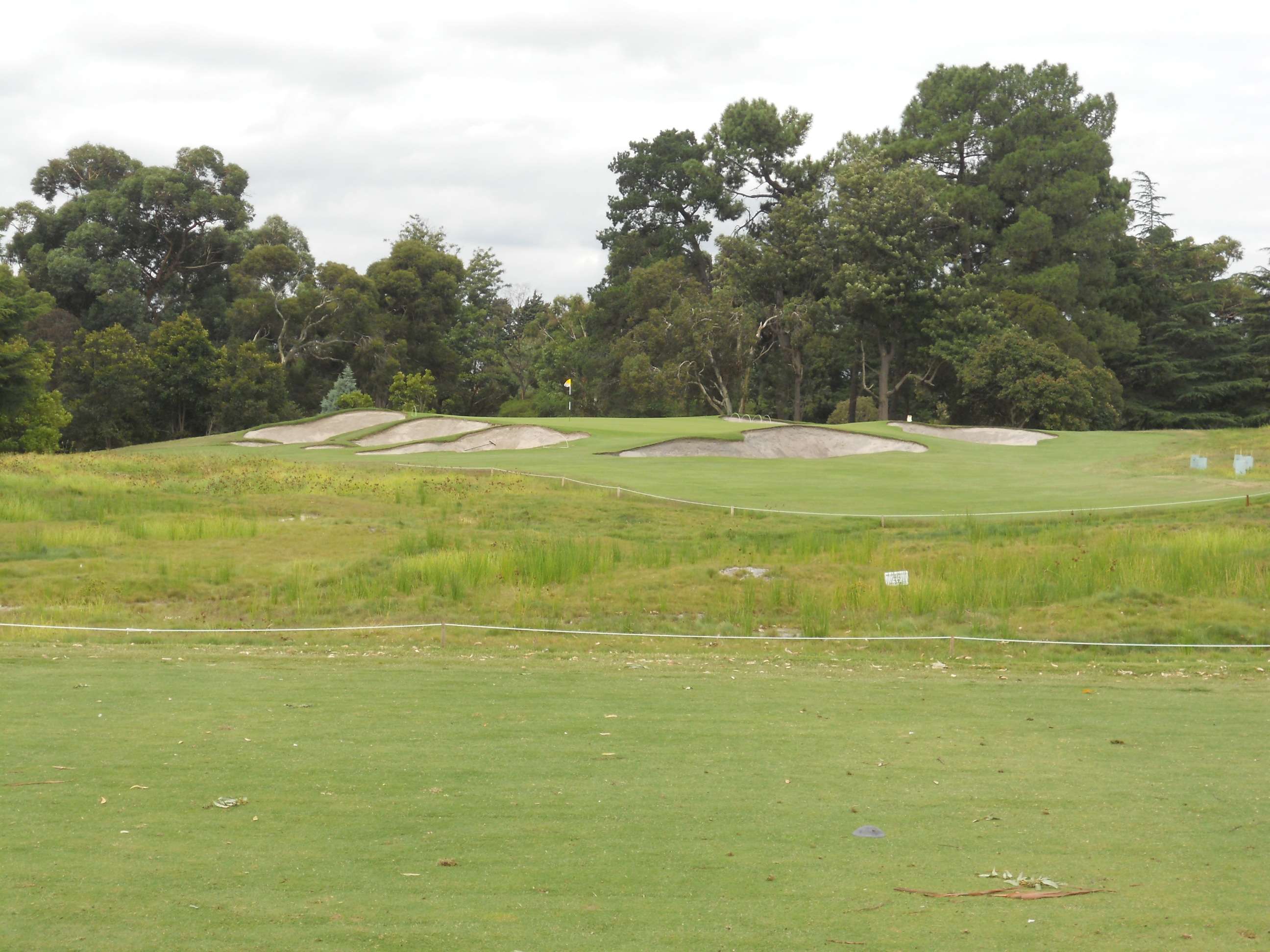
The 4th is a new hole, designed by Martin Hawtree, that maintains the high standard of the par threes, along with the 11th and 15th - and all very different from one another

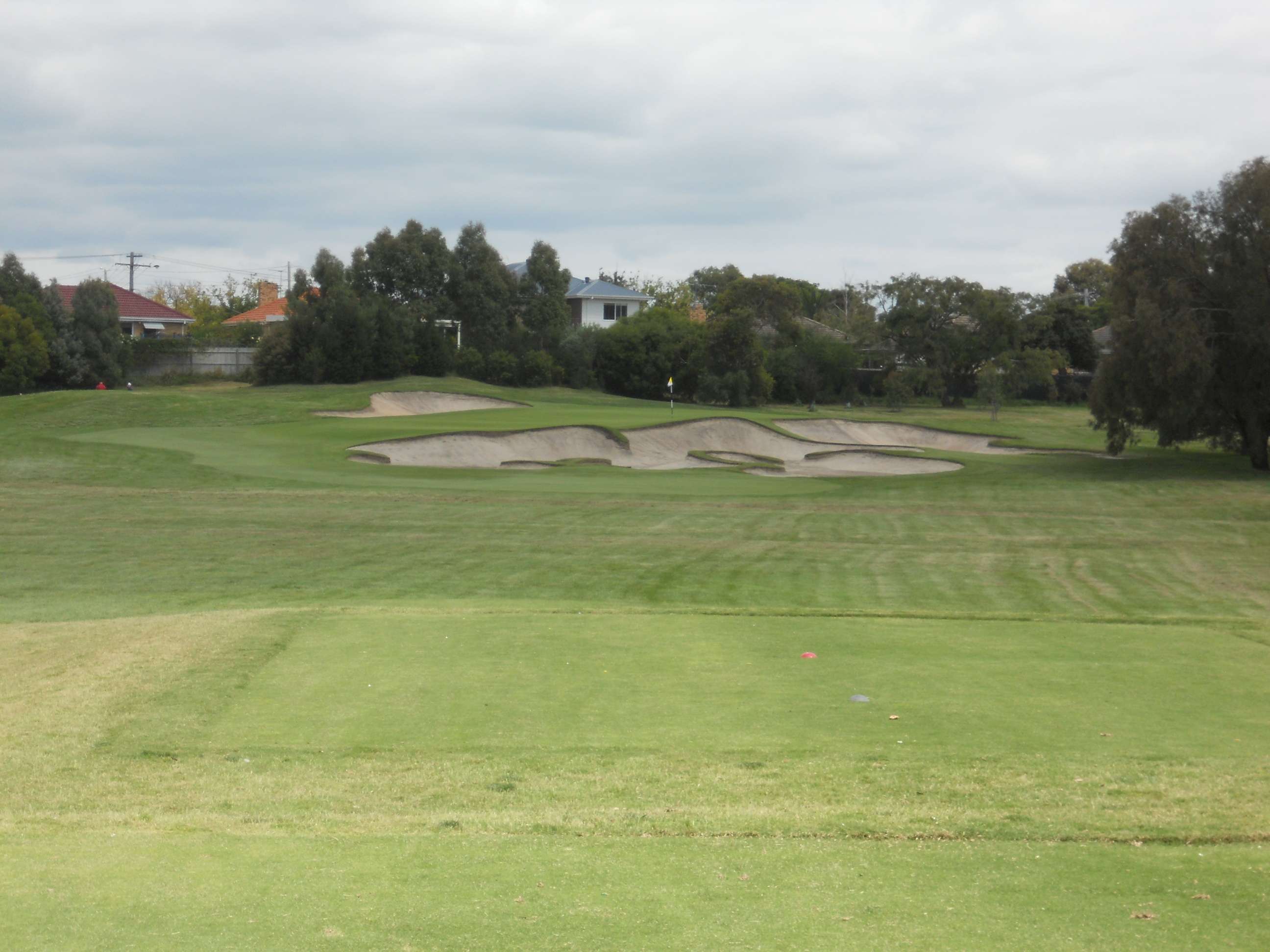
The difficult 11th calls for a faded long iron to a green flanked by trouble

Approaching the 12th, its green pitched steeply from back to front

A wonderful short par three, the 15th

Course name: Yarra Yarra
Location: Melbourne, Victoria, Australia
Four Word Course Review: Par threes the standout

While many of the holes at Yarra Yarra are currently a bit overpowered by trees, it has a handful of great holes and a set of greens that I loved for their putting difficulty and approach challenge.

The likes of the 5th, 9th, 12th, 13th, 15th and 18th greens were difficult to read and really rewarded a ball placed below the hole. A number of them break much more than it looks like, which I credit to the long, steady slopes on much of the course making it hard to work out what's flat and what's an easy slope.

The 15th especially was a fantastic green for a short par three, coupled with some vicious bunkering. The steep tier rewards precise distance control and, with a front pin, gives the imaginative golfer options for working the ball towards the hole either from the tee or when recovering from the sand. As a similar beast to 13 at Royal Melbourne (East), 13 at Royal Melbourne (West), 10 at Kingston Heath and 11 at Metropolitan - ie. flat land, plentiful bunkering, bold green - I'd rate it the best of the bunch, which is no mean feat against that field of contenders!

But for all that praise it's probably not even the best par three on the course - with that title probably claimed by the 11th, flanked by deep, expansive bunkers and the green set up with something of a nod towards the reverse Redan concept. A great opportunity for the talented long iron player to show off his skills.

Another standout is the long par four 5th, the drive calling for a fade over a bunker that unless the hole is into a strong wind is likely to be flown with ease by most players.The approach is from a hook lie that will assist with the draw into the green than the land and the bunkering combine to call for. Recent technological advances have probably reduced its challenge somewhat, but it's still a smartly designed hole over quality land with great scale to the features (which is lacking two holes later at the 7th, the left-hand greenside bunker dwarfing the green).

The par five 9th has a lovely lay of the land green that falls from right to left, while the par four 2nd makes good use of some lesser land, with smart bunkering inside the fairway and a tricky green.

The 12th is a great example of the tree encroachment's effects. The daring line down the right, over the fairway bunker, is made less tempting by the thick trees on that side. But, as with the 3rd hole (which has recently been altered to move play away from the boundary), the tree coverage is necessary to keep balls away from neighbouring homes. Trees removed from the equation, the 12th is a brilliant hole.

Unfortunately balls in backyards = expensive repairs and legal exposure, so while the new 3rd might not be a great hole in everyone's eyes, it solves a major problem and expense for the club.

There's a lot of work underway at Yarra Yarra to recapture former glory and lift many of the holes to the league of the standout holes, with tree removal planned.

Let's hope it continues, because the land, the best holes and the incredible Spanish clubhouse will really shine when the ongoing tree removal and subtle redesign work on several holes has been completed. Tree removal will not only increase playability, more open vistas would give the property a greater feeling of spaciousness and also open up views of the course from the clubhouse (and views of the clubhouse from the course!).

Granted, clubhouses are a sidenote to the merits of the course, but at Yarra Yarra the clubhouse really is something special, both inside and out, and desrves special mention.

St Andrews Beach

If the opening tee shot doesn't get the juices flowing, you may as well head back to the car

The first real temptation comes at the 2nd, with the gren well within range for many, especially downwind, but plenty of sand looming for the mis-hit shot, whether off the tee or on the approach

A punchbowl green awaits behind the severe bunkers right and closely-mown slope short left at the par three 6th, and with a bold slope at the back of the green off which to work the ball, there's no need to flirt with being short

Viewed from the right-hand side, the boldness of the 7th green is evident, and to a back pin it's great fun to land a ball on the front of the green and try to run it up the slope

A drive that challenges the fairway bunkers at the 9th sets up the prime line into a fearsome bunkerless green hidden behind a steep slope


I'd love for the 13th green to fill more of the bowl it's set in

Where the 2nd hole asked for a draw if you wanted to go for the green, the 14th rewards a fade, and the lay-up must be played well left if it is to stay on high ground. Anything that errs toward the centre will feed down to the low right-hand side of the fairway, leaving a blind pitch to the green over a deep bunker

If you can nestle your drive near the centreline bunker at the par five 17th you'll be in range of the green (visible over the LHS bunkers), which although blind from the driving zone is a tempting proposition with the land to its right feeding the ball toward the hole

There's a massive benefit for cutting the corner at the final hole, with a kickpad hidden over the rough-covered RHS bunker adding a good 30 metres or so to your tee shot

Course name: St Andrews Beach
Location: Mornington Peninsula, Victoria, Australia
Four Word Course Review: Design accentuates superb land

What's the best value golf course on the planet? I've come across a few of the candidates in my travels: £55 for a midweek day ticket at Silloth-on-Solway (but even the £45 you pay for 18 holes at the weekend is a bargain!), £40 to play Woking after 4pm in summer, £50 for a day ticket at Brora, even $130 to play Barnbougle Dunes all day long is great value.

Right in with all of those is the value of paying just $55 to play St Andrews Beach.

St Andrews Beach would likely be a lot more well-known - and probably a lot more expensive to play - if it hadn't been launched as an ultra-private club before going broke and closing for a period of time.

But of course it's only such great value because the course is so full of great holes, rolling terrain and exciting shots. While the greens are the least dramatic set I've seen from Tom Doak and his crew (who designed the course in partnership with Mike Clayton's firm), they're no less interesting for their subtlety.

The variety of St Andrews Beach immediately comes to mind when I think of how much I enjoyed it: varieties of length in the par threes and fours, variety in the land on otherwise similar holes (the driveable 2nd and 14th holes, for example), variety in greensites - some atop dunes, some benched into dunes and others hiding behind dunes.

While the bottom of the flagstick is unlikely to be visible from the approach area on at least 10 holes, that's largely a function of the rolling land. In very few cases is the shot significantly uphill. Some golfers will complain about such a high level of "blindness", but I don't share their misgivings.

What was driven home as I recounted my round was the number of different shots I was able to attempt into the greens: relatively short aerial approaches at 1, 2, 6, 8, 10, 11, 14 and 15, long irons and hybrids at 3, 4, 13 and 16 and the option of using the ground to work the ball toward the hole at 5, 7, 9, 12, 14, 17 and 18.

The terrain and vegetation feel extremely Australian to me and I like that the routing takes the golfer across the dunes on a number of holes, while also providing respite from the drama at regular intervals, where the holes run parallel with the ridges and valleys. In both cases, the holes fit the land and feel draped over rather then forced on the land. Very little earth was moved to build most of the holes - even by Doak's standards - and  that's evident in how natural the course feels.

I'd like to see the 13th green, recessed in a near-punchbowl, expanded to fill more of its amphitheatre, which dwarfs it currently. For the scale and boldness of the hole - which starts with a blind, uphill drive - the green seems undersized.

As the weakest link, I'd choose, without need to pause for thought, the 16th. I wasn't surprised to hear it was a late addition to the course to fill a hole in the routing. While it provides something different to the other one-shot holes, that's really all I could say in favour of it. With the slope fronting the green and the firmness of the surfaces, the ball seems destined to finish long or left (which is purgatory) if the player makes any kind of bold play for the green. On a course where longer walks from green to tee haven't been avoided, I'd have preferred a far shorter hole to take its place.

I really do think St Andrews Beach is better than it gets credit for being, and given it currently places 10th in Golf Australia magazine's list of Australia's best courses, that's no mean feat.