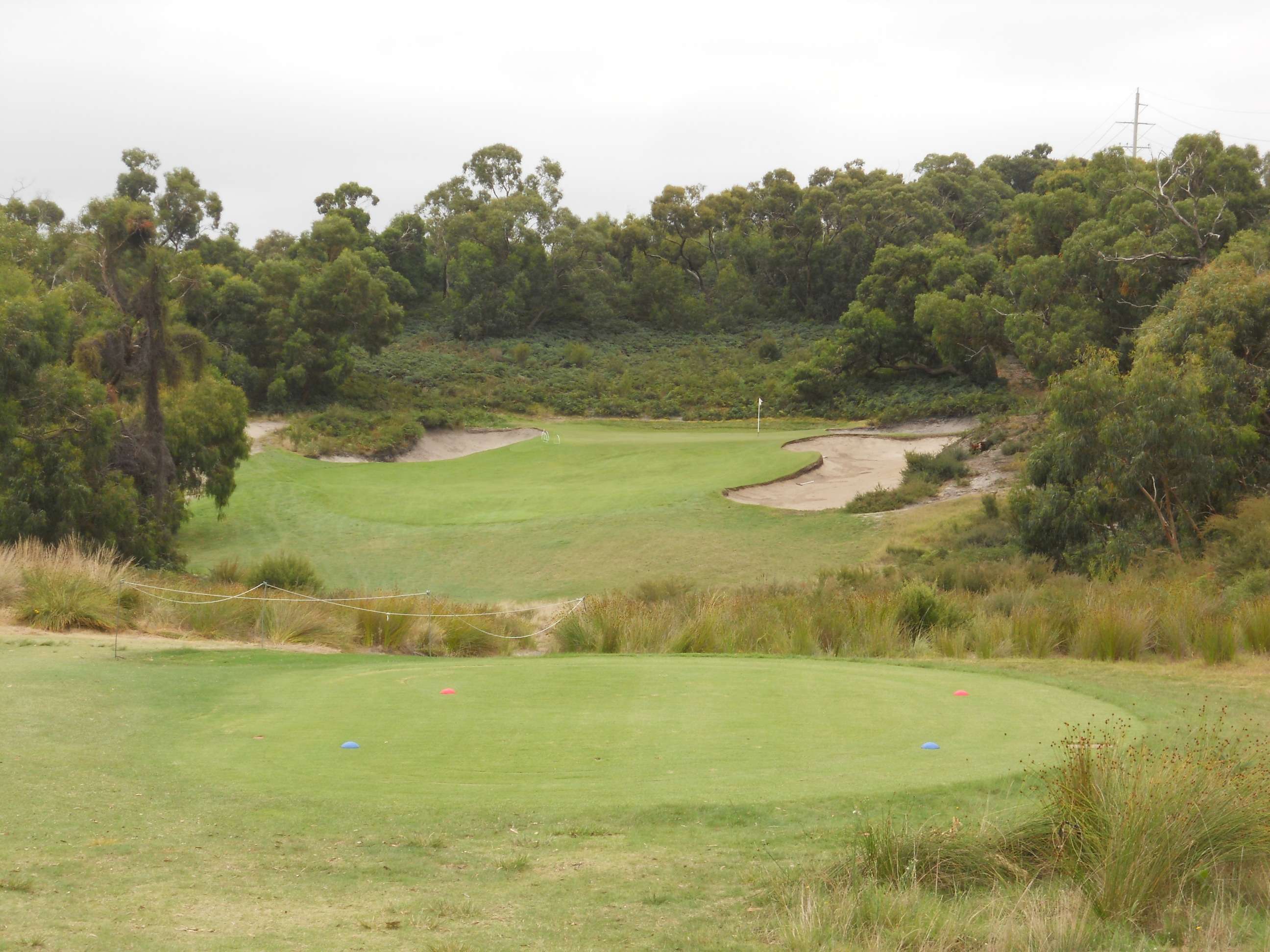
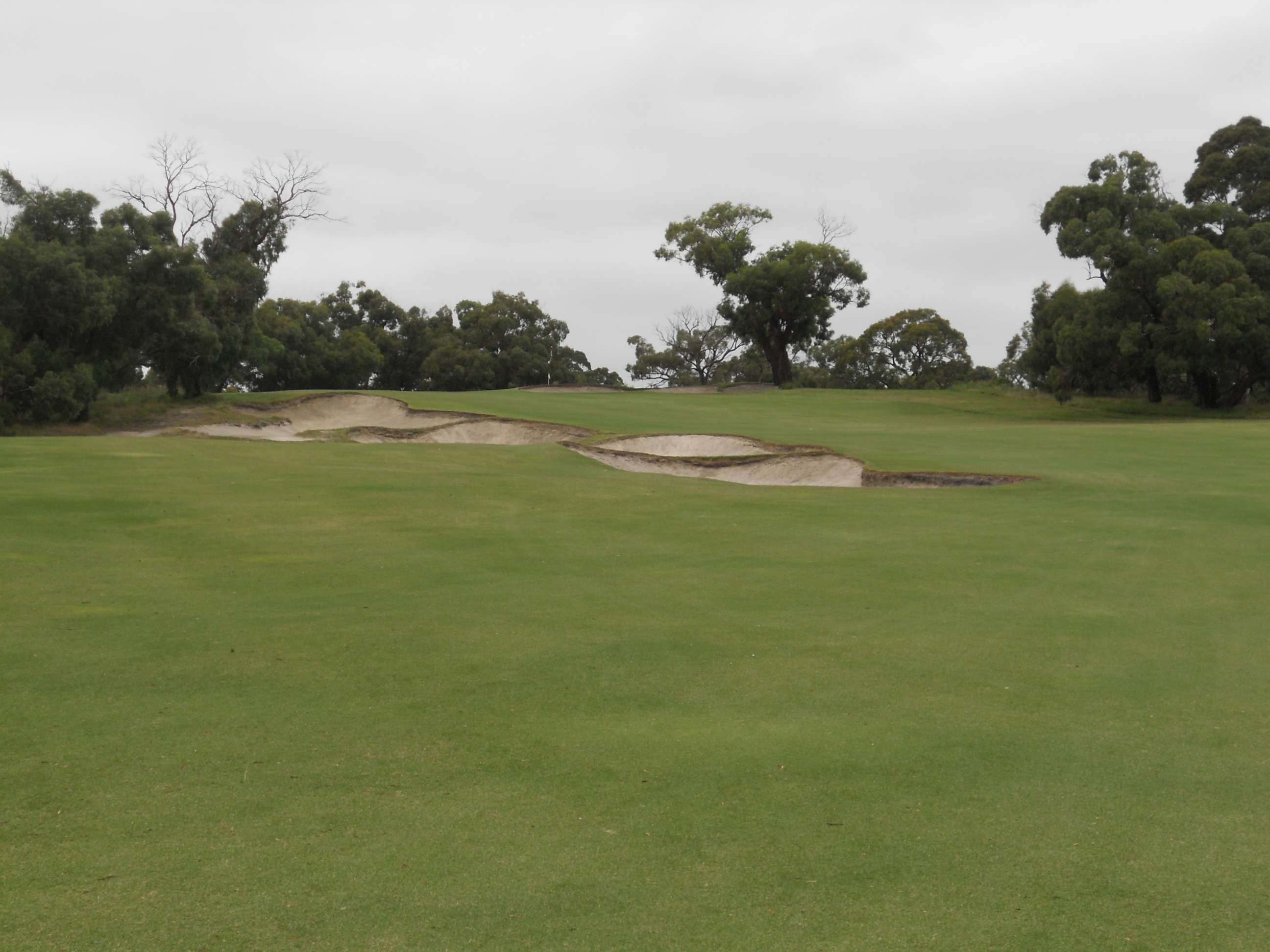
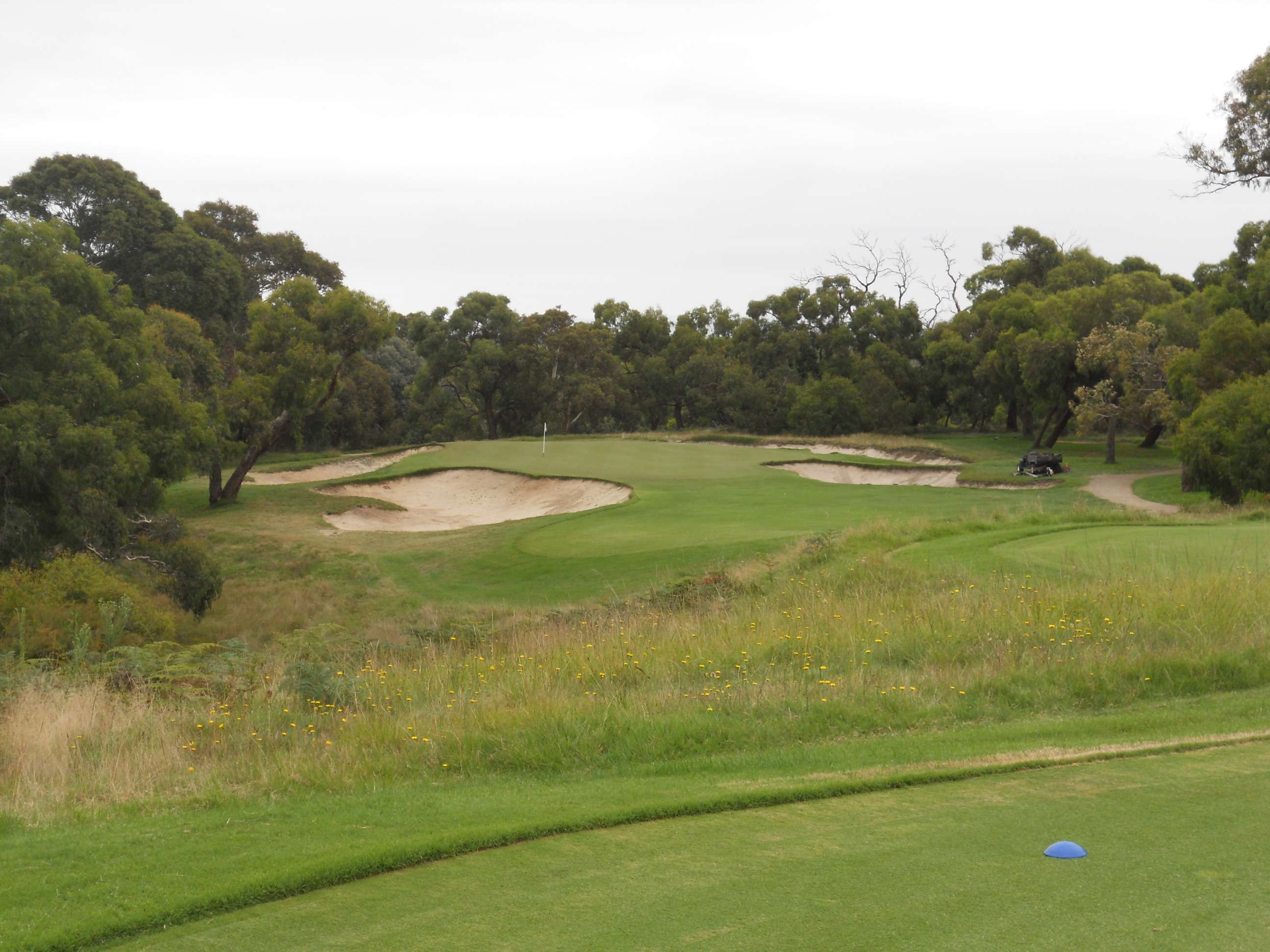
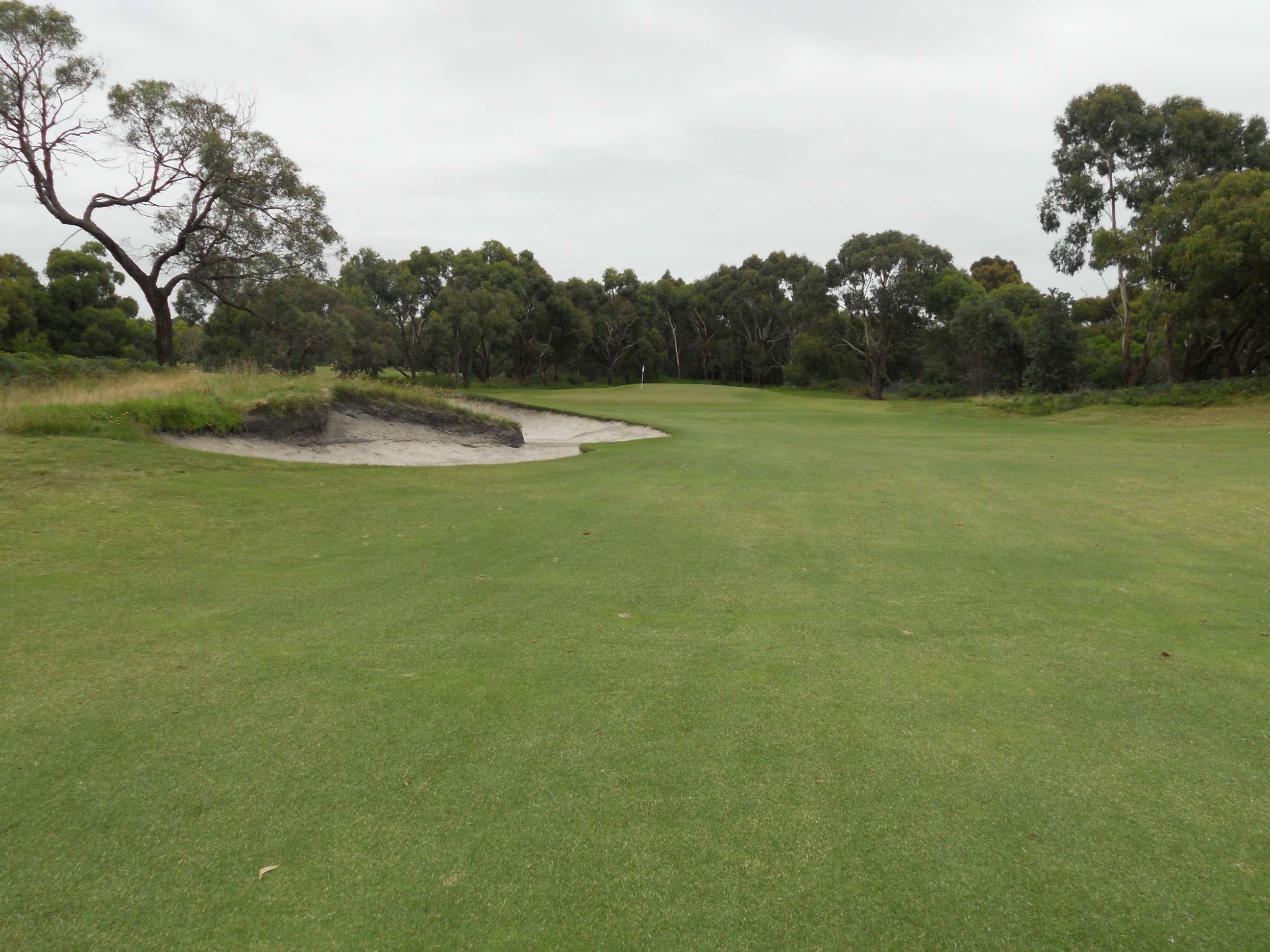
The slightly uphill nature of the 2nd is well camouflaged from the tee.
The drive at the short par five 5th is one of the best "how brave am I feeling?" drives on a course full of them.
The centreline bunker on the short par four 6th allows all golfers to select a challenge suitable for their skill level.
The 7th green features bold bunkering that eats into the putting surface.
The par four 12th, with its hogsback fairway and well-bunkered green is one of the best holes on the course.
The driveable 13th is a great example of both the bunkering at Peninsula tying in with the native vegetation and a bunkerless green that depends itself stoutly.
With its daunting front bunker built on a grand scale and clever false front/side, there's plenty to like about the 16th.
Course name: Peninsula (North)
Location: Frankston, Victoria
Four Word Course Review: A course for life
Wide fairways, greens surrounded by short grass, bunkering that's both visually appealing and effectively placed and greens featuring a fun mix of internal contours, false fronts and runoffs... what's not to love about Peninsula (North)?
It's hard to imagine a golf course that could be more fun to play day-in, day-out than this - length is rarely the feature that issues the challenge, instead it's a constant process of placing the ball with consideration for the next shot and deciding whether taking on a hazard is within your capabilities.
Of course both those things are at the heart of great golf architecture, but they're not seen regularly enough and rarely featured more effectively than here.
The opening hole, a slightly uphill mid-length par four, provides a great introduction to how well Peninsula's bunkers are tied in to the natural vegetation, while the rise in elevation is well camouflaged on the approach shot to a slightly domed green.
After another well-hidden rise at the par three 2nd comes the first real test of bravery (or restraint!) at the short par five 3rd, a drive over a smartly-placed fairway bunker brings the green into range with the second shot, a crack at the green that leaks right almost certainly taking birdie away if the pin is within the well-contoured front section of the green.
The 4th green is a fantastic L-shaped effort, calling for precision from the mid to short iron approach, with run-offs both long and right.
Completing the wonderful opening stretch are another par 4.5 hole tempting you to drive over a sculpted fairway bunker for a shot at the green from the valley fairway and a short par four with a diagonal centreline bunker running a great distance up the fairway, which sets up any manner of approaches to the blind green atop the hill depending on the wind and the player's preferences.
Six holes in, you can't help but be impressed, not just by the number of sublime shots on offer, but by the myriad ways most of the holes could be played depending on wind, pin positions and how well you're striking it on the day.
Further to that - and I was to discover in subsequent days that this is a hallmark of the Sandbelt - I could imagine my 76-year-old 38-handicap grandmother being able to easily navigate her way around without feeling overwhelmed, while my single-figure handicap game was feeling well and truly tested.
Again, it's something taked about regularly but seen on the ground all too infrequently.
While the holes from the 7th to the 11th may not assert themselves as among the best handful on the course, they are a great example of how well low-profile and bold design are each well-utilised in the right place, often depending on the nature of the land.
Subtle bunkering at the flat ground 9th and 10th holes is combined well with greens that play tougher than they look, and the fairway bunkering on the 8th hole - on choice terrain - displaying more panache reminiscent of the holes on the opening stretch. The 7th green's bunkering is also a highlight for the way it eats into the putting surface.
The 12th - a driver, mid-iron two-shotter - was perhaps my favourite on the course. The tee shot to a hogsback fairway where the point at which the ball will roll away is well-disguised to create indecision. The green is flanked by deep bunkering, demanding that the vagueries of the inevitable sidehill lie are handled without error.
Next comes a short par four in the same league as the 6th - the two of them setting a high standard for the rest of the Sandbelt to match (and of course I was to learn that Melbourne is a hotbed of great 270-300m holes). The green is a toned-down version of my beloved 6th at Deal, the recovery shots demanding deft touch, but allowing any number of approaches, from the putter to the lob wedge.
The final two par threes (14th and 16th) each utilise false fronts and ample bunkering, but set up in different ways to ensure there is no feeling of repetition.
Following each of those mid-iron holes are lengthy par fives, adding some balance to the course following shorter holes of the same par on the front. The 15th is probably the better of the two, despite a flanking creek not playing a great role in the strategy of the hole.
The home hole is an attractive sharp dogleg left that climbs significantly on the drive, acres of room to the right for the player who - as he has had the choice to do all the way around - wishes to avoid the hazard.
On a mixture of ideal land and some flatter areas, Peninsula (North) does well to provide masses of variety, the different character of the land creating an ebb and flow that mixes drama with subtlety.
I could play Peninsula (North) for the rest of my life and be absolutely content. When it comes down to it, that's as high a compliment as any course coud wish for.
Monday, February 28, 2011
Friday, February 11, 2011
Hamilton Island
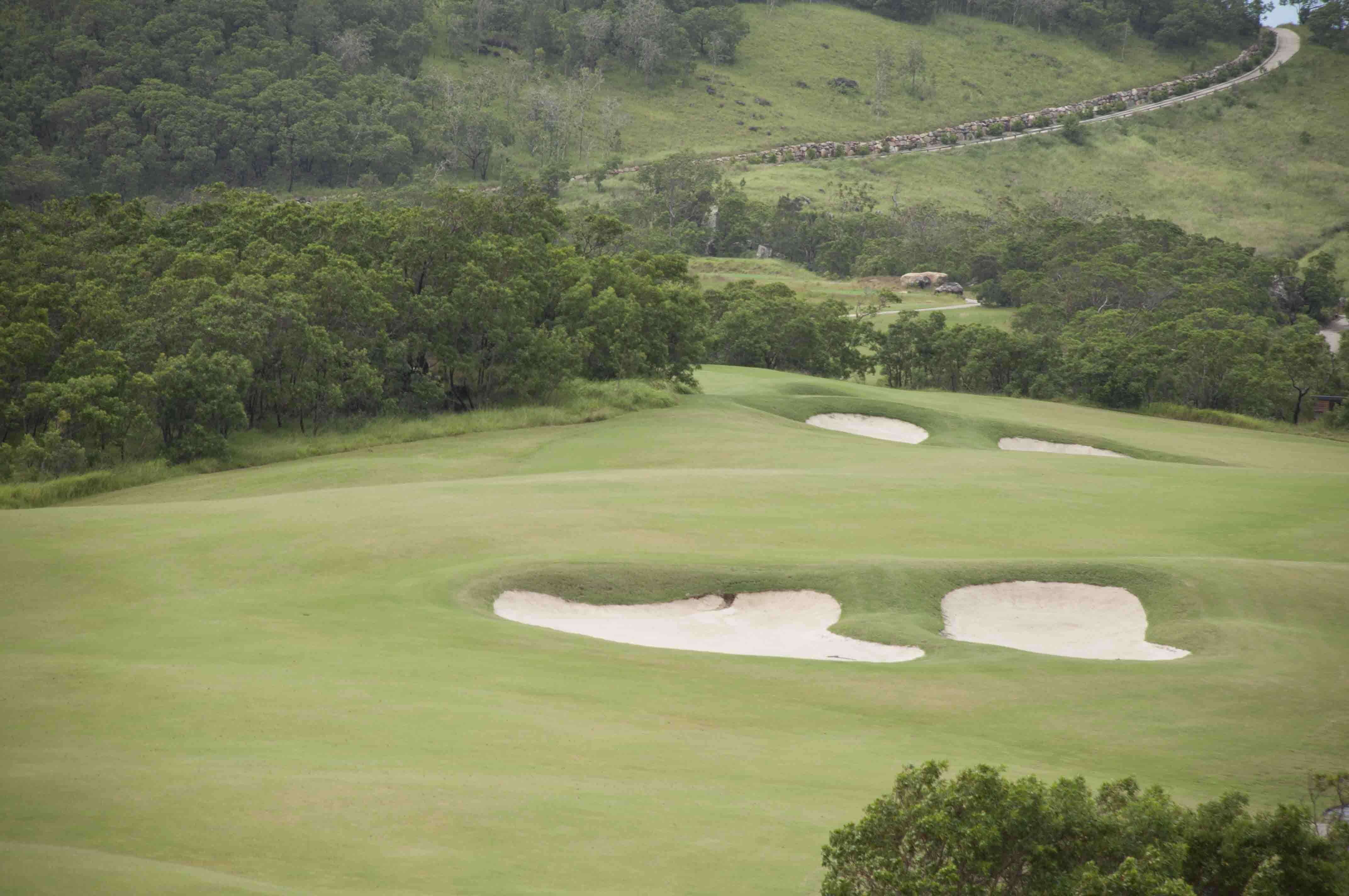
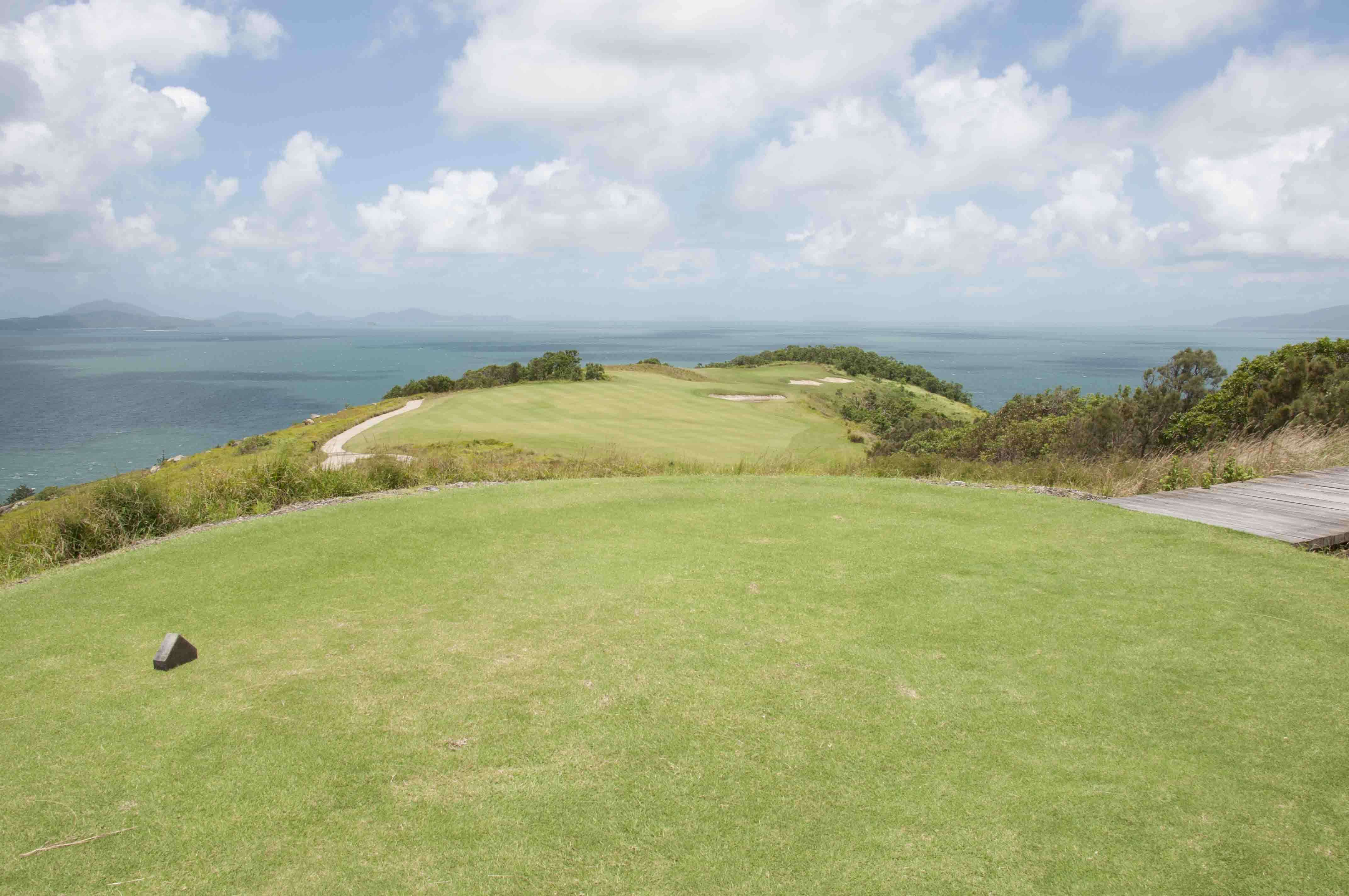
The opening tee shot. While the fairway and greenside bunkers are both down the right, there's an interesting "pick your poison" situation where a drive over the sand finds flat ground, while a safe shot to the left will mean a hanging lie towards the greenside bunkers. The green sets the tone by having more movement than it appearsThe 5th is a short par five with some well-placed cross bunkers in the lay-up zone and the green tucked in to the left, a bunker defending it from the layup area but leaving it open to the bold player who goes for it over the scrub
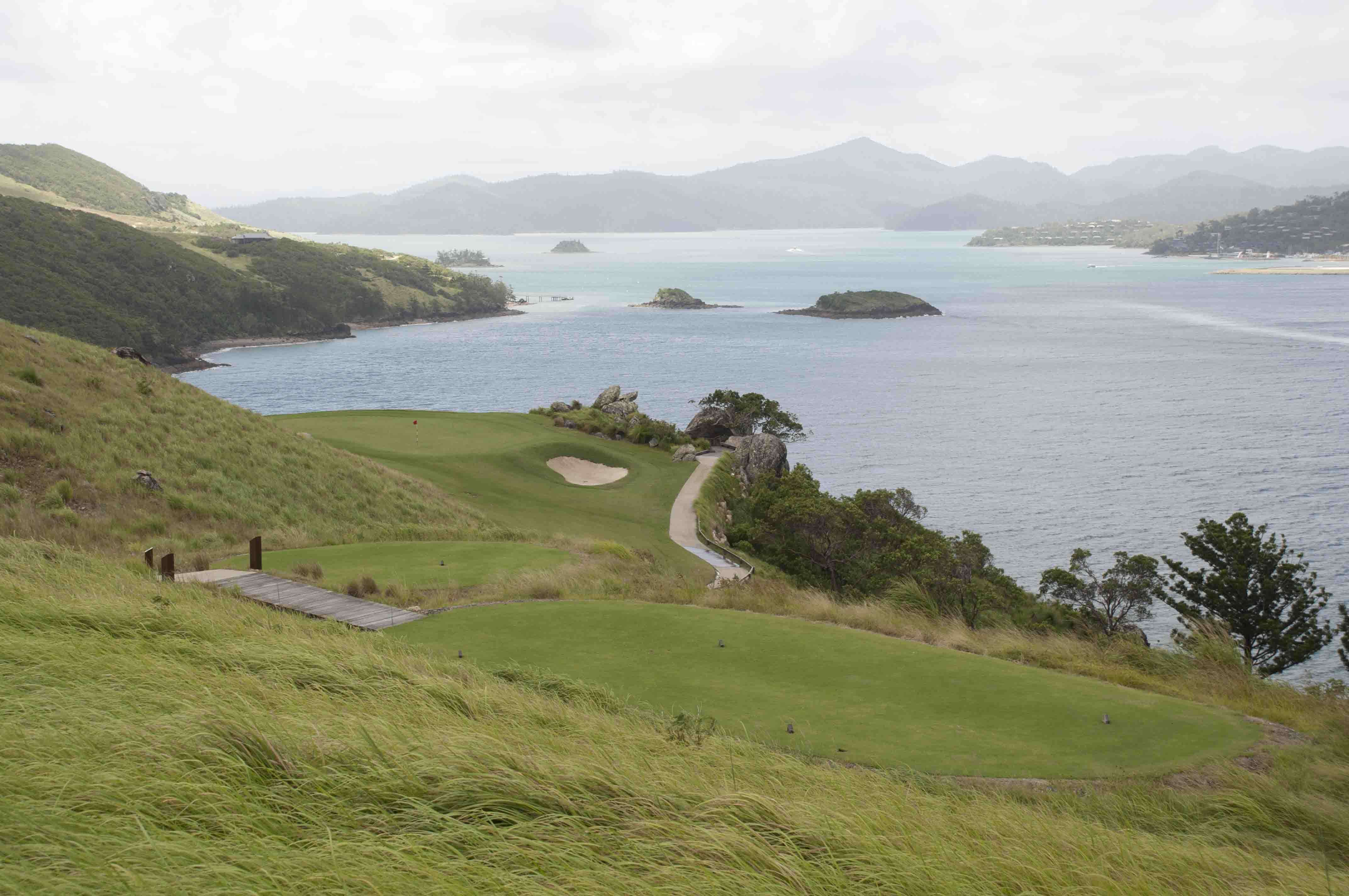
The enormous routing compromise that created the cart ride that sees you double back after playing the 15th is almost worth the value of this gorgeous par four played down a spit of land with 270 degree views of the coral-laced waters. As with the 1st, the bunkering makes more sense in practice than it appears to on a graphic, the green feeding from short left, a hill on the left 100m short making the right the favoured side from which to attack, while the fairway has ample width both short and long of the fairway bunker
The par three 16th drops downhill to a green that tilts steeply back towards the tee
For sheer design, the 17th might be my favourite hole on the course. The drive asks you to hug the LHS bunkers for a clear path to, and slight view of, the dell green, with a running approach a definite option. A drive down the right creates an uncomfortable second that must either carry a lot of scrub to an entirely blind target, or be cut in
Course name: Hamilton Island
Location: Dent Island, Queensland (next to Hamilton Island)
Four Word Course Review: Compromised routing maximises views
Hamilton Island and other Whitsunday islands have long been a popular holiday destination, but the region has always been short on golf, with only the basic nine-holer on Lindeman Island and Laguna Quays on the mainland, so the arrival of HIGC was eagerly awaited.
The course has been routed to take advantage of what are some sensational views - as good as anything I've seen anywhere on the planet - but the pursuit of views created some awkwardness with the routing, which is unwalkable, largely for the long distances between holes: driving back the length of the par four 15th after playing it to get to the 16th, a long uphill journey from the 10th to the 11th, driving past the 14th green on the way to the tee and a 5min drive through bush between the 17th and 18th holes.
That said, the moments that are created through some of those compromises are wonderful, though the length of the drive to the 18th robbed me of any desire to play the hole, I just felt done for some reason.
Perhaps surprisingly for a resort course that many are likely to only play once or twice, there are quite a few blind shots - most coupled with generous width, which is necessary due to the fact anything even a foot off the cut surface is likely to be lost.
Like Riverside Oaks (on Sydney's outskirts), the course handles some extreme elevation changes by climbing significant hills on the approaches, with greens set into the hill, the putting surface not visible from the driving zone.
There is some bunkering that feels like perhaps it was placed more to maximise aesthetics rather than create options, but there's some really nice shapes short of the greens to allow the creative player to bounce a ball in and avoid the sand. The fairways are also highly contoured - lots of big shapes rather than over-the-top micro undulations - I'd say in large part to manage the massive rainfall during the summer wet season.
The greens themselves have more action in them than they appear to in many instances - enough movement to make putting interesting, but sedate enough that they would remain playable in high winds.
All in all, this isn't classic golf, but it certainly isn't trying to be, so I am hesitant to criticise it for not being so. For holiday golf, it hits a lot of high notes and still presents a bunch of really interesting shots, and were you lucky enough to live in the area and play it a lot, I think there is a lot to be learned from repeat play, especially on the more reachable three-shotters.
For someone in the area for some R&R, it is worth playing ($150 inc. cart and ferry transfer).
Subscribe to:
Posts (Atom)