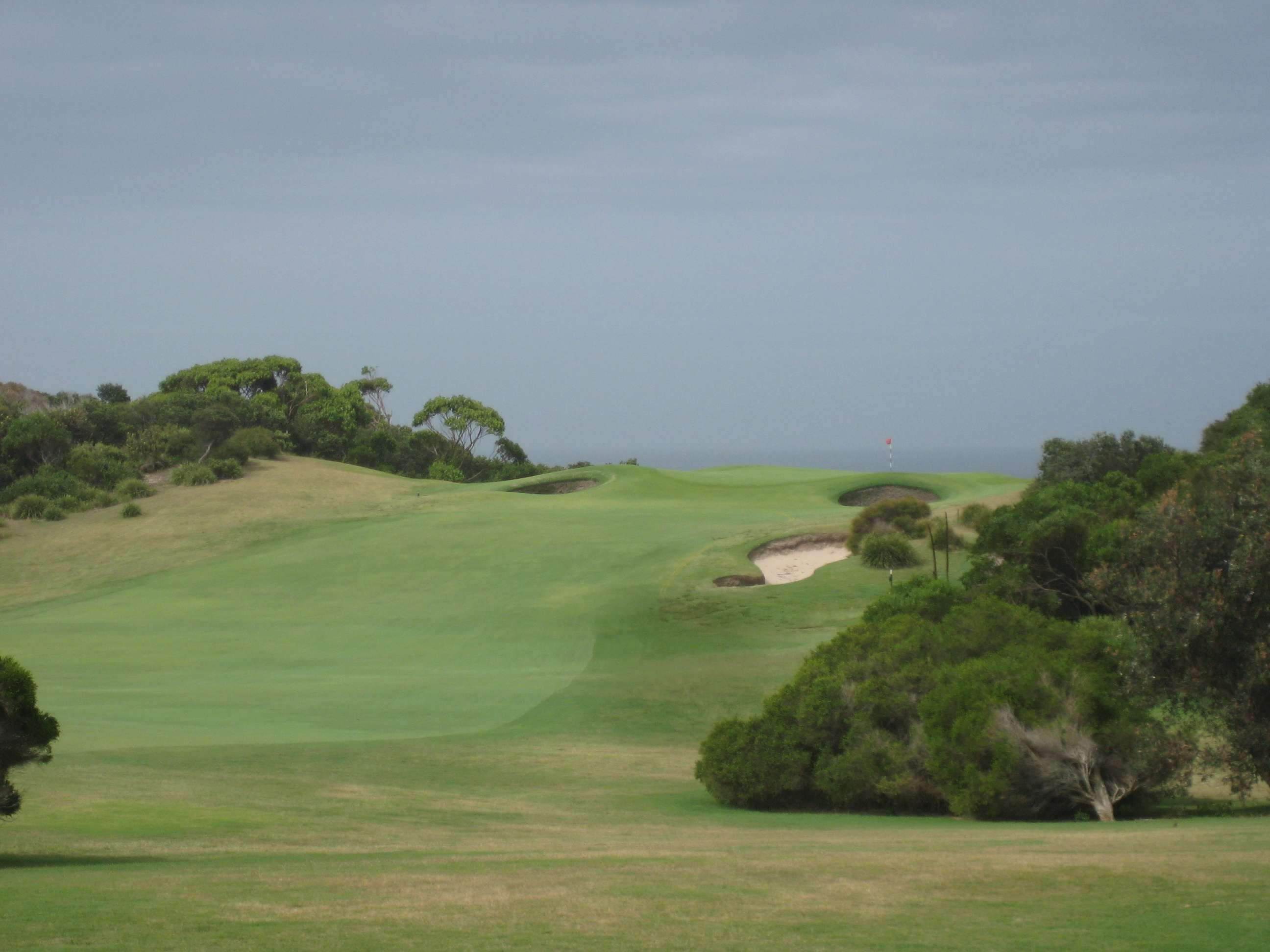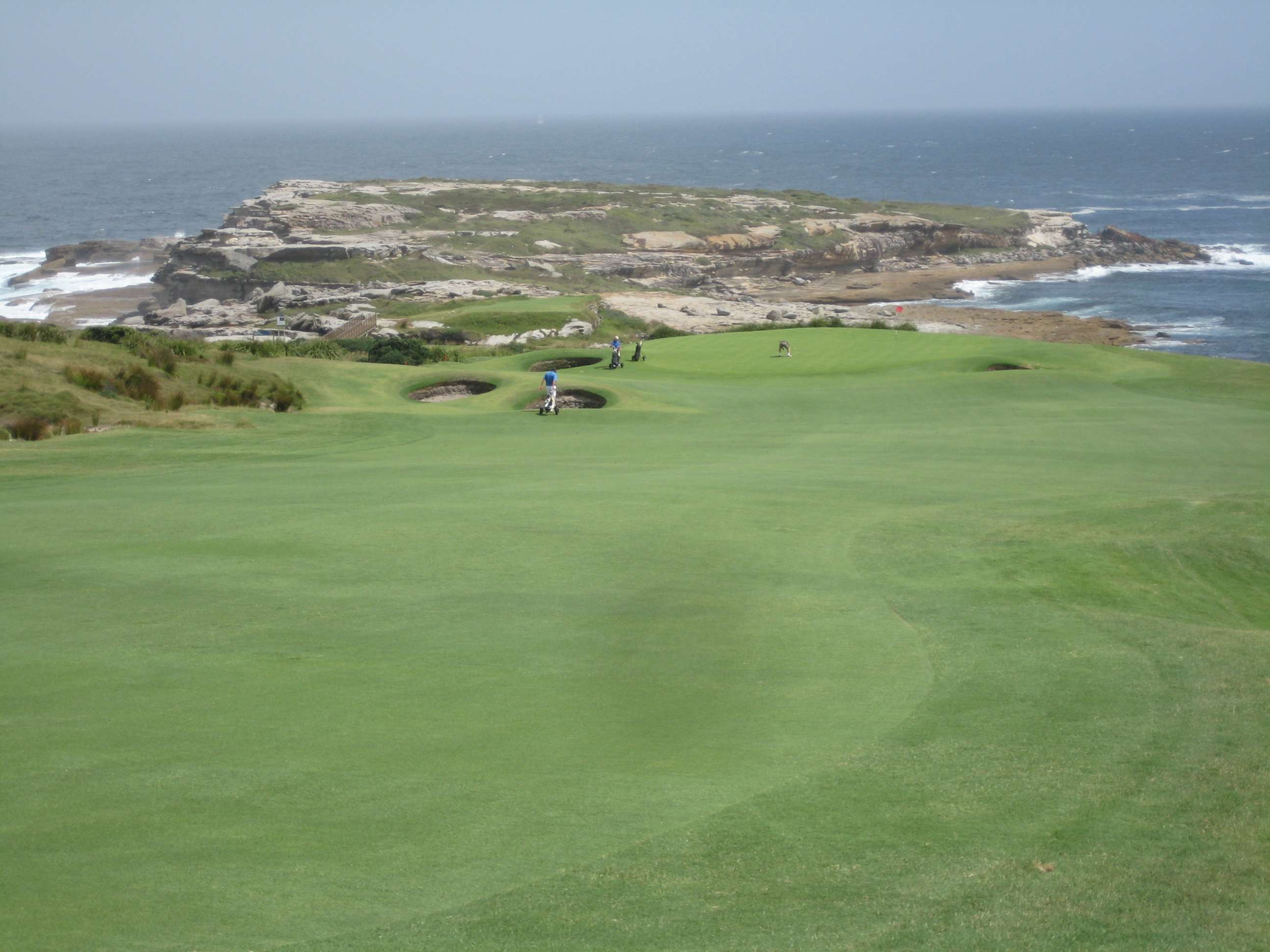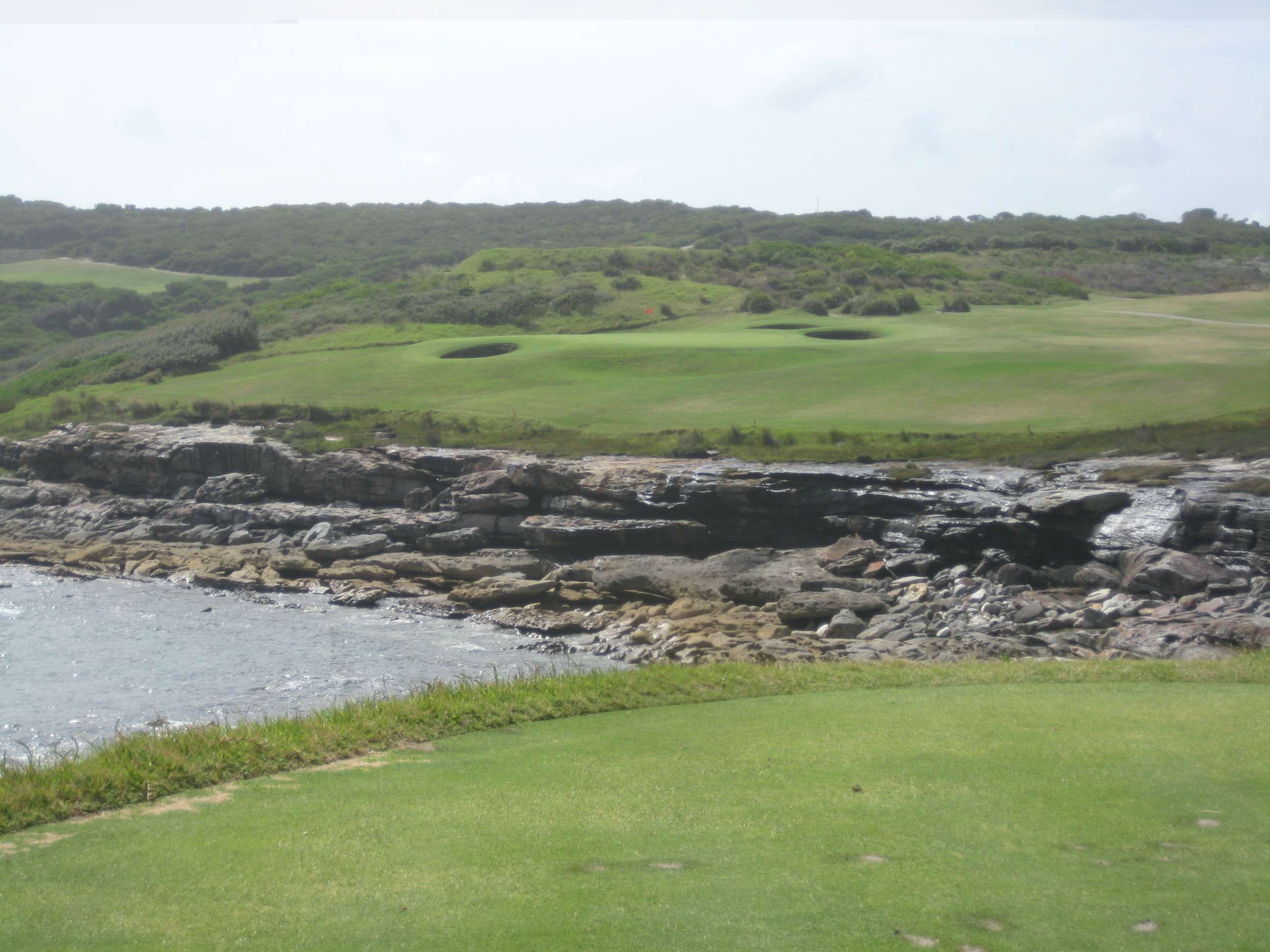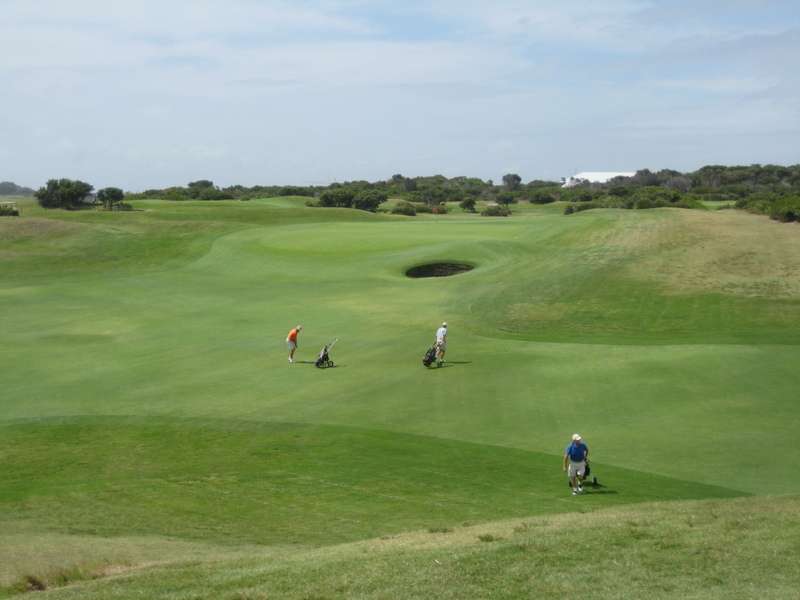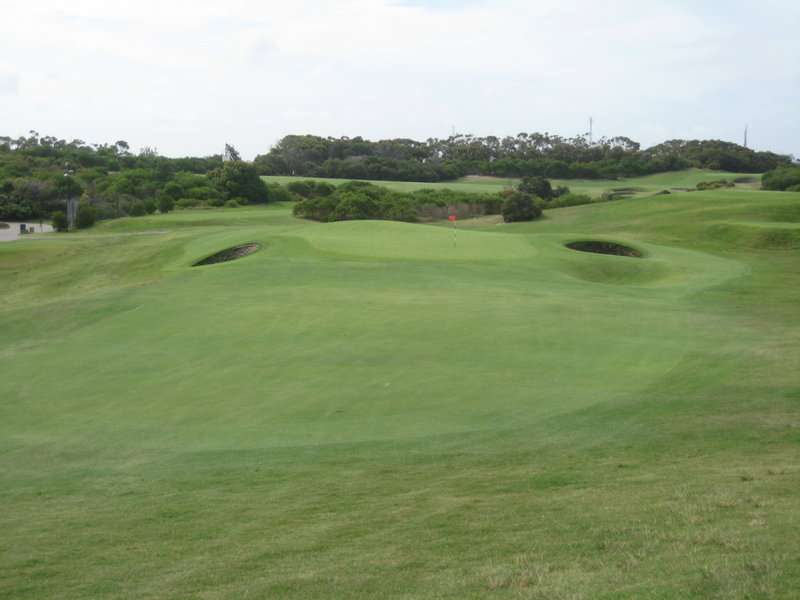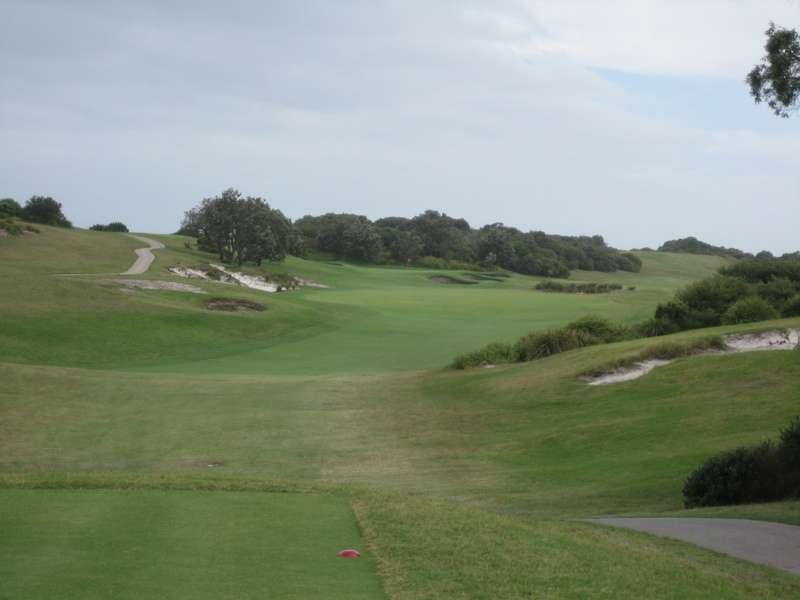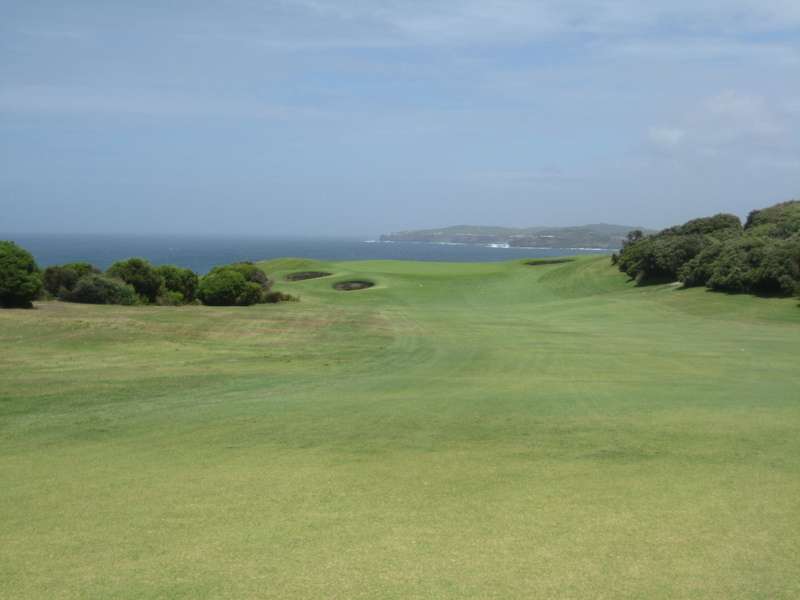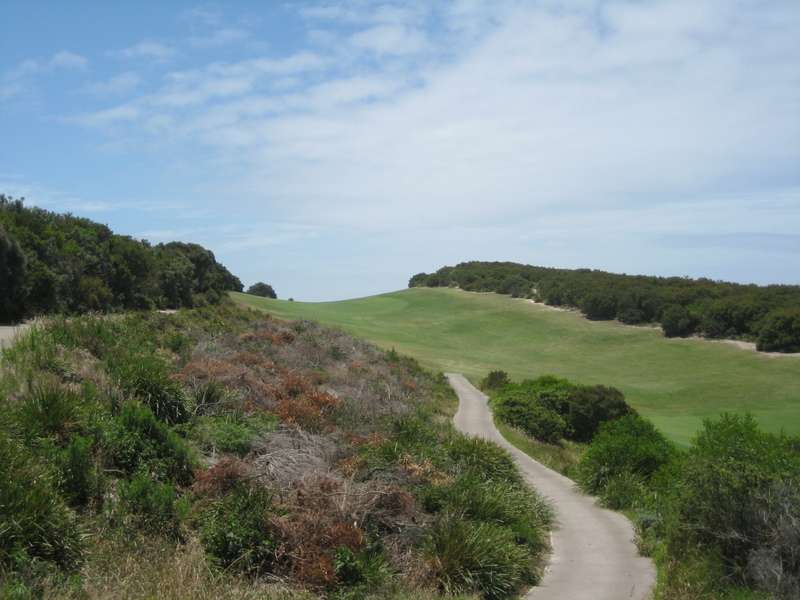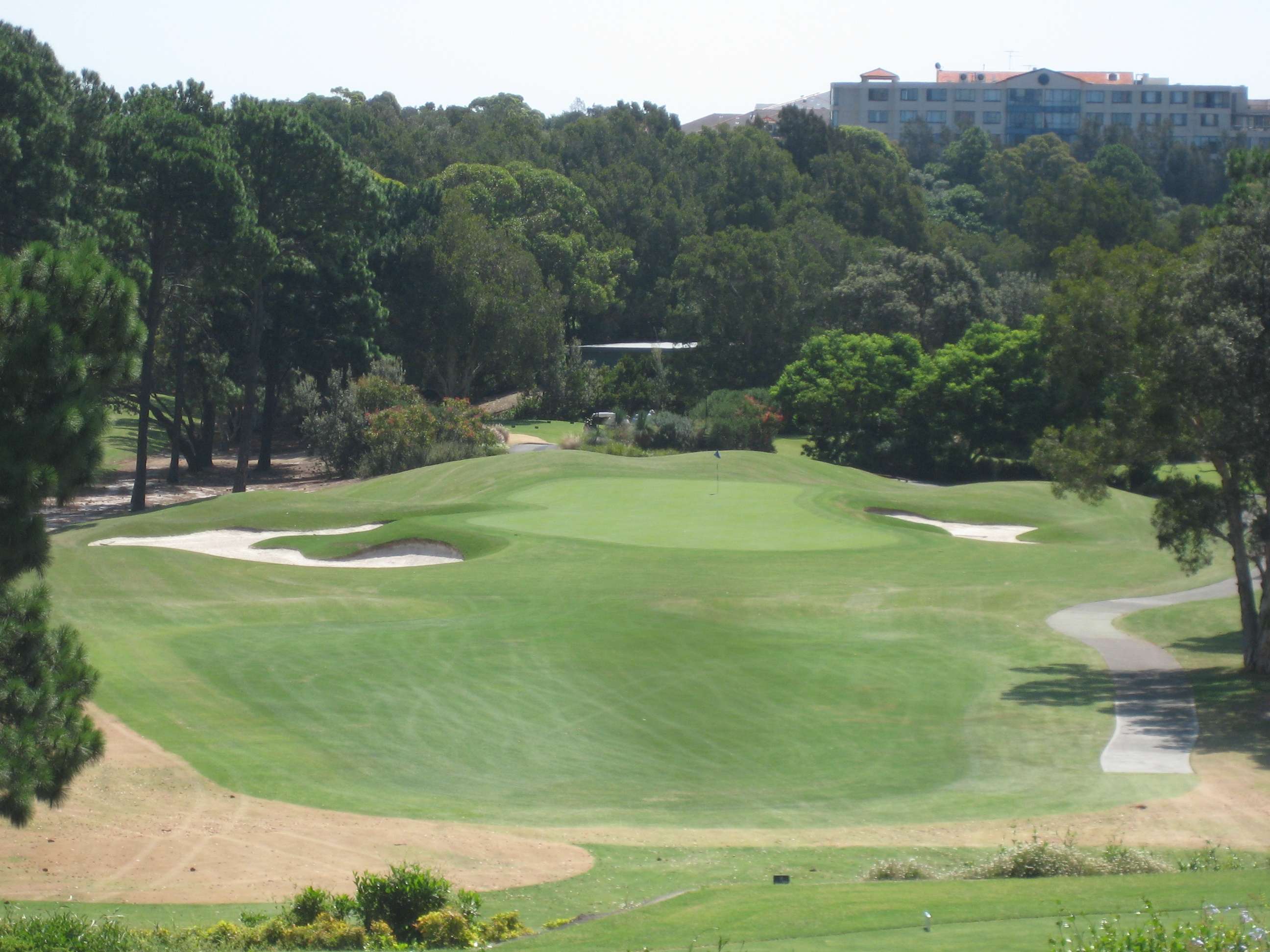
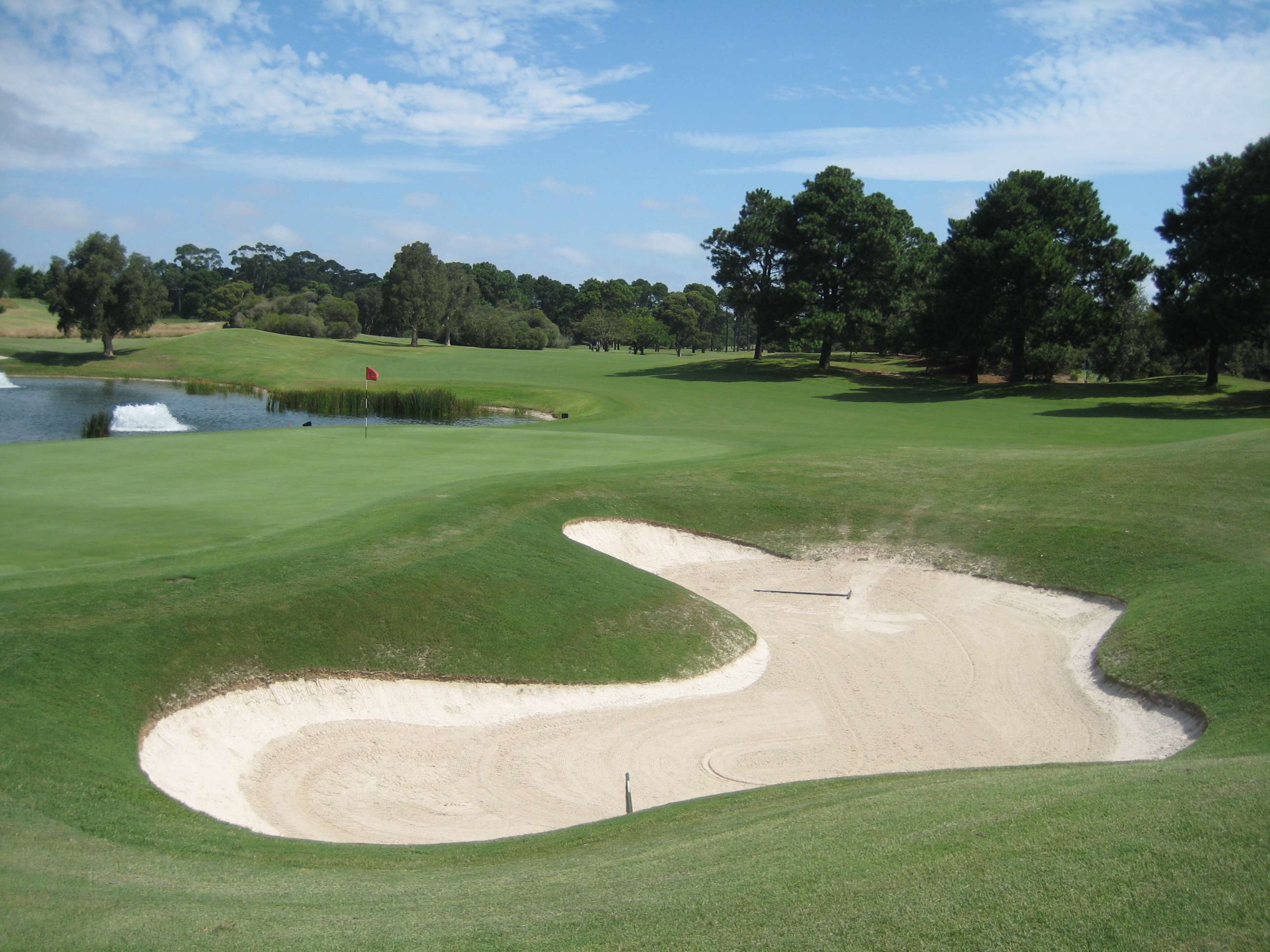
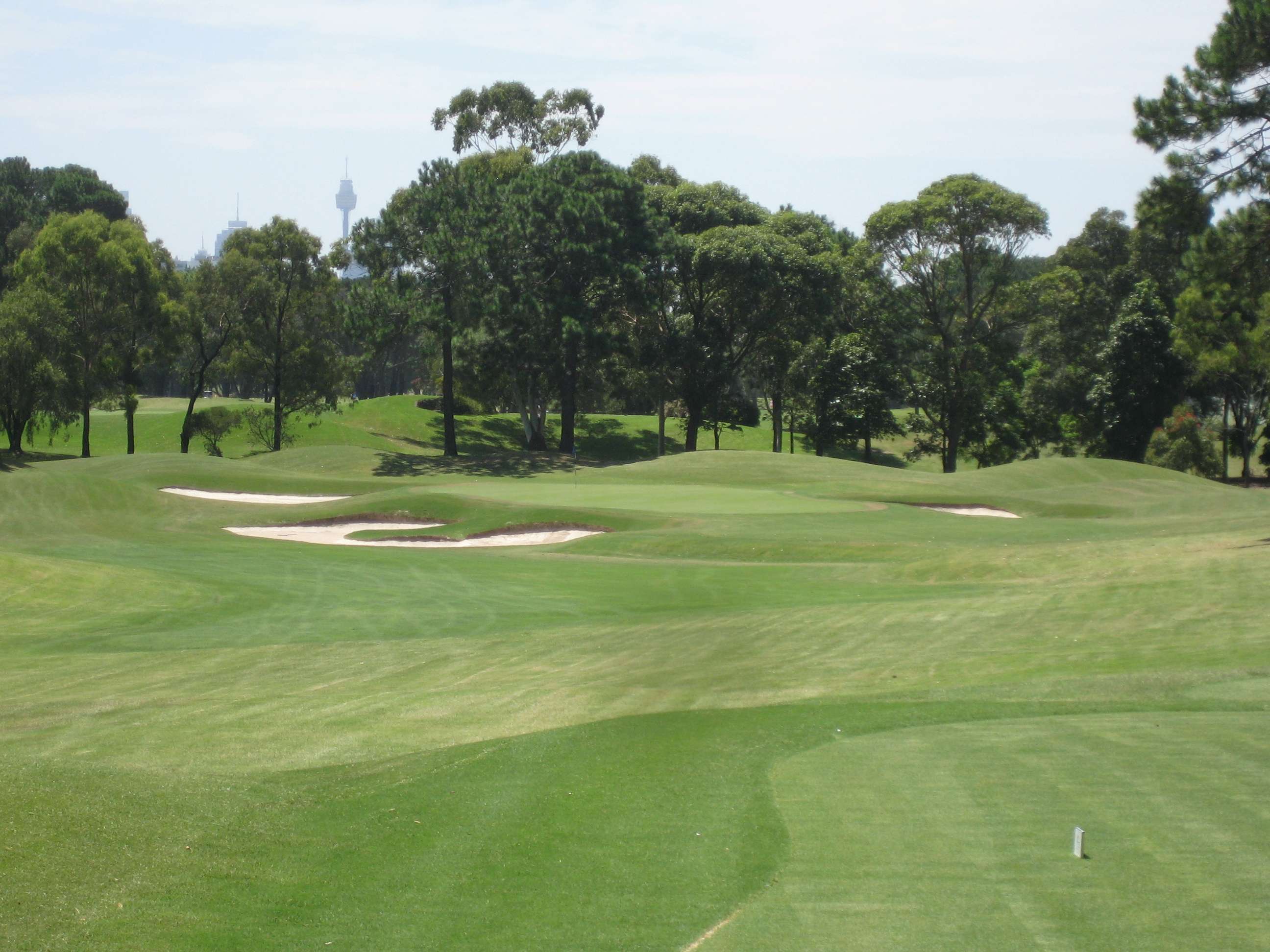
Viewed from behind the green, the 340-odd metre dogleg left 3rd would be a better hole were the trees on the inside of the corner removed and replaced by bunkers, allowing the better player to flirt with danger for a shorter approach that didn't have to carry the water

Course name: The Australian
Location: Sydney, Australia
Four Word Course Review: Maths test on grass
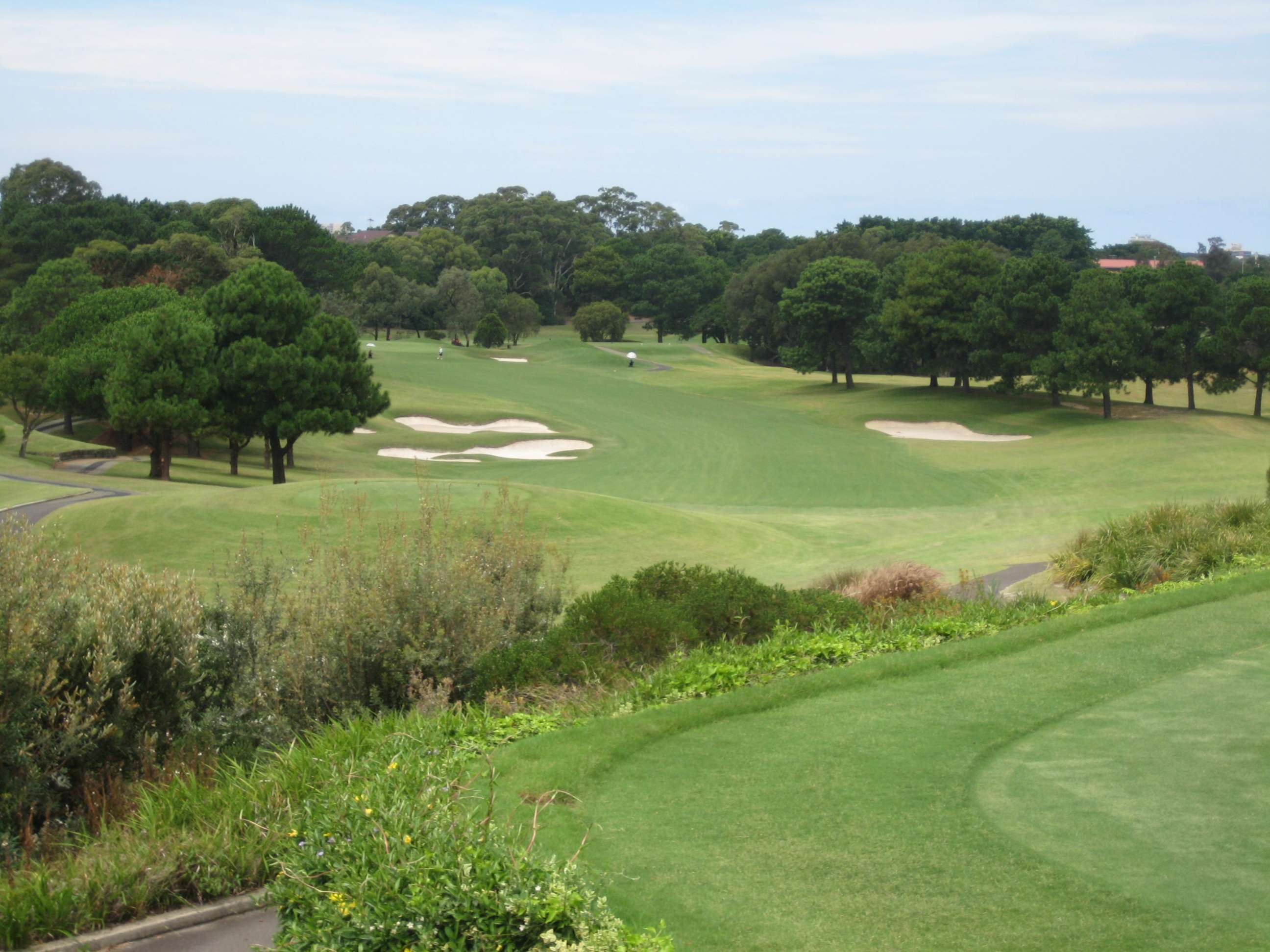
"So what's the line here?," I asked my playing partner as I surveyed the opening tee shot of the day. "Straight down the middle is good," he replied.
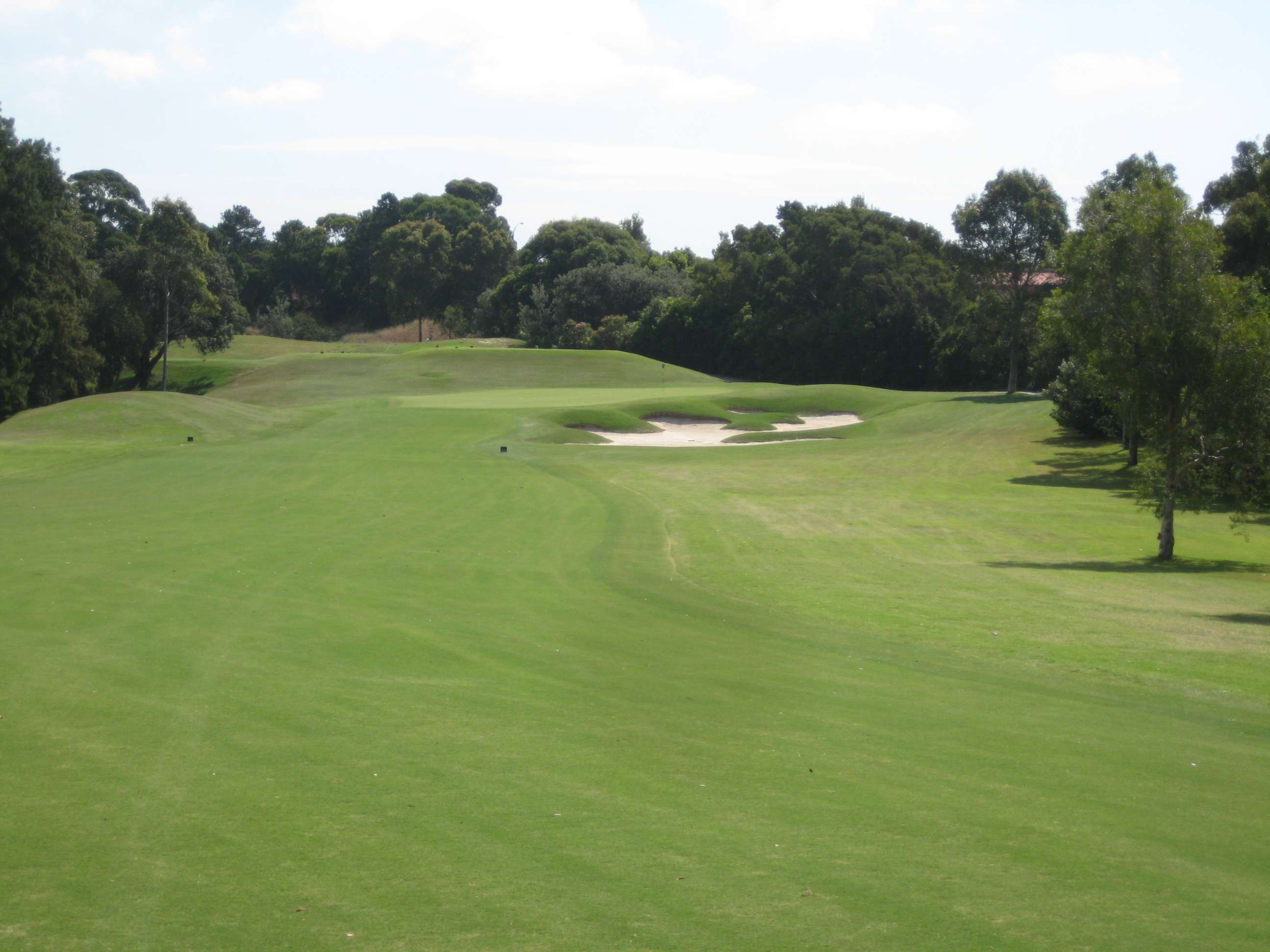
Five minutes later we're in the fairway and I'm shaping up my approach. "Bunkers both sides of the green?"
"Yep."
It was a discussion that we repeated over every tee shot and approach for a few holes before I got the message: Hit it straight and long off the tee, and if you miss a green, grab your sand wedge (if it isn't on the beach, it will be in two-inch rough).
The Australian is not a great golf course, but there is no question it is a great club, and does what it aims to without equal. Everything is prepared and maintained at the highest standard, the facilities are the equal of any other and the feeling of seclusion is remarkable, given six lanes of Southern Cross Drive flank the 9th and 14th holes and perhaps a hundred thousand people live within a Jack Nicklaus drive and five iron of the property boundaries.
It was Nicklaus in the 1970s who created the course as we know it today. The legendary Kerry Packer, a member at The Aussie, decided he would turn the Australian Open into one of professional golf's biggest events and that Nicklaus - in his prime and well on the way to 18 majors - was the man to redesign the dunesland course at which the tournament would be held (despite being a golf course design novice at the time).
The resulting course is one that you might expect the world's greatest golfer, at the height of his powers, devoid of much design experience, to create when charged with the job of building a tournament course.
Respite is rare, and even the shorter par fours (the 4th and 13th are the only two under 370m these days from the blue tees, which I am told is largely the positioning of the original back tees - about 6500m or 7150 yards) present significant challenge. The opening hole aside, the three-shotters will require three shots for most golfers and the par threes are all flanked both sides by hazards. The greens mostly feature subtle slopes, a must when the greens are set up to run attournament speeds.
One tremendous issue is the over the top containment mounding that flanks many holes, at odds with any shape nature might create as well as with the minimal undulation of the playing surfaces... in short just very much at odds with everything around it and as unsightly a ground feature as I've seen on a golf course.
There is a test at every turn, but that's not to say there aren't some great golf shots (and despite the jokes, not everything requires a fade!). The par three 2nd is eye-catching and also presents a wicked green and exposure to the wind, while the one-shot 5th has a smart angled green that tilts towards the water on its right - making a recovery from the left a nerve-wracking one. The 6th is a fun par four with a blind drive, but there's no risk to be flirted with on the left, which offers the prime line into the green.
On the back, the approach to the benched 12th green is fun, but it would be much more interesting were the bank on its right shaved down to provide an alternate method of approach for shorter hitters or in high wind. The par three 15th for mine was one of the better holes on the course, echoing the fantastic 13th at Worplesdon in London - though this hole far less beautiful - with the sand dominating the eye and the long green requiring precise distance control. At the next hole, an approach to the great green complex is far easier from the left, so why is the drive bunkered down the right?
Almost predictably, the final two greens are nestled against lakes, but at the final hole that feature is well paired with the "par 4.5" length that means better players can drive within range of the green, but may still be best served by laying up.
Variety being the spice of life, there's absolutely a place for a course like The Australian. If courses like The Valley Club, The Old Course or New South Wales are akin to a creative writing assignment, where parameters are few and creativity is a must, then this is a maths test, with set questions that have definite answers and where a mistake on the first part of a question can leave you with no chance to get the second or third parts correct.
That said, more short grass around the greens would allow better players to use their range of recovery skills and seperate themselves further from the pack, and where only one side of the fairway is bunkered, it really ought to be done with consideration to the most favourable approach to the green.
There's talk that The Australian is about to have some changes made to the course as many around it have either recently undergone or are set to undergo improvements. While some long for a return to the native dunesland aesthetic, there is ample potential even if the skeleton of the current course remains.