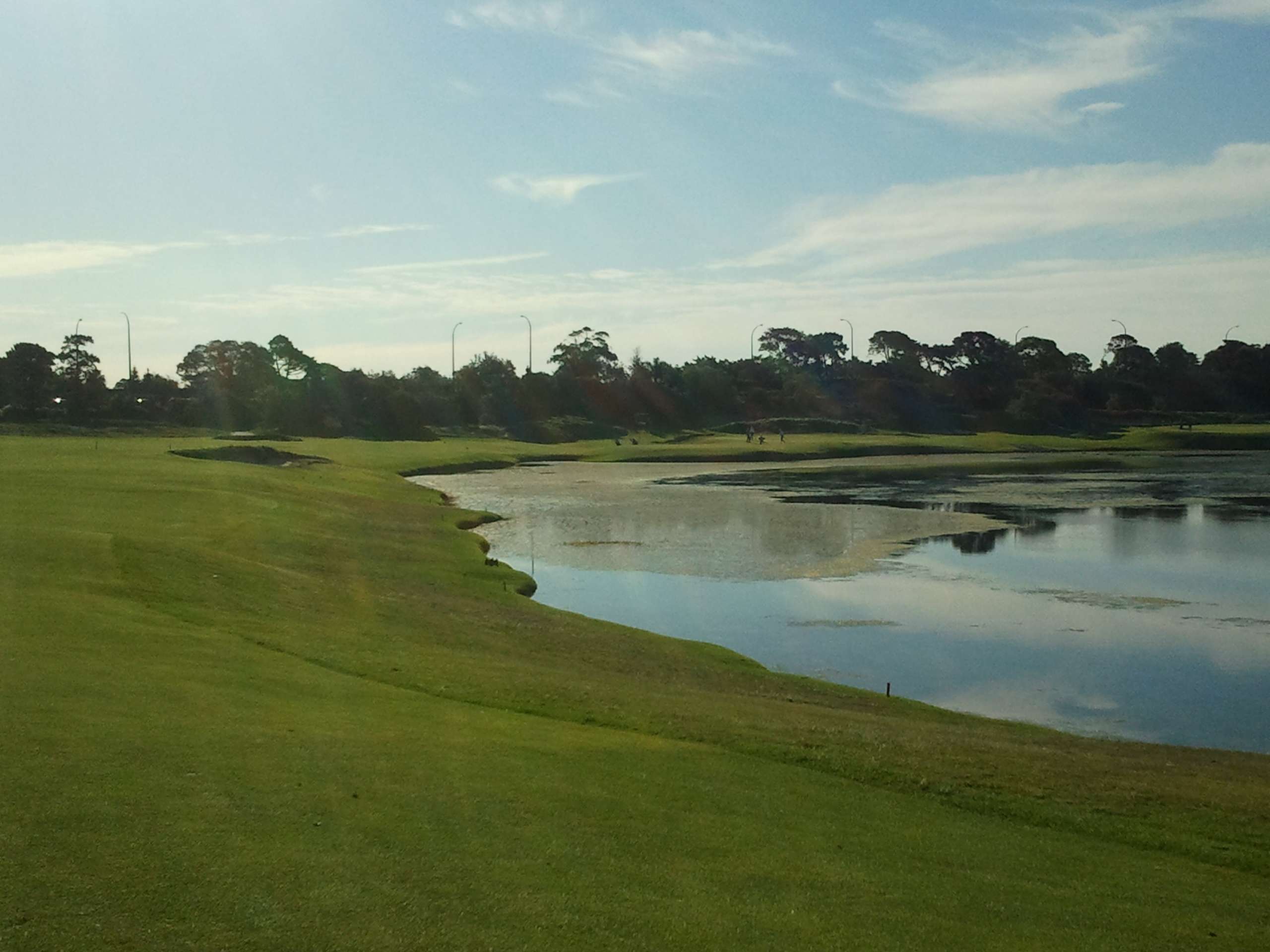
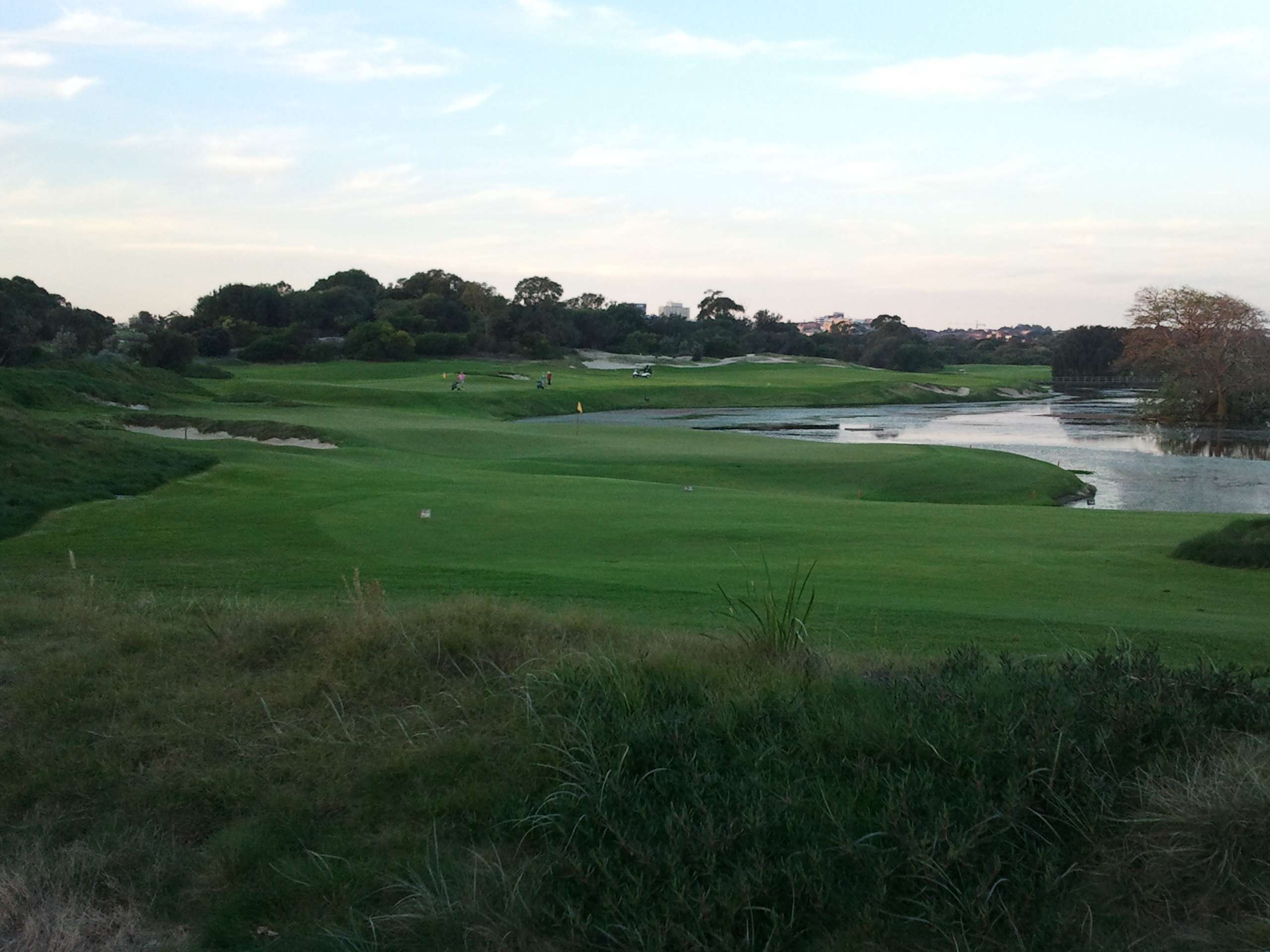
Viewed from the right, the 2nd green has deep swales both short and long
If you feel the bold strike to reach the 11th in two is beyond you, you must deal with a well-placed lay-up bunker
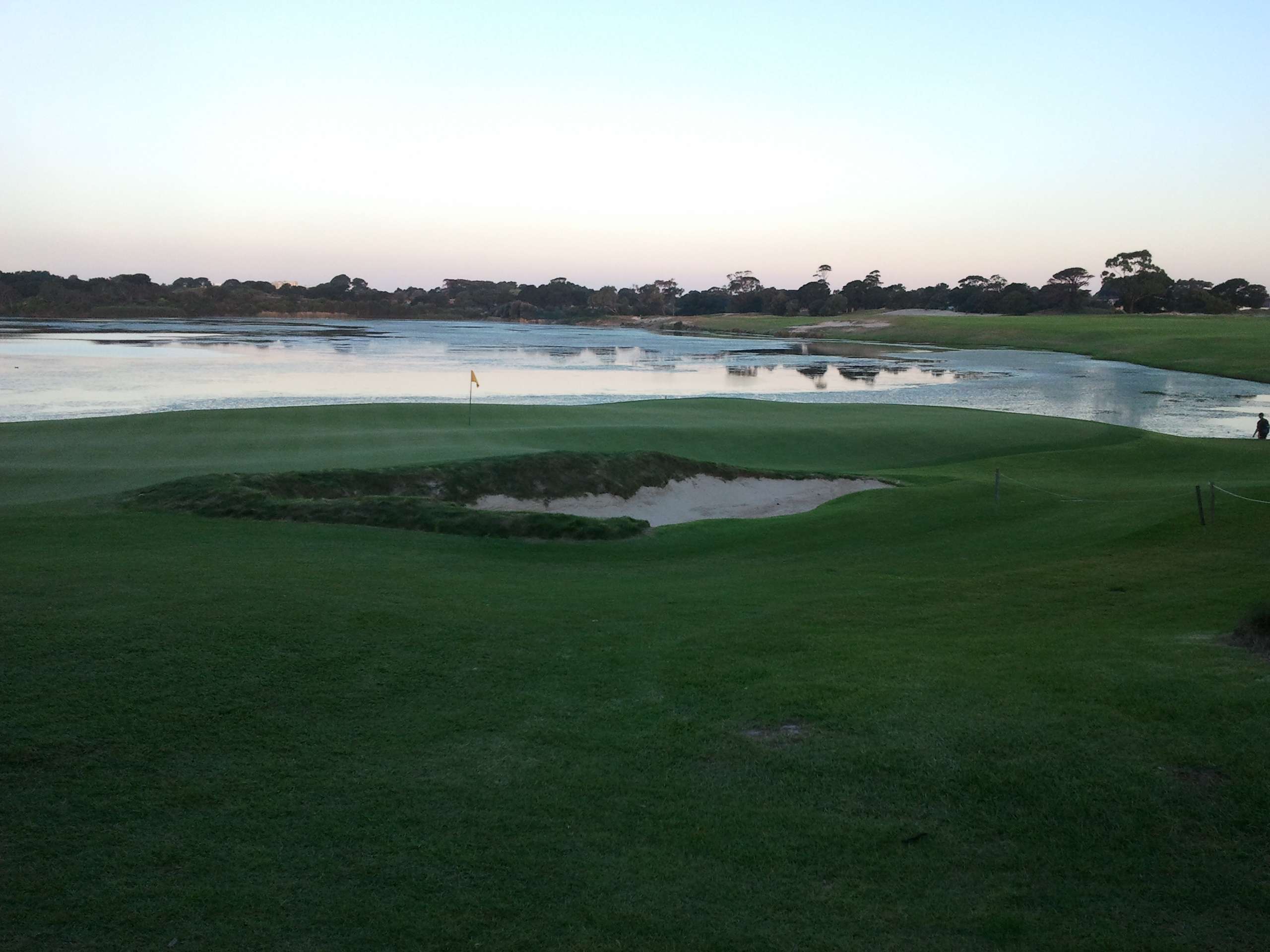
Looking back up the 11th at sunset
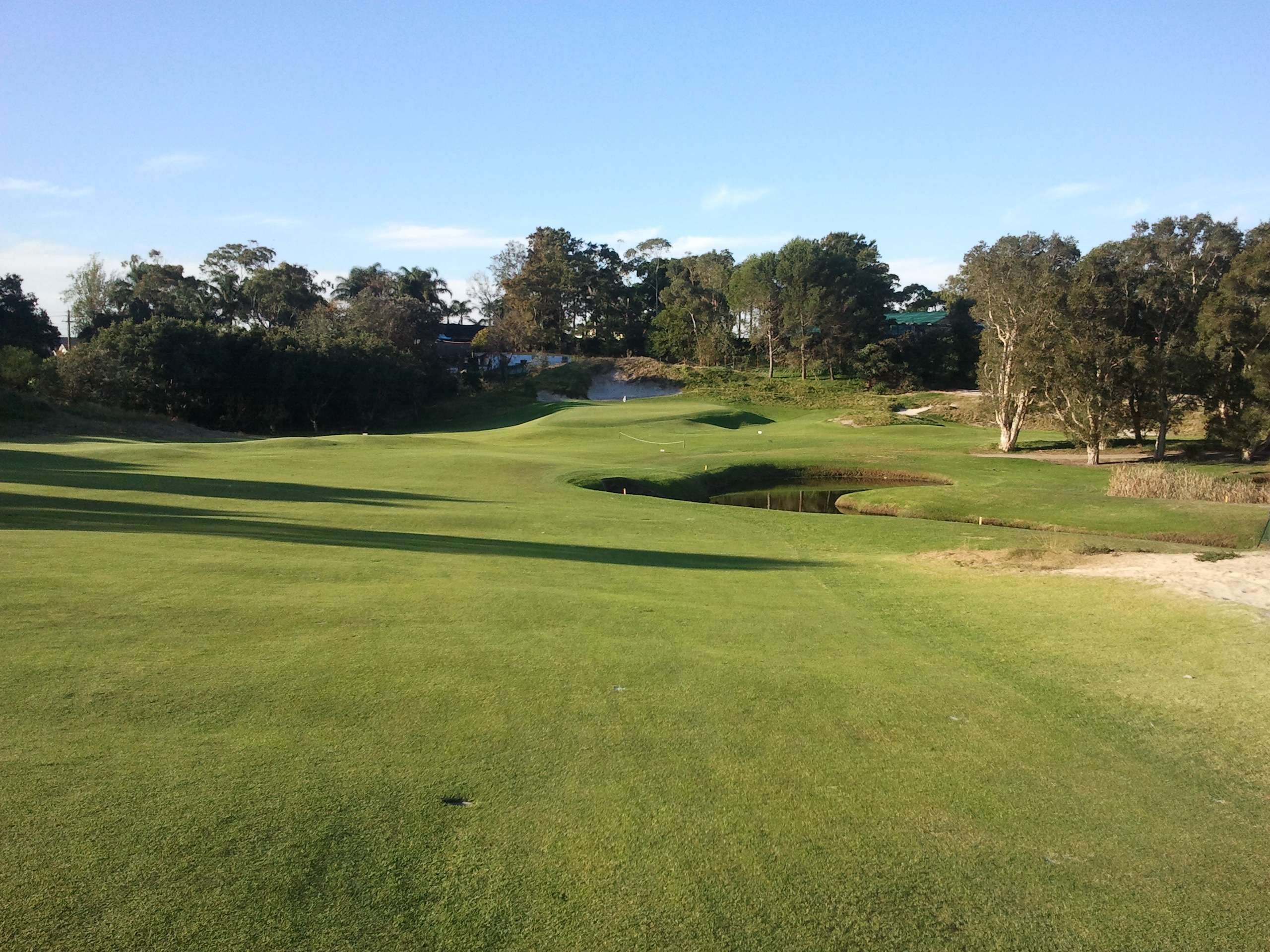
The 13th is among the most controversial - and in my opinion best - holes at The Lakes, just 265 metres to the green from the back tee, with a small pond guarding the ideal lay-up zone
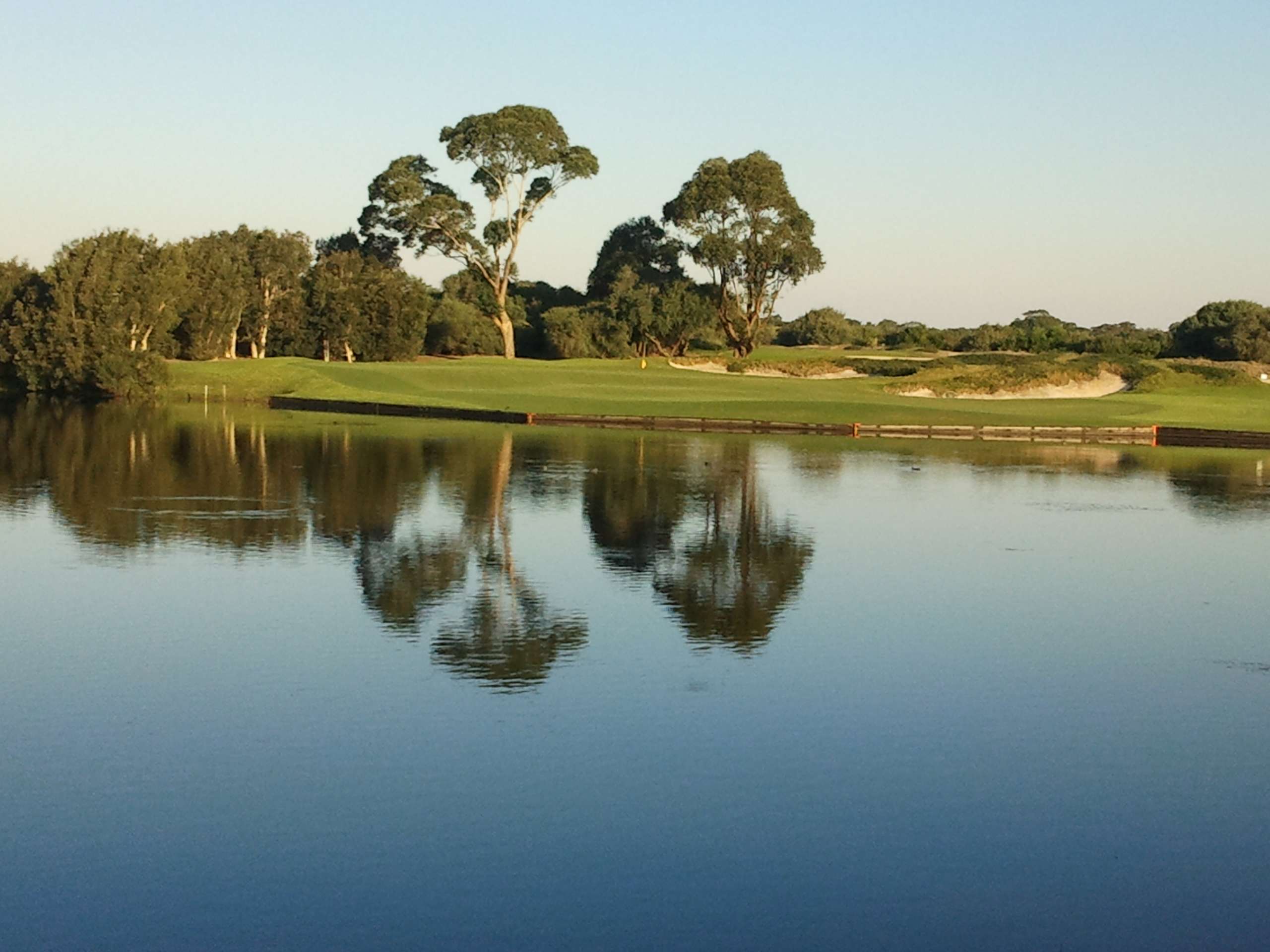
The bold rolls of the 14th green are visible from across the lake, where a strike of 220-250m (depending on the tee you play from) will leave you with the dilemma of choosing between glory and safety
Looking across the 11th green and back up the par five 17th
Course name:
The Lakes
Location: Sydney, NSW, Australia
Four Word Course Review: Unique thrills and aesthetics
Sydney used to have one and only one world-class golf course - NSWGC, then along came Mike Clayton and his crew in 2007 and voila: The Lakes was something truly special and unique.
It's not just the exposed sand dunes that make the course different to anything else in Australia, the wide corridors coupled with angled greens that are much wider at the rear than the front creates plenty of changeable strategy, where the most desirable position off the tee is hugely dependent on the pin position.
There has been some criticism of the expanses of sand bordering both sides of the fairway, with suggestions it removes any notion of a "daring" side and a "safe" side. As I see it, there are many holes at The Lakes where the "safe side" is the middle of the fairway and the "daring side" changes with the hole location and there is enough width for that to work.
The greens (and greensites) are the boldest set I have seen on an inland course. The shaping in and around the 2nd, 3rd, 5th, 6th, 7th, 13th and 14th is an enormous feature of the course, but one that has also attracted criticism from golfers who feel that after finding the green they are entitled to a straight-forward two-putt - even on a par five like the 14th where getting home in two is within reach of many.
The course opens with a tempting short par four flanked down the left by one of the many bodies of water that give the course its name, the fairway widening considerably about 180m from the tee, with the best line to the green given to those who embrace that heroic carry with their first swing of the day.
On an unenviable piece of land across a busy road from the main paddock and clubhouse, holes two through eight used to be a tree-infested embarrassment. Now the 2nd, 6th, 7th and 8th holes are among the best half of the course and the greens at the 4th and 5th add enormous merit to holes that are otherwise compromised by their limited acreage and proximity to the boundary fence.
The long par four second features a bunkerless green defended by dramatic grassed swales short right and long right of the green. A steep backboard helps a long iron approach work its way close to the right-hand hole locations, but woe betide the golfer who knocks his ball over the backboard - the next shot is a delicate flick to a green at head height and sloping away. It's a shot that should provide ample options for someone with a fertile imagination and short game skill, but with kikuyu fairways the ground game options are limited.
Nonetheless it's a strong, fun hole, as are the 3rd - a long par four to a well-bunkered, T-shaped green - and the short par four 4th. Because of the houses that line the boundary fence in the driving zone, the 4th has a sandy waste that forces a lay-up with an iron off the tee, setting up a fun short iron to a tiny green cut in half by a diagonal ridge.
The boundary is also an issue affecting the tee shot of the mid-length par four 5th, but again the approach shot is great fun, with the front half of the heart-shaped green sloping steeply from back to front and the back half much flatter. Putting from one section to the other is either great fun or far too difficult, depending on your feelings of two-putt entitlement!
The 6th invites a bold drive over a long bunker that runs up the left, another wild green punctuating the hole, and the short par three 7th plays uphill to a green that features a six-foot-high slope separating the front and back tiers. It's a prime case of a hole relying on interesting features rather than length to create challenge. Adding length was not an option for most of the holes on this side of the road due to the small parcel of land.
A genius bunker in the lay-up zone of the par five 8th adds interest to both the drive and second shot. It makes the right side, guarded by a small pond, the prime line off the tee and forces a decision after a solid drive as the flat green makes this a good birdie chance and the approach is far easier from over lay-up bunker than from short or to the right.
After crossing back under Southern Cross Drive and playing the par three 9th (both nines here finish with a one-shotter) and awkward par four 10th, threaded between a lake and the practice fairway, it is time for a thrilling run home, with water used expertly on five of the final eight holes.
Most dominated by water are the three par fives in the closing stretch. The 11th is the first of the bunch and is the least reachable of the three, a lay-up zone bunker and a thumb-print in the left of the green adding subtle interest.
Following a long par four with a skyline green that adds some brawn to the back nine, the 13th received more structural change during Clayton's redesign than any other hole. It was previously a feeble dogleg right around a grove of trees to a forgettable green, but now plays straight and downhill at just 265m from the back tee to the front of the green.
Like the 7th, the humble length is paired with dramatic features to create something memorable. The domed green is a cross between the 6th at Deal and the 13th at Peninsula (North) - not as bold as the former, but much wilder than the latter. If you don't fancy a tilt at the green, the best place to be is about 100m short on the right-hand side, next to a small pond that makes the perfect lay-up almost as tricky as hitting the green. To the left is a huge area of fairway that's not at all difficult to find but that presents an extremely unpleasant angle to the green.
There's a lot to like about the hole and the numerous options it gives you off the tee, but like the 2nd, the playability of the green is hampered by the kikuyu grass.
Continuing the thrilling ride, the par five 14th invites you to drive close to a fairway bunker to earn the option of a long iron across a lake to a green the size of the Sydney Cricket Ground and with a surface resembling the battlefields of Verdun. Hitting the green from next to that bunker shouldn't be a problem for anyone who can carry an iron shot 150 metres, but once you're on the green the two putt is likely to be tricky. As a general rule, your putt is likely to be easier if you are short and left of the pin. For those who lay-up, the third shot should be from within 100m, and from that distance placing the ball on the same part of the green as the pin should be straightforward.
It's a brilliant hole in large part because of the unconventional green and the thrill of that long iron shot.
The next two holes aren't standouts, but the Redan-style 15th is a fun hole and the 16th green's tiny fronting bunker creates some interest after a less than ideal drive where the water hazards on both sides of the fairway are blind from the tee.
The par five 17th presents the second forced lay-up drive of the round and as at the 4th it sets up a great second shot, this time a draw down a narrow spit of fairway to a large green. This time the lay-up is dictated by the island of fairway that sits in the lake between the headland on which the tee is built and the main piece of land that houses the last 150m of fairway and the green. From the lay-up area it's just 200m to the middle of the green, so it's a shot that a lot of golfers can feel they have a decent enough chance of pulling off that they'll go for it.
The par three finishing hole calls for a long iron to a steep green, with bunkers left and right. It's perhaps the toughest par three on the course and a hell of a proposition at the business end of the round.
The Lakes has some flat spots, some poor land, interference from the highway and nearby airport and the kikuyu isn't the ideal grass for the style of play that several greens call for - but it also has some of the most exciting shots in Australia, unique character and aesthetics, great greens and loads of variety.
Not only is NSWGC not the only world class course in town any more, it may not even be the best course in town depending on what you value in a golf course.