Friday, October 29, 2010

Monterey Peninsula (Dunes)

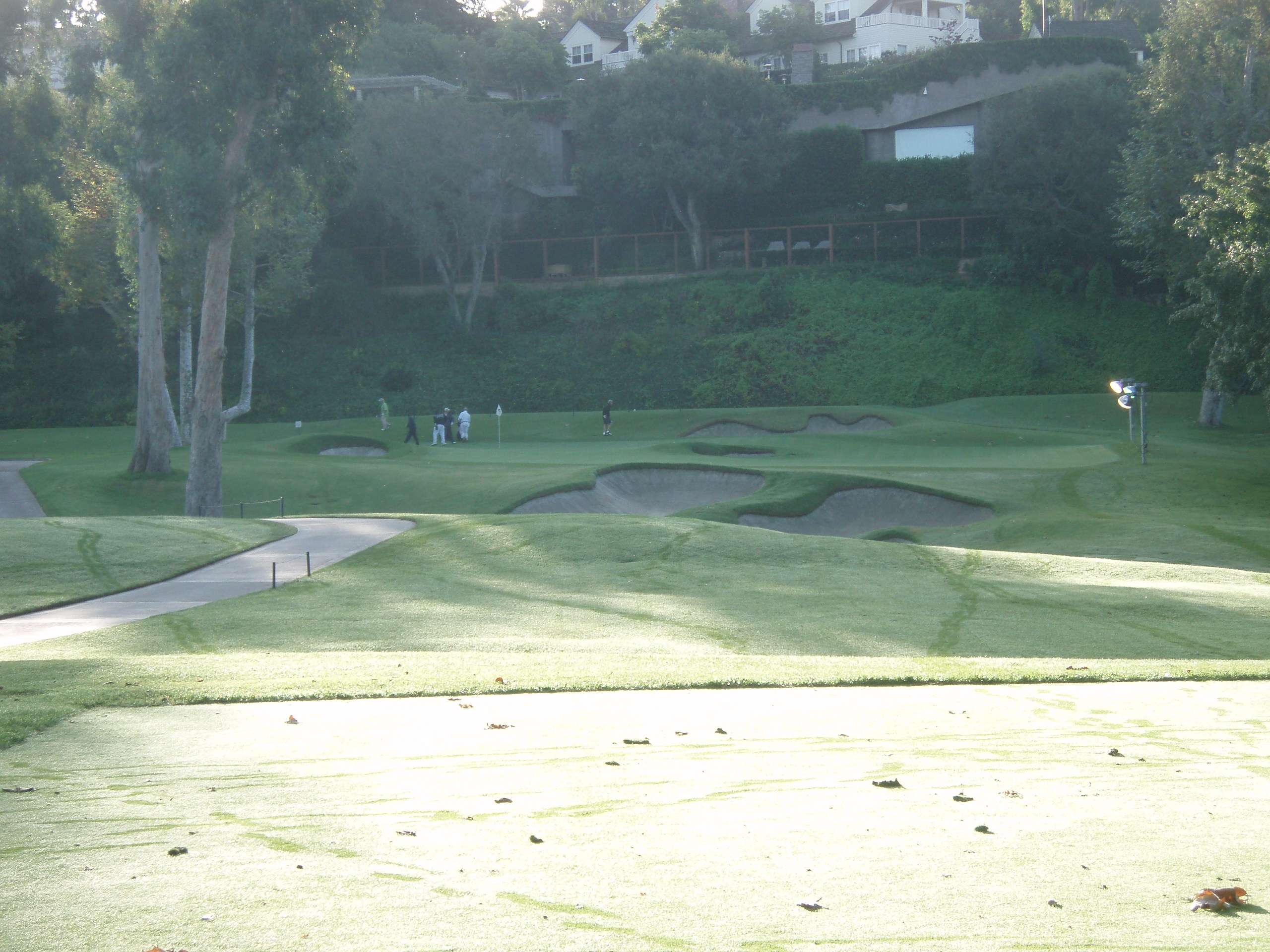
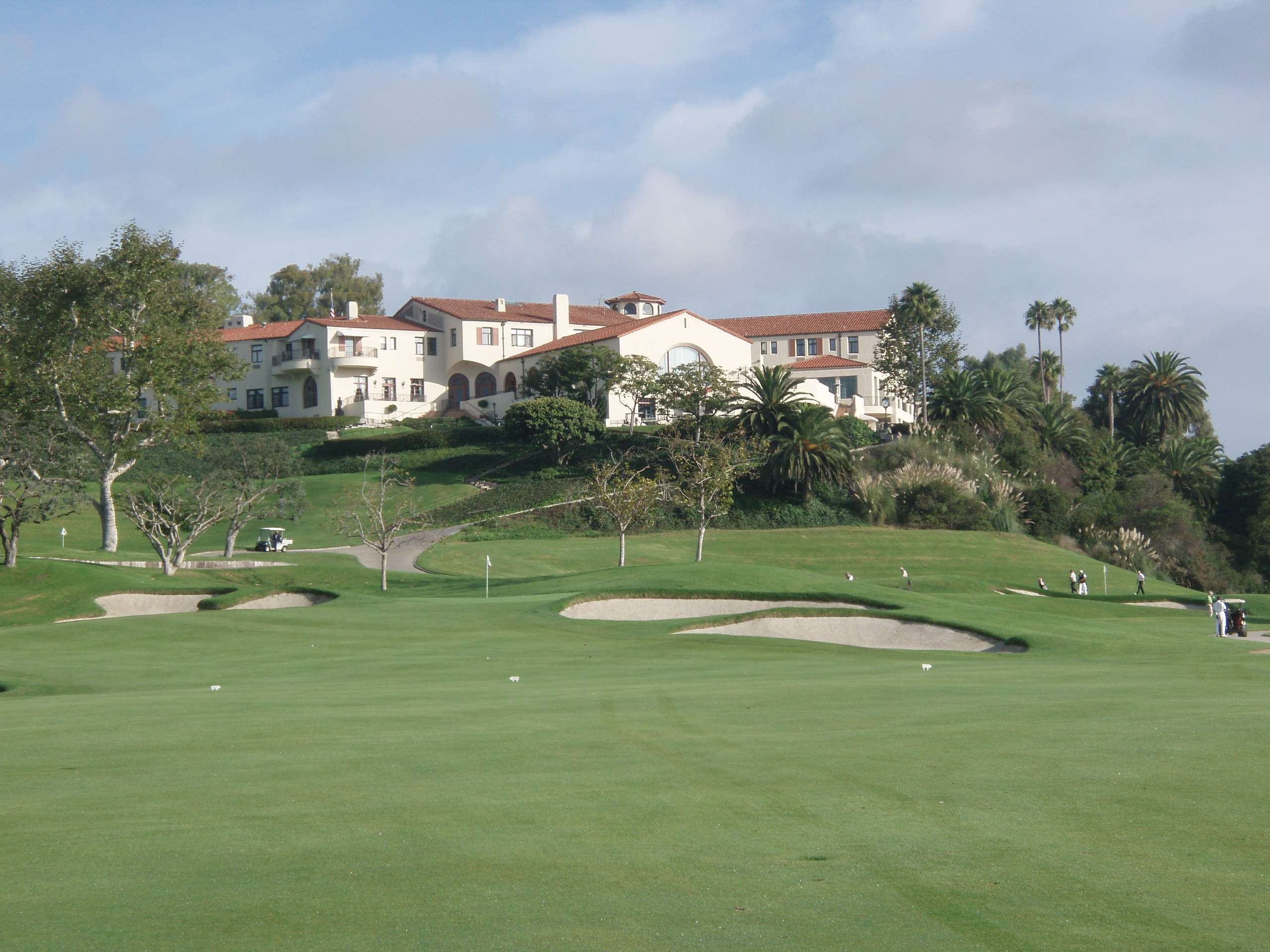
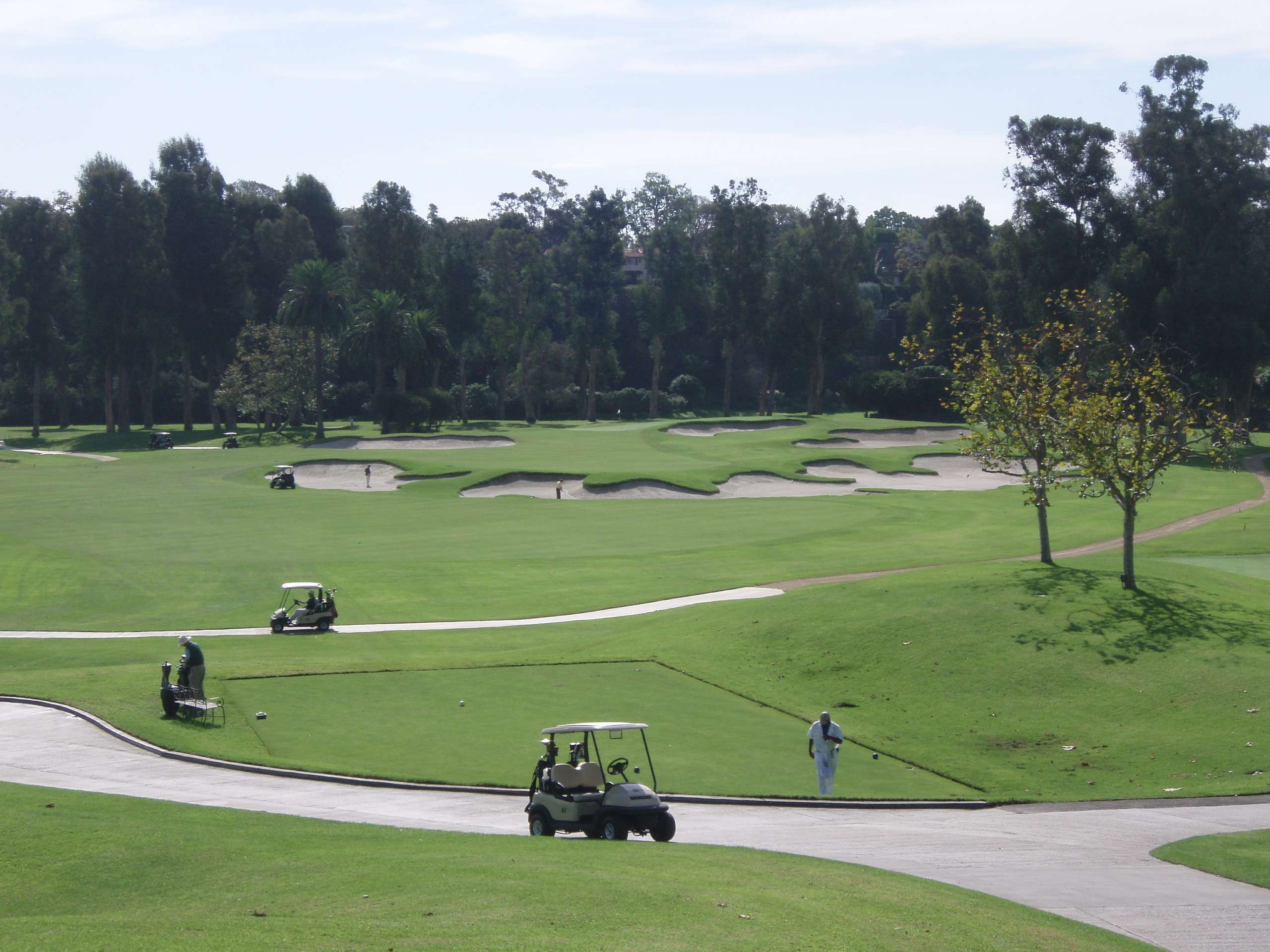
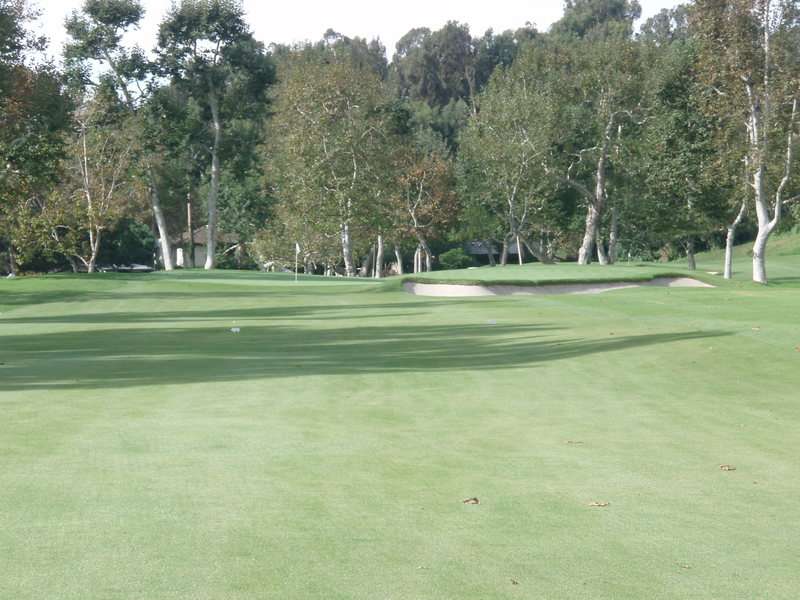
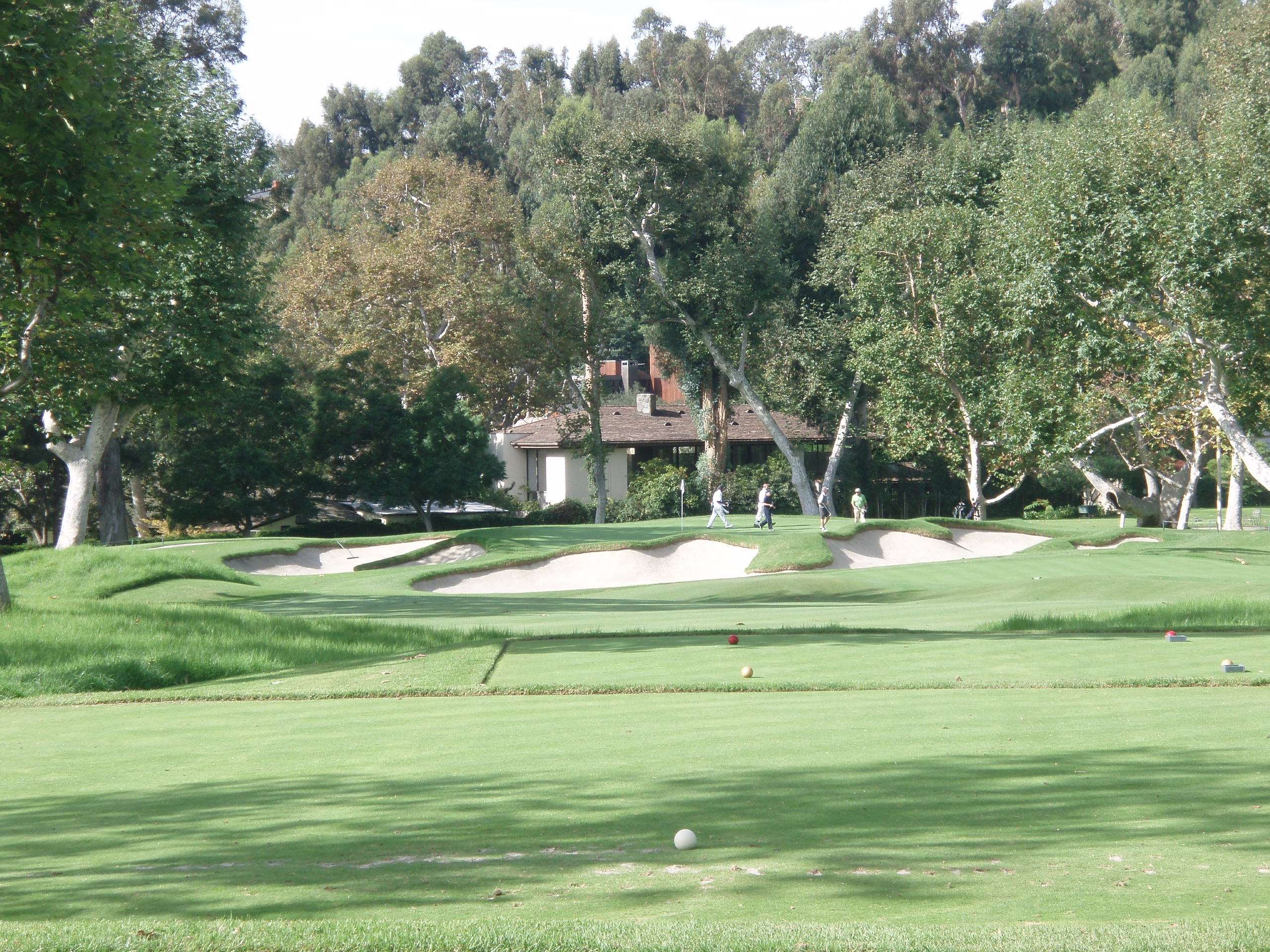
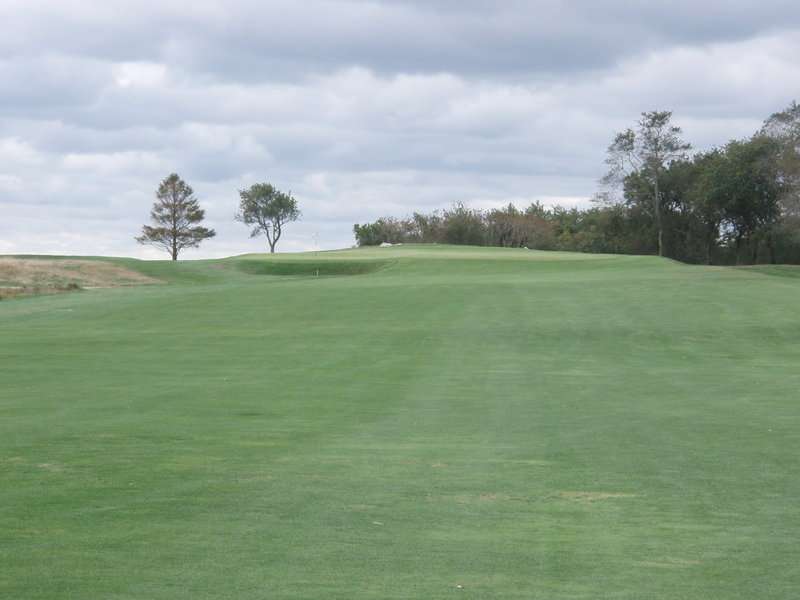
The swale in the 4th green is shallower and wider than other Biarritz greens, allowing the pin to be cut in the trench

The Eden 7th, offering a glimpse of the sea through the canopy, which has been trimmed in recent years


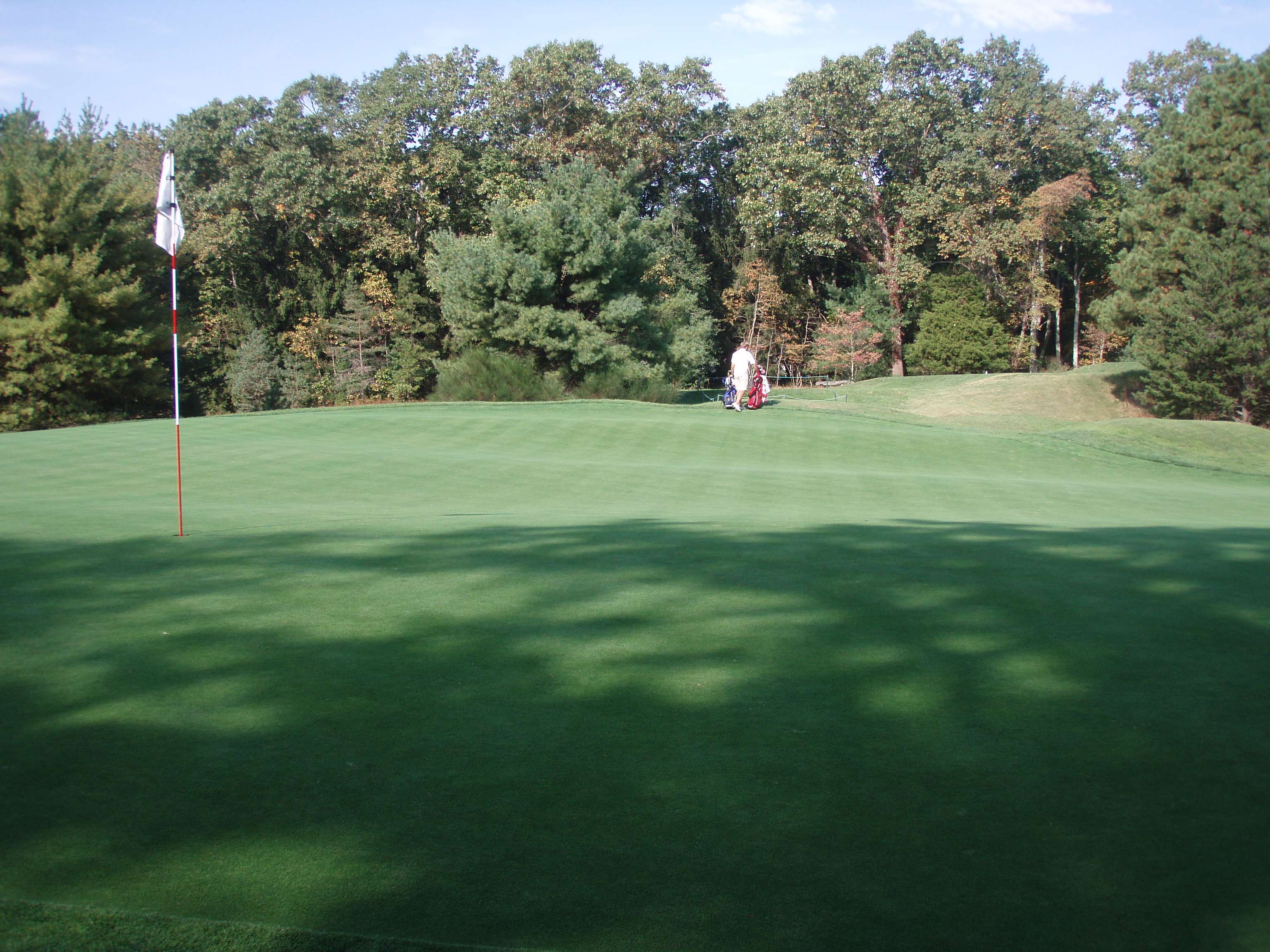
The 9th green is smack bang in the middle of the dunesland section of the course

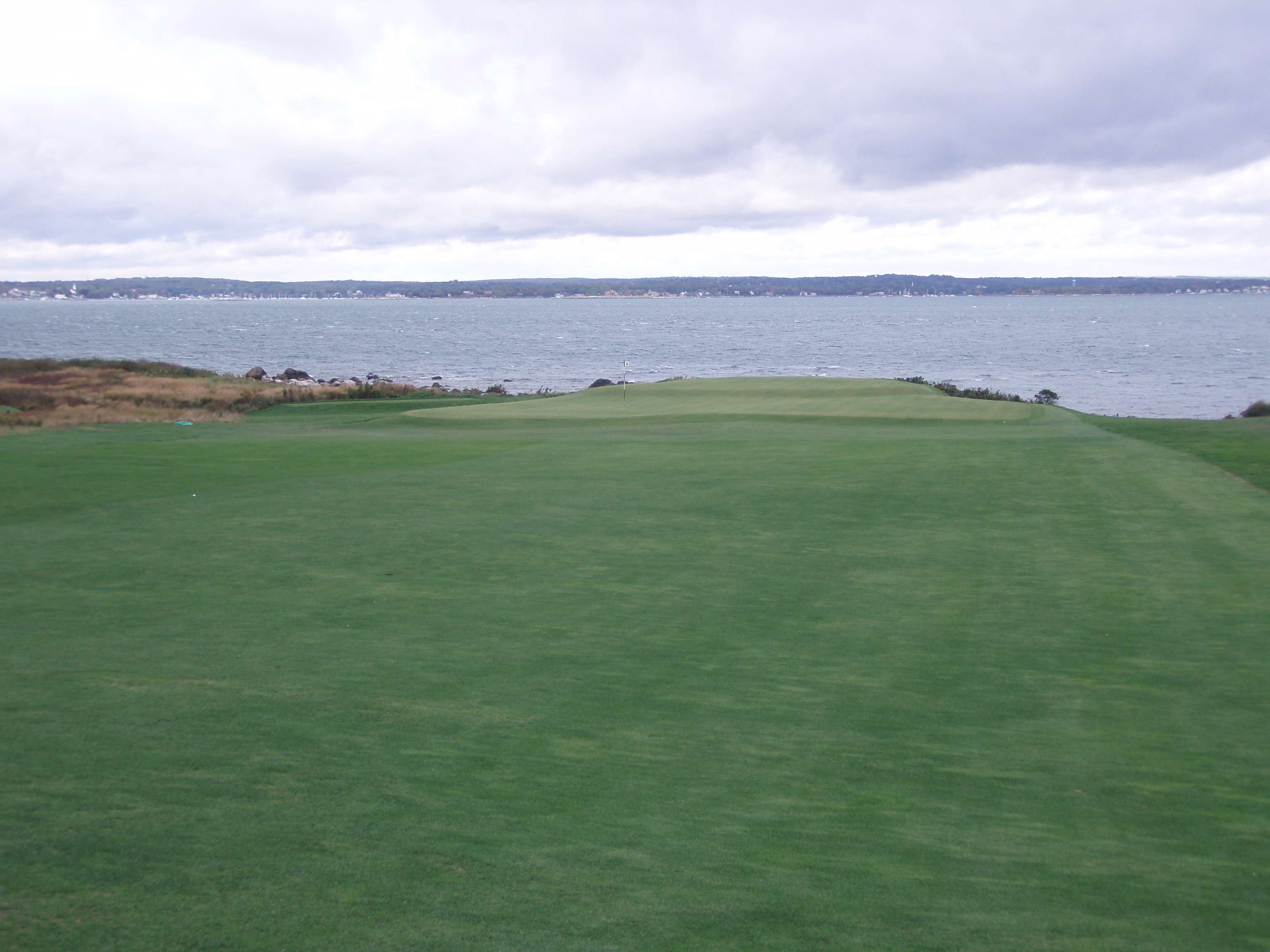
The 10th is about as picturesque as a golf hole can be, and played in a stiff cross-wind that green seems a lot smaller than it looks!

Looking back down the 11th, with the tee shot played from near the right of the picture

The pin on the amazing par three 14th is just visible over the right-hand-side bunker, with plenty of room out to the left

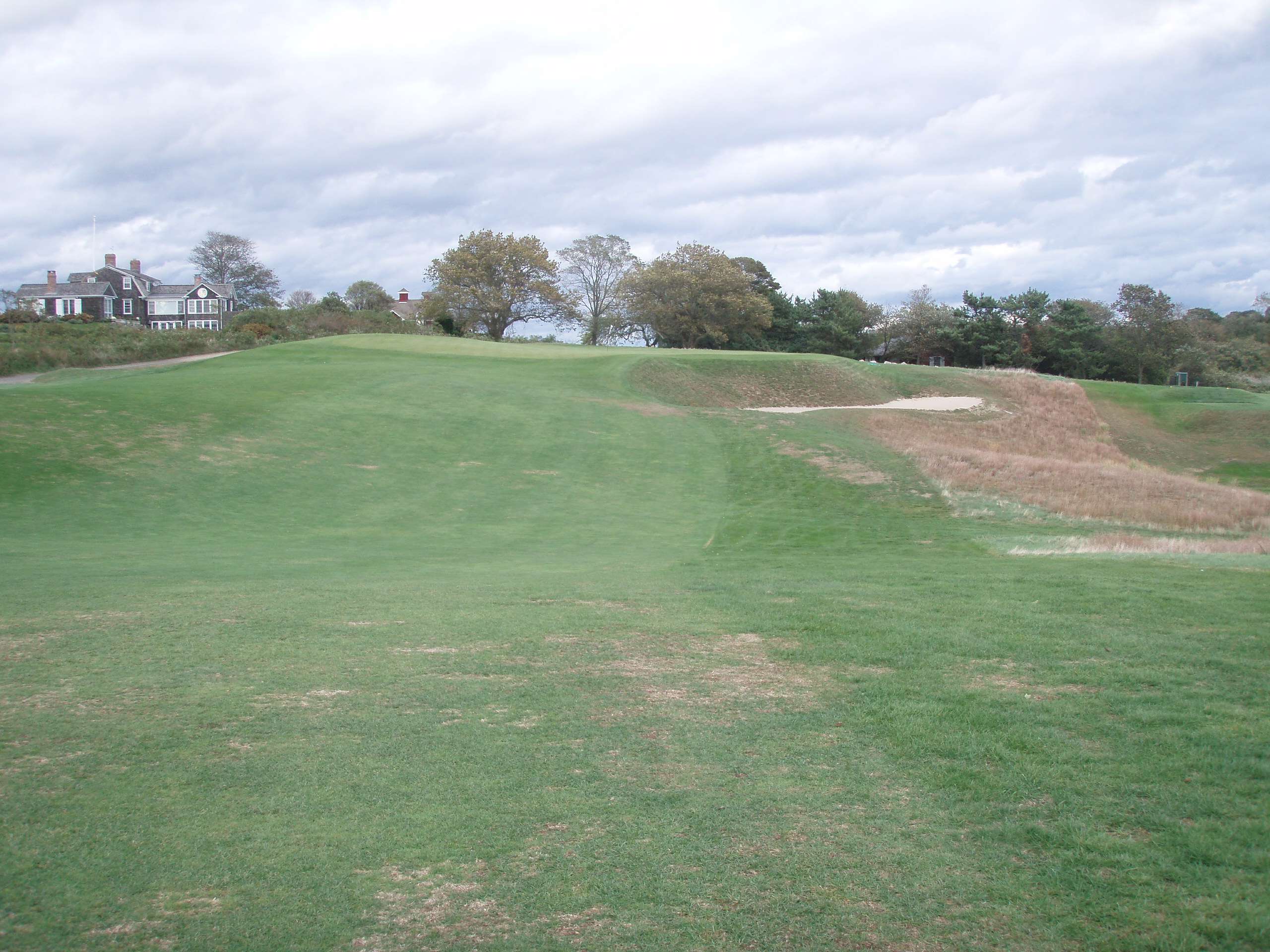
Cutting the corner on the dogleg left 15th brings the wraparound bunker into play

Course name: Monterey Peninsula (Dunes)
Location: Monterey, California
Four Word Course Review: Proof of Monterey's depth

After playing Hankley Common on London's heathlands earlier this year, I commented that the best golf regions perhaps identified themselves not by their strongest courses, but by those that got little to no attention.

The quality of the unheralded - in relation to its neighbours - Monterey Pensinsula Country Club Dunes course is all the proof you need that Monterey is up there with the best golf areas in the world (now there's a newsflash!).

The par threes and fives stand out most in my memory as being the leading lights, but the two-shotters that connect them are of such a consistent standard that the course never looks like losing your interest. Add to that the great year-round weather, breathtaking views and the sight, sound and smell of the ocean and you have the ideal golfing package.

Given the club's other course is named the Shore, you might think seaside golf was not on the menu while playing The Dunes, but the routing makes full use of the site's varied terrain and vegetation, including the thrilling seaside land on both sides of 17-Mile Drive.

The routing is essentially one long, narrow loop. The opening three holes run inland, the million-dollar homes that flank the fairways well hidden behind cypress and pine, before the first pointer to the course's Seth Raynor heritage - a Biarritz hole that plays slightly downhill. The green was in fact flattened during the ravages of time and replaced by Rees Jones during his renovation of the course.

Still cutting through cypress and pine, the course now turns for the sea, a nice combo of short and long par fours moving you over interesting terrain as you head back towards the still unsighted ocean.

Behind the 6th green is a Raynor trademark, the steep 15ft drop into a trench bunker, from the bottom of which I can't imagine many pars have been made!

The opening stretch provides steady golf, but few absolute thrills. That all changes when you walk onto the tee of the 7th, an Eden par three that provides a tantalising view of the seaside through the thinned canopy behind the green.

On the back of that great par three you then continue the excitement with a fun downhill par four to a green set beyond a stream, a wonderful short par five over land that transitions from forest to dunes - the fairway flanked by white sand - and then an exciting pat three played downhill with a panoramic view over the coastline and golf courses stretching left and right.

The course takes a couple of turns inland between the 11th and 16th holes, but for the most part sticks close to the shore, the high point being the 14th and 15th holes. The one-shot 14th sits across 17-Mile drive, the tee and green both a matter of feet from the ocean, with a rocky inlet separating them. I encountered it with a stiff wind in my face and needed a four wood to get pin high. As far as golfing thrills in million-dollar settings, that's about as good as I have experienced.

Then it's back across the road for the long par five 15th, a simple design that's made by the low key greensite. With the par fives that have come before being on the short side, this one is as muscular as you could hope for

After a couple more smart par fours at 16 and 17, it's time to head back away from the ocean for the par five finishing hole, which concludes at an eye-catching green perfect for a reachable par five.

The transitioning scenery and terrain passes smoothly on the Dunes course, with relentlessly fun golf to be had all the way around.

Of particular enjoyment among the shots I haven't mentioned yet are the diagonal drive over sandy waste at the par four 11th, the approach to the seaside 13th green and the tempting drive at the dogleg 16th.

Thursday, October 28, 2010

The Valley Club of Montecito

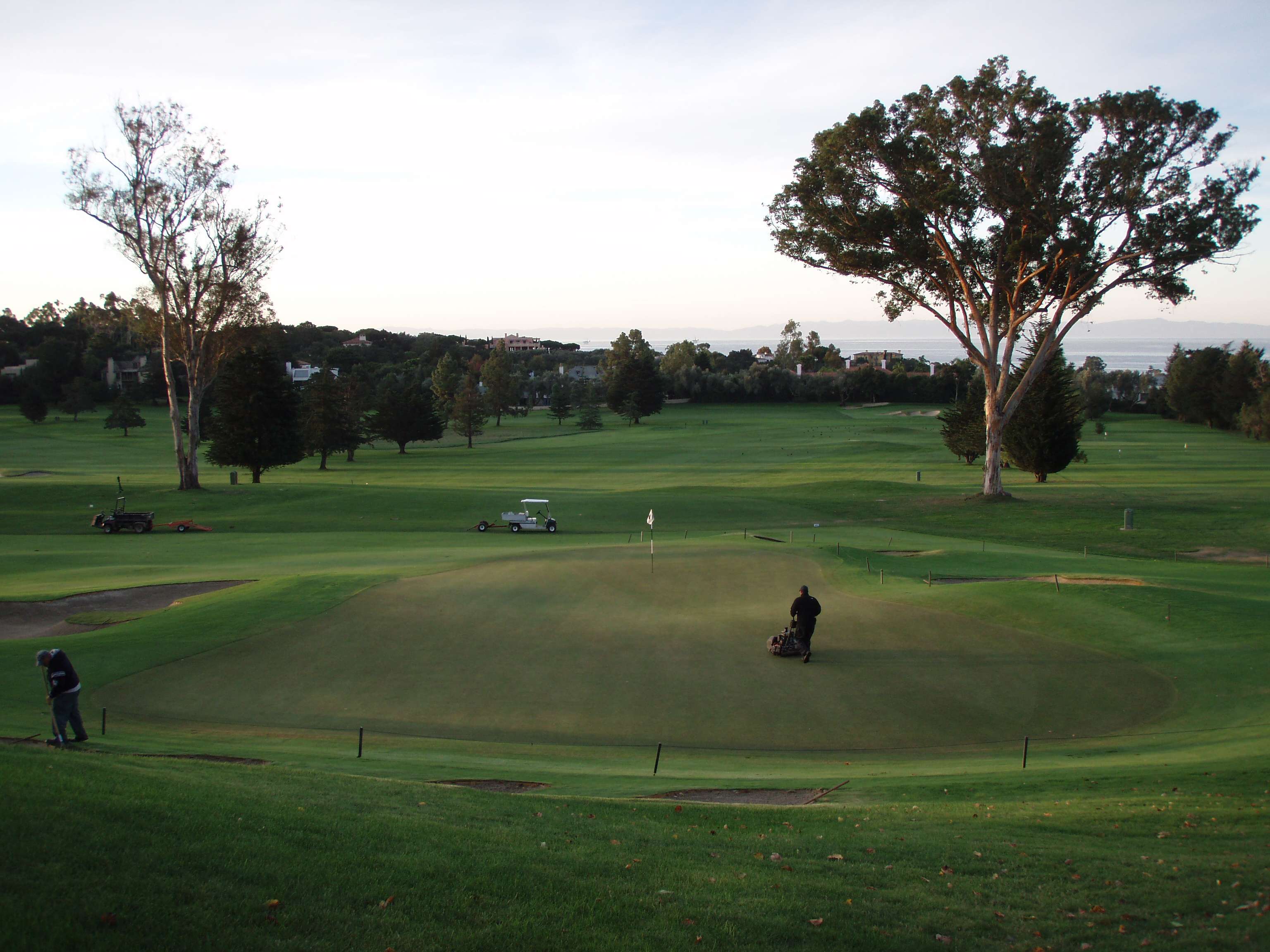
Greenskeepers tend to the 18th green as first light peaks over the water, with the practice range to the right. Could there be anywhere more serene on Earth to greet the sunrise while hitting a bucket of balls?

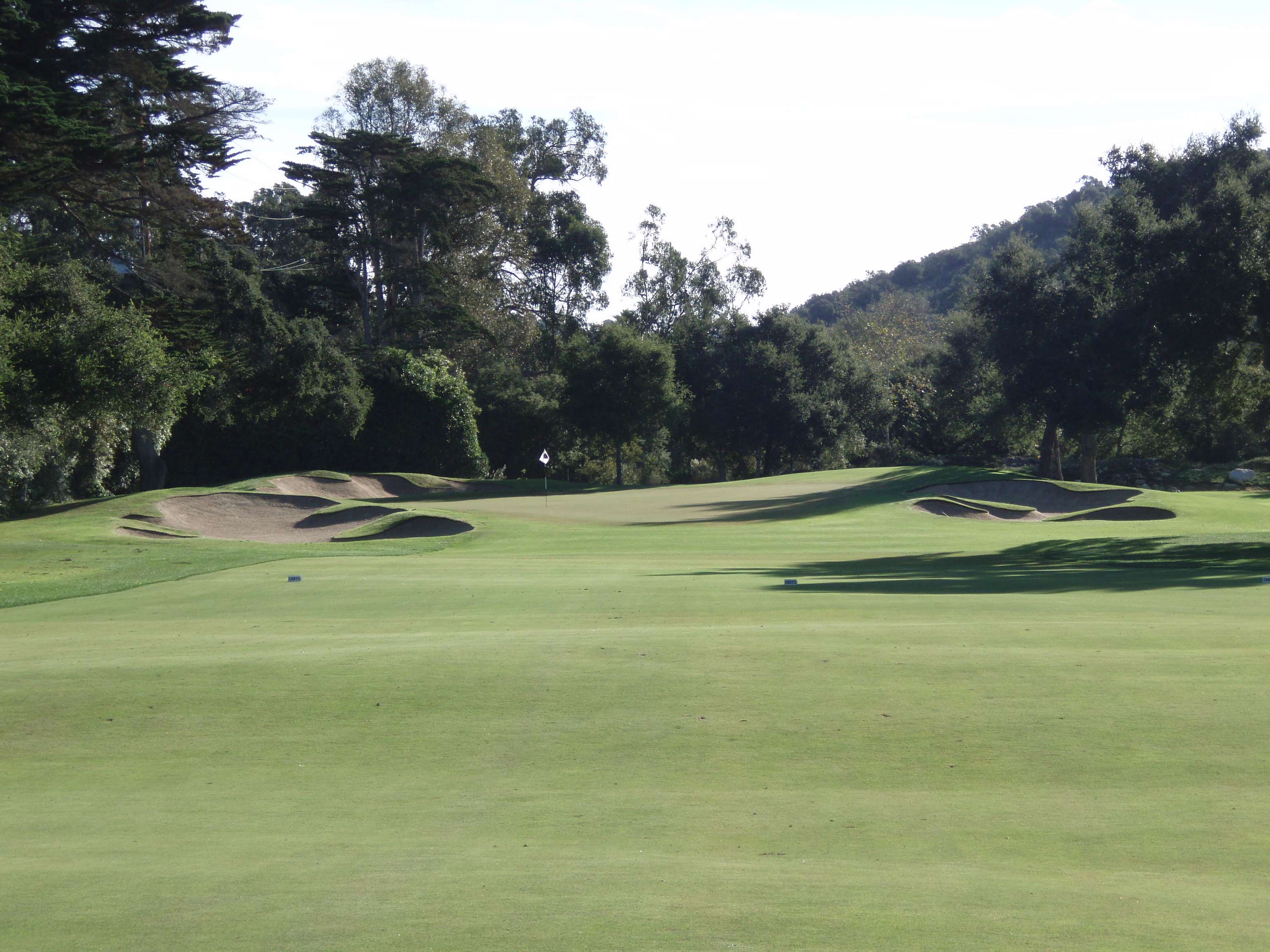
Approaching the short par four 6th is all about angles

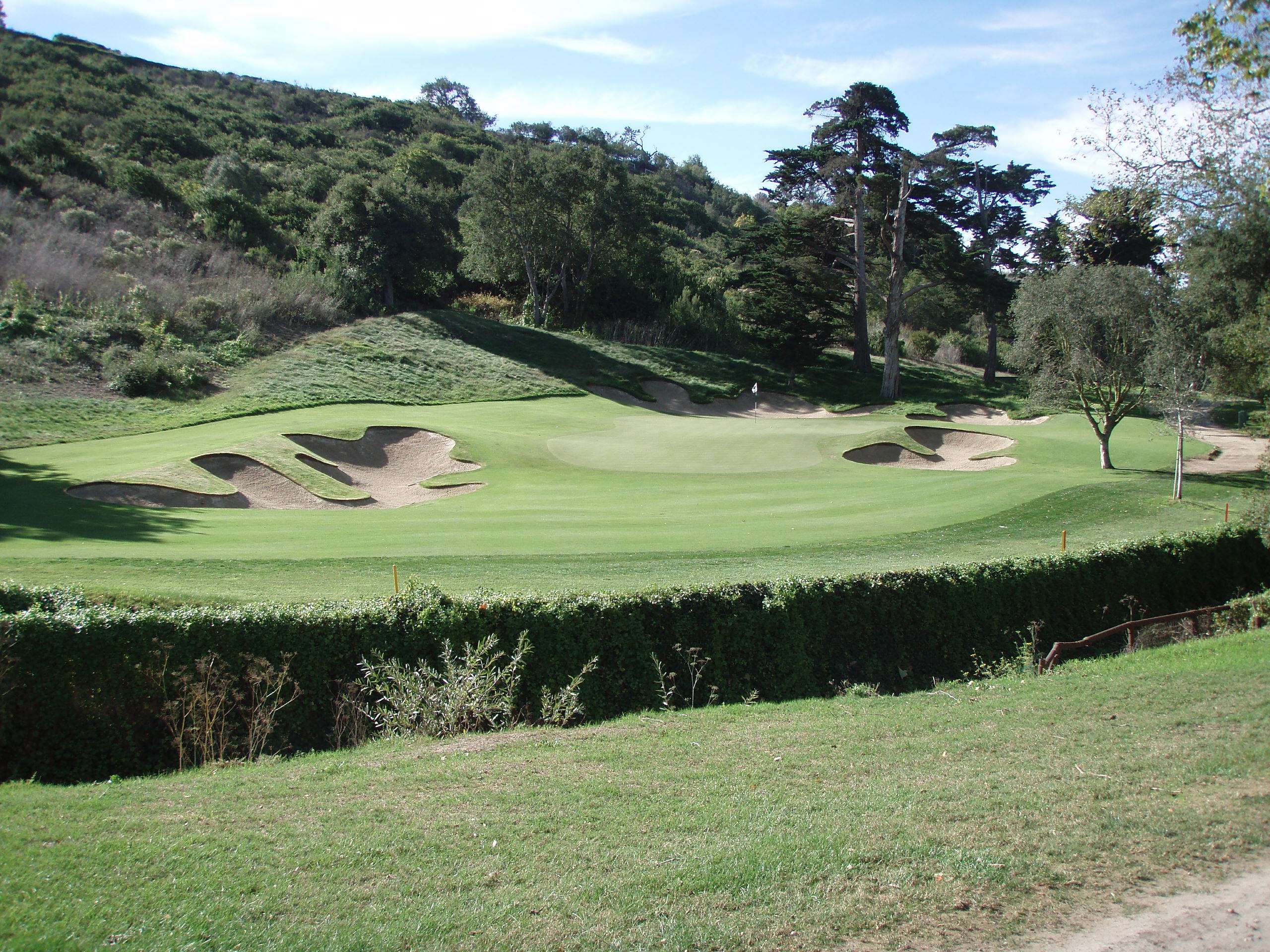
Calling only for a mid or short-iron, the par three 8th was my favourite of the one-shot holes


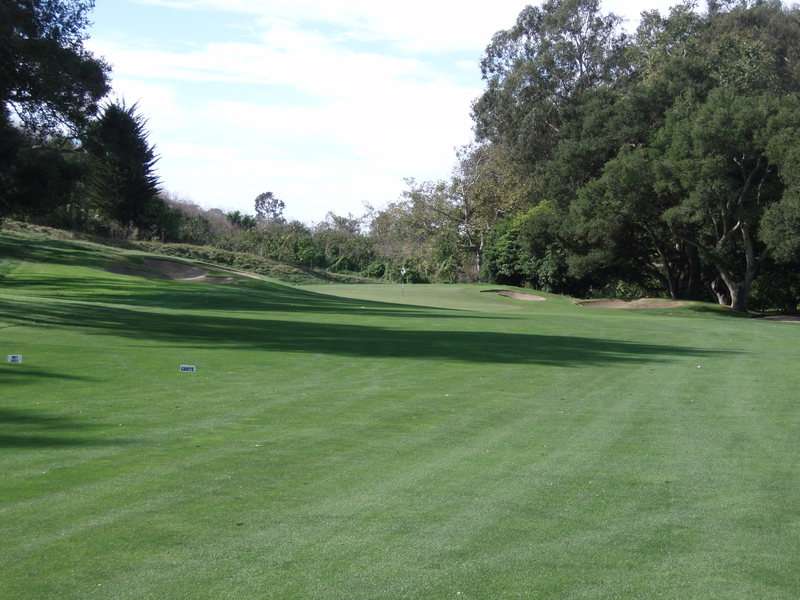
The par three 11th is the last of three one-shotters that plays from the same small hill

The par four 12th is one of the less lauded holes on the course, but it was a favourite of mine with its natural, low-key greensite

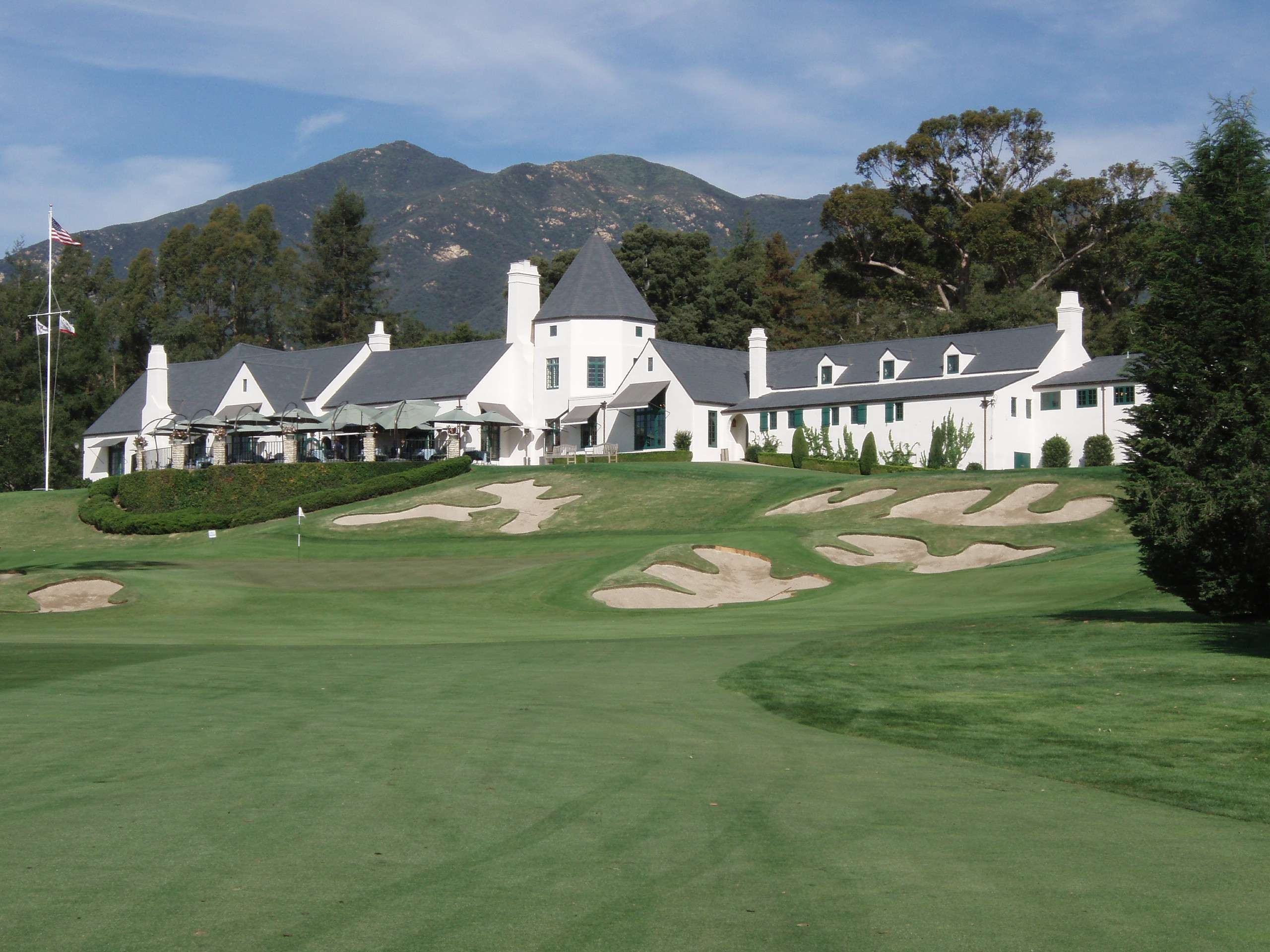
Beauty comes in threes: the 15th green, the clubhouse and the Santa Ynez Mountains

Course name: The Valley Club of Montecito
Location: Montecito (Santa Barbara), California
Four Word Course Review: The perfect members' club

The Valley Club's great putting surfaces are apparent the second you step out of your car - the drama of the 15th and 18th greens at the foot of the clubhouse drawing the eye almost as strongly as the long view down over the closing holes to the Pacific Ocean beyond.

The beauty is quintessential MacKenzie and the course seems to display perfectly the ideals of golf design he spoke about during his lifetime and packed into the likes of Augusta National, Cypress Point, Royal Melbourne and Alwoodley.

Not overly long, plenty wide, very little water... it would seem at first glance that The Valley Club (as with many of the courses named above) is a relaxing doddle that might yield a career score: then you get to the greens.

While the 15th and 18th here are your first look at what awaits with the flatstick in hand, they are not really representative of what you'll find on the course. Subtlety is largely the order of the day, with slight slopes at the 3rd, 6th, 7th, 8th, 9th, 12th and 13th demanding precise green-reading skills if you want that lengthy putt to finish anywhere near the hole.

Many times on sections of green that looked flat, I watched balls roll... and roll... and roll... until that two-putt was a mere dream or, even more embarrassingly, the golfer was swapping his putter for a wedge to play the next shot!

That subtlety in the greens that were rebuilt in 2007 by Jim Urbina is the crucial aspect of scoring. Being on the right side of the hole is crucial and so, working backwards, you realise that wide expanse of short grass you were gazing at off the tee was hiding one or two enviable approach angles among others that were a slow track to a certain bogey.

This is a course that will roll over and let a player in form scratch its belly - I managed to get from the 8th tee to the 16th tee in three-under - but also one that penalises poor planning just as much as poor shotmaking (five bogeys from the 2nd to the 7th!). In short, it's thrilling golf where anything can happen from one hole to the next.

The short par four 6th is a case in point, with acres of short grass in which to hit an iron and earn a good angle in, but such modest length that a driver is almost too tempting, despite the fact the bad angles get progressively worse the closer you get to the green. The green itself, as much as the surrounding bunkering, dominates that strategy.

Likewise, at the short par five 2nd it's easy to become pre-occupied with getting a short birdie putt and miss the fact that any ball left above the hole (especially to a front or middle pin) could easily be putted right back down to the fairway.

But of course a round of golf is a journey, and no golf course has been a more joyful one for me than The Valley Club thanks to a routing that moves more or less out-and-back, but makes great use of a hill on the eastern parcel from which you play on three of the four par threes - the 4th, 8th and 11th: each posing a different shotmaking challenge as they head off from the central hub.

For mine the best of the one-shotters is the 8th, played a cross a valley to a benched green set at an angle and defended short by a handful of the gorgeous bunkers that help to set the mood of the course. It's only a mid-iron, but it, like many holes on the course, plays much harder than it looks.

The par fives won't scare you when you look at their lengths on the scorecard, but the greens at the 2nd and 15th, recovery shots at the 1st and sidehill drive that feeds into a creek at the 10th all demand precision and careful planning.

The high handicapper need never feel overwhelmed or out of his depth at The Valley Club, but the better player will find all the challenge he could ever need. As far as a template for the perfect members' club, MacKenzie's Montecito masterpiece may well be it!

Monday, October 25, 2010

Riviera

The first green and its fronting bunker give you a good idea of the challenge to follow

The brilliant Redan 4th is one of those holes you could play repeatedly all day long without tiring of the fun or the challenge

The approach to the 5th, with the hook lie forcing you to interact with the RHS mound, is one of the most enjoyable on the course

The iconic 6th, with its green-centre bunker - the shaping of the green ensures there is nowhere on the green that doesn't offer the chance to lag the ball near the hole

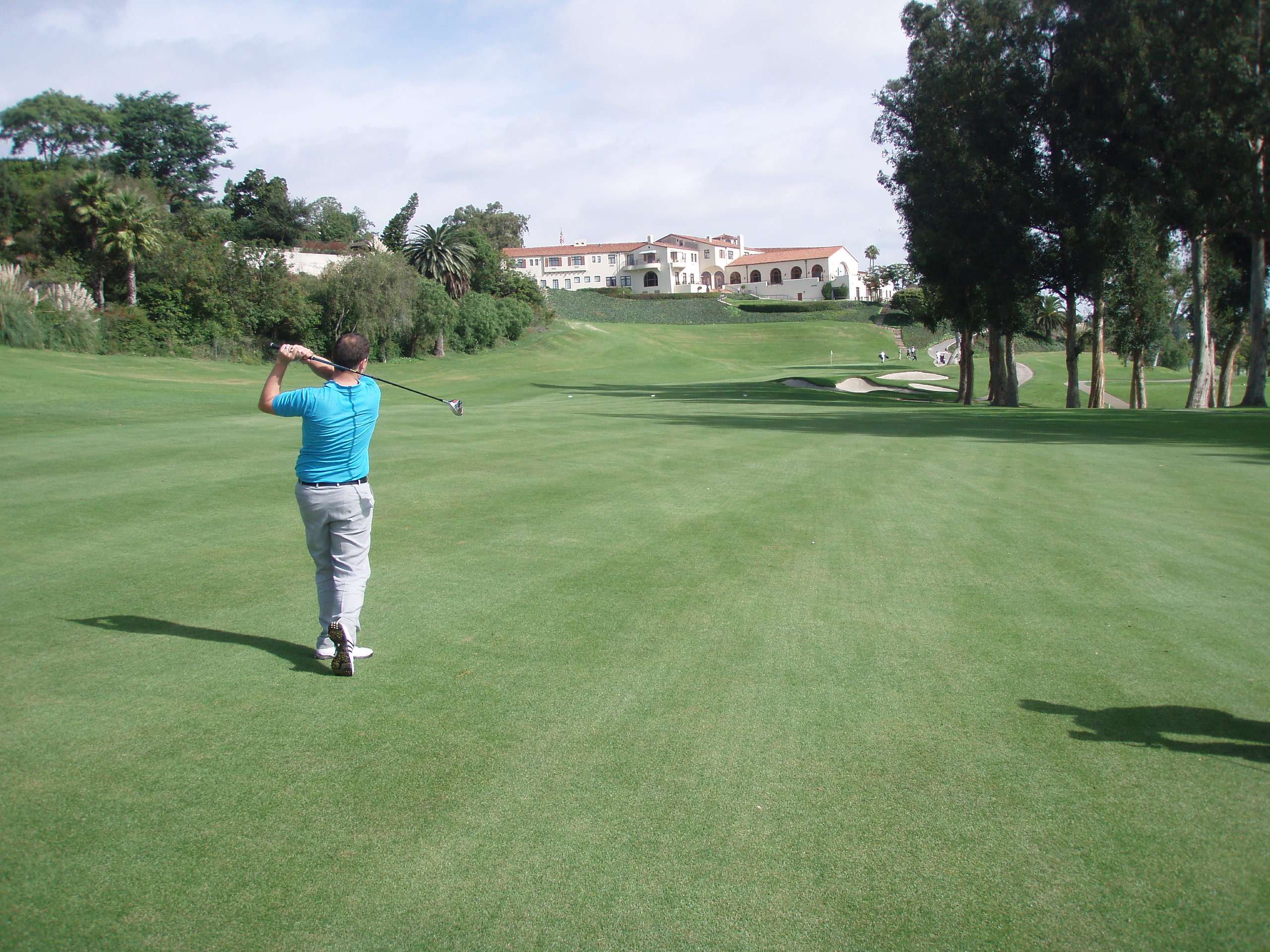
Overlooking the tricky, two-tiered 9th green is the sprawling clubhouse

For years I have fantasised about playing the 10th hole, a par four of just 315 yards that is made by the angles created by the bunkering and green orientation... the reality was even more thrilling than I imagined

The 15th green appears to have been inspired by the Biarritz concept, creating a tough second shot

At a modest length and with the small green ringed by sand, the 16th comes at the perfect point of an important round or a do-or-die match

Approaching the 18th green is one of those moments you will remember forever

Course name: Riviera
Location: Pacific Palisades, California
Four Word Course Review: Bunkering and routing masterclass

It's amazing, looking at Riviera today, to consider that George Thomas had to be convinced to take on the job of designing the course. With little in the way of natural land movement to utilise, Thomas and construction/bunkering supremo Billy Bell had to construct most of the features that make the course so fascinating, while routing the holes to make the best use of the natural barranca that weaves through the site.

The result is a masterpiece of variety, challenge and brilliant design - testing every aspect of your game and calling for the ball to move both ways off the tee, for approaches to be placed smartly on the greens and for recovery play to be precise.

Of course it was a dream come true to hit a drive from the elevated 1st tee and then play the likes of the Redan 4th, the par three 6th with its green-centre bunker, twin fairway 8th, "Rubix Cube" 10th and the iconic finishing hole, but lately I have been thinking that the very best courses identify themselves not by their best holes, but by their weakest. Of course when it comes to the best of the best, "weakest" is relative!

At Riviera, I didn't feel there was a single hole that let down those around it. If forced to select the two weakest holes I might opt for the 3rd and 14th, but both are still well worthy of praise, especially on the flat ground they occupy.

The holes of each par complement each other well. The par fours are generally on the long side, but the shot demands are rarely repetitive - especially from the tee - while the par fives demand that all three shots (few mortals will reach any of them in two) are placed with the following shot in mind.

The four one-shotters call for very different approaaches and for me required a four wood, six iron, four iron and seven iron from the back tees. Ben Hogan called the Redan 4th "the greatest par three hole in America" and it's hard to argue with his choice of a hole that offers options galore to get past an enormous front bunker.

The 4th is characteristic of Riviera in two ways:

First, the bunkering is BOLD (the capital letters seem necessary), with the likes of the greenfront bunker at the 1st, fairway bunker at the 7th, cross bunker at the 10th, fairway and greenfront bunkers at the 15th and circling bunkers around the 16th green joining the front bunker on the 4th in dominating both the strategy and visuals of the holes.

Second, it takes a well-known template hole and adds a healthy dose of interpretation to create something unique (as well as the Redan 4th, is that not an Alps mound on the 5th? The 13th, before addition of trees inside the dogleg, was a Cape, the 14th doesn't look unlike a Macdonald/Raynor Eden hole and the 15th features a rotated and elongated Biarritz green).

Aside from the masterful bunkering (and although the aesthetics have changed under Tom Fazio's recent stewardship, the placement, I am informed, stays very much true to Thomas and Bell's original creation) the barranca is the major hazard to be avoided. It is employed many ways, crossing the 1st and 11th holes - both par fives - to threaten the second shot, hugging the front of the green at the par four 12th, flanking the 7th and 13th and splitting the 8th hole's two fairways to force a significant choice on the tee. I found the grass in the barranca long enough to swallow a ball, making it a true hazard in the absence of water.

The 10th was the first hole I saw as the sun rose before my round, and as I walked to the 3rd tee there it was right before me (it was hard not to immmediately turn left at that stage), so when the time came to play the hole, I was beside myself with excitement. Thankfully, I managed a straight drive over the left side of the cross bunker and a sand wedge to within eight feet of the front pin before I two putted for a satisfying par that made sure my memories of one of the best three holes I have ever seen will be sweet.

Playing the hole, it was sensational to see its angles, bunkers and slopes with my own eyes and imagine how I might attack different pins. Riviera's members are indeed fortunate to have the chance to know that hole intimately.

The other major eye-opener was the 6th green, its central bunker surrounded by sections of green that are connected by steep slopes allowing a ball to be putted or chipped around the unconventional hazard to any other part of the green. My weak approach left a chip from the front right fringe to a back left pin and there were three or four ways of playing the shot to get around (or over) the bunker, which was directly between me and the hole.

Add to all of that great golf the beautiful hilltop clubhouse overlooking the course, the impeccable conditioning, Los Angeles' glorious weather and you have the complete package.

For this Australian, it was also special to play the course over which Steve Elkington won the 1995 PGA Championship and Adam Scott and Robert Allenby have won the LA Open in the current decade. Not to mention it being the course that brought Ben Hogan his first US Open in 1948 and was the site of Tiger Woods' first Tour event aged 16.

Having spent my teens and twenties dreaming of playing Riviera, I can now spend my coming years remembering how the course and club exceeded my every hope and expectation and taught me just what is possible on a flat site with the right men steering the ship.

Saturday, October 16, 2010

Fishers Island

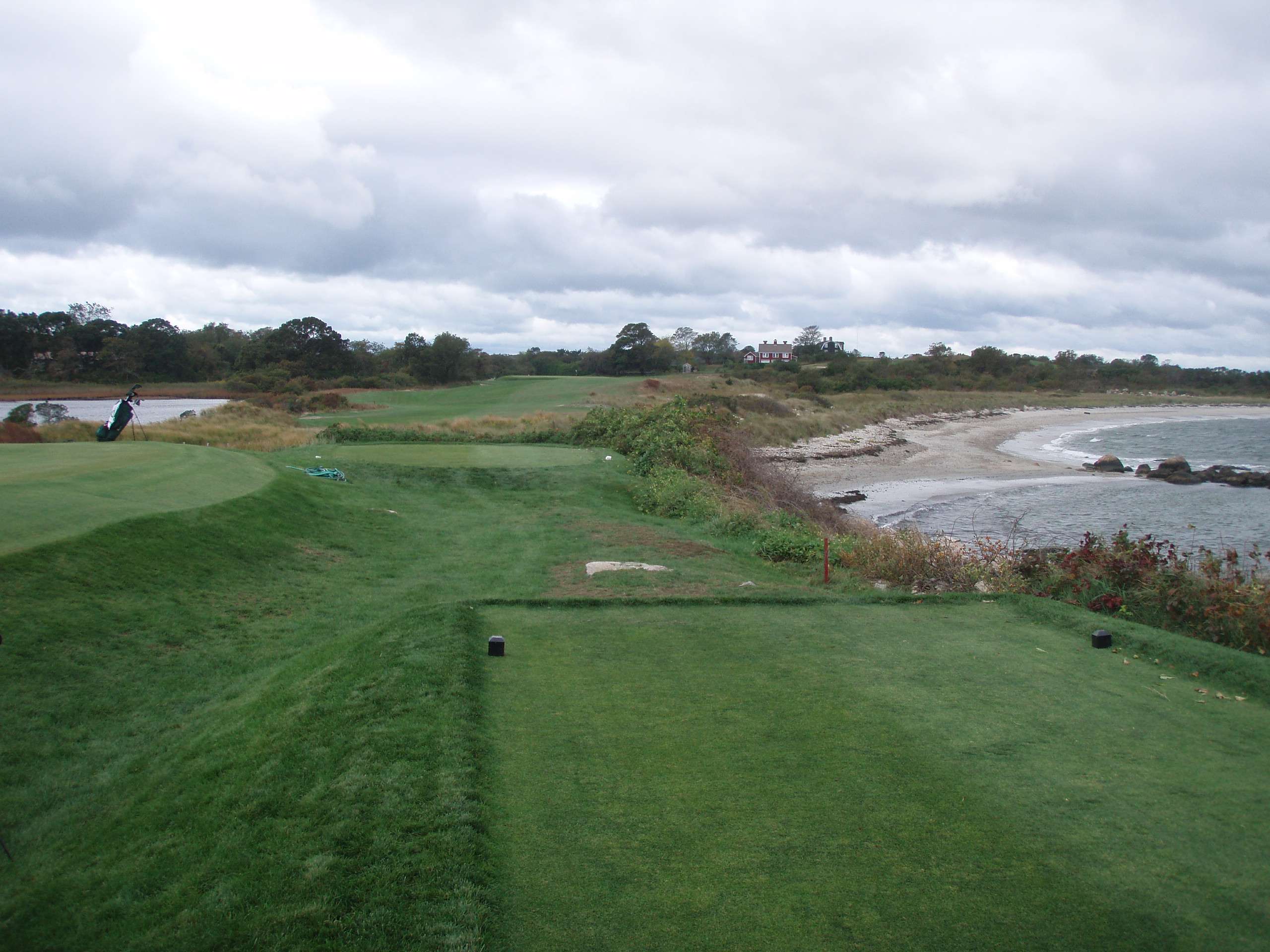
Looking back to the tee from behind the awe-inspiring par four 4th, the ridge in the green ensuring the fun isn't over when you reach the putting surface

The Biarritz 5th is almost certainly the most difficult par three I have ever played, as well as being one of the most attractive

The 8th is a par five with a Road Hole green, which rewards a drive that flirts with the coastline

Walking over the crest of the 9th fairway and seeing this vista caused me to laugh and shake my head in disbelief: "How did I get here?!" That moment summed up the dream I felt I was in for much of my day on Fishers Island

The 11th hole plays to a green that is deceptively steep from back to front. This hole is a perfect example of the sensory overload that Fishers Island presents, making it hard to concentrate on playing your best golf

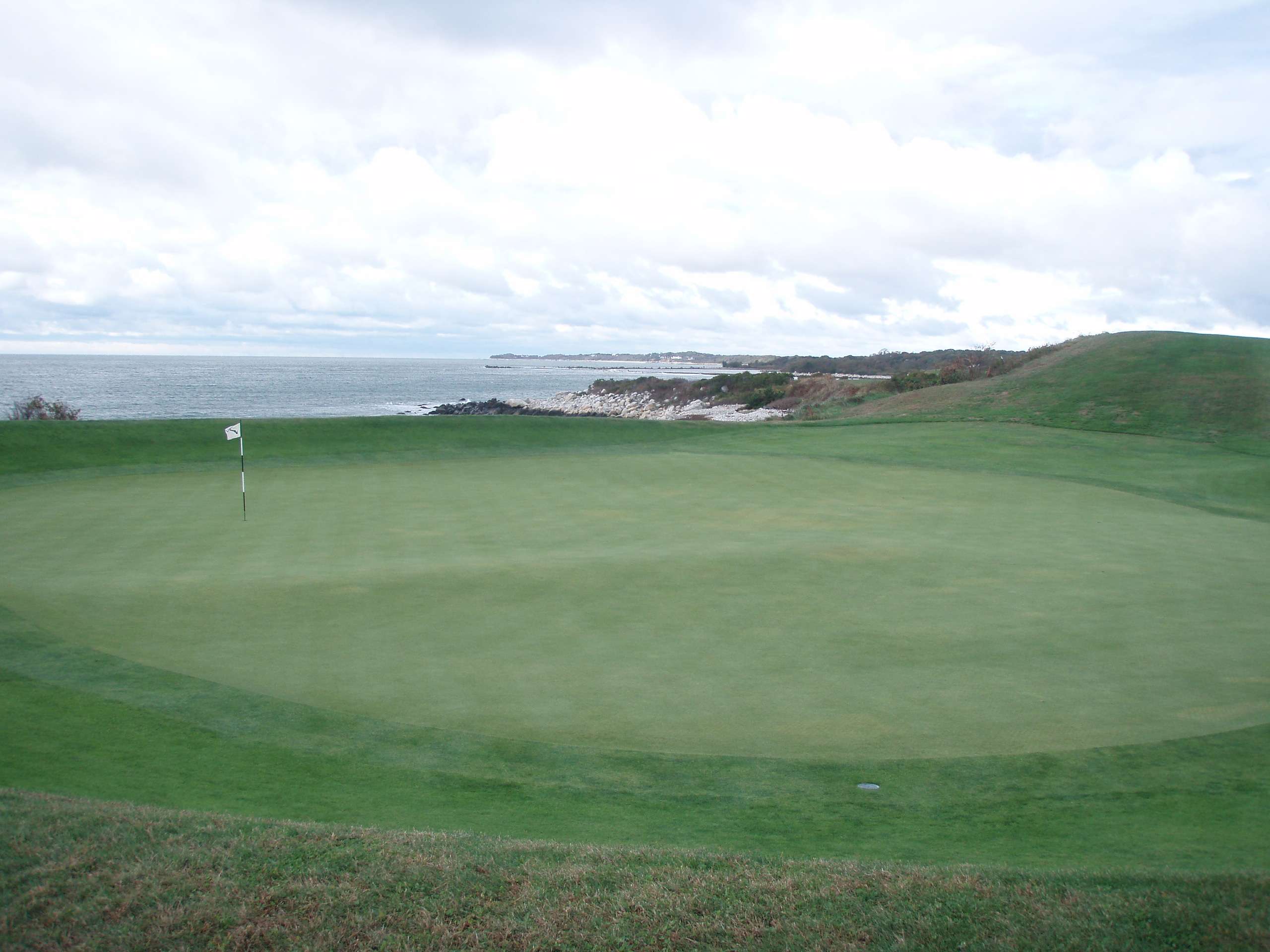
The approach to the 12th was one of the most fun shots on a course full of them. With the pin cut to the right it was a challenge to use the left-hand kickpad to access the hole, but not so much that the ball built up enough speed that it ran off the right-hand side of the green

The 18th will vary between being a two- and three-shotter depending on the wind and ground conditions. From 220 yards out the decision to go for the green is a difficult one to make, especially to a left-hand pin tucked behind the bunker and surrounded by steep slopes

Course name: Fishers Island
Location: Fishers Island, New York
Four Word Course Review: Coastline isn't mere eye-candy

Perhaps more than any other golf course, Fishers Island is about the experience: the ferry ride to the island, the breathtaking views from every hole, the mansions dotted around the course and - most importantly - an unbelievably memorable, challenging and interesting golf course.

The course starts with a relatively straightforward downhill par four that introduces you at the green to the vicious, deep bunkers you'll do well to avoid all day. The opening hole is also devoid of fairway bunkers, another feature of the course with just the one cross bunker at the 9th to be encountered off the tee. Instead, driving the ball into the best positions is about using the slopes of the land and driving as close as you dare to the coastline that flanks many of the holes and the ponds on the 7th and 14th.

The bold greenside bunkering sets up advantageous angles into the greens, with an increasingly stern test if you stray out of position at the buisness end of the holes.

But imagination is rewarded as well, with many greens featuring slopes that will help access pins from unenviable parts of the course. Of particular note, the 2nd, 9th, 12th, 15th and 18th greens have strong internal slopes and backboards off which to move the ball.

The dream stretch that gets the most attention is from the 3rd to the 5th, where the course first hugs the coastline, which is well utilised in the design. The first in the trio is Plateau, a 335-yard journey up a steady slope to a skyline green. Next up is the Alps/Punchbowl par four that offers a tantalising glimpse of the flag from the tee as it kinks to the right with the curve of the coast. The view from 80 yards short of the green is as good as it gets in golf.

The last of the three is Biarritz. Bunkered ferociously, it's perhaps the toughest par three I have encountered. We played it from the black tee at about 225 yards as well as the original back tee (now the blue tee) at 207 yards and from either it was a monster hole offering nowhere to miss other than short and straight, and even then the putt or chip through the swale at the front of the green (short of the swale is maintained as fairway, not green as with some other Biarritz holes) is a challenge in itself.

It's a remarkable stretch of golf, where great design comes together with perfect golfing terrain and views to die for, but for mine some even better golf was still to come.

The 6th through 8th holes keep the quality high, though not matching the drama of the previous three, before a second stretch of all-world golf from the 9th to 12th.

The blind drive at the 9th makes way for a thrilling approach to the seaside Double Plateau green, before the Knoll 10th presents maybe the toughest par on the course (a big effort following the Biarritz!), the fortress green sits up high and falls away on all sides, and if that's not enough a valley running towards the tee down the middle of the green means even once you're on in regulation a par is no sure thing.

The Eden 11th may not bear a lot of resemblance to the 11th at The Old Course, but it is equally as majestic as its namesake and quite possibly even more difficult. To my mind, the general properties and strategies of the template holes Macdonald, Raynor and Banks copied are what matters - they are inspired by the originals, not straight-up blueprint copies. The original Redan may not play over the edge of a lake, for instance, but that doesn't make Fishers Island's Redan a lesser hole for doing so.

The last hole in the series is Winthrop - a 389-yard par four through a rolling saddle fairway to a reverse-Redan green featuring as bold a kickpad as I have ever seen at its front left.

Perhaps the golf then falls down a notch from 13 to 17, though I really enjoyed 15 (Long) and 16 (Short) - both boasting interesting greens, but the 452-yard home hole - named Home - is a worthy end to such a magical course.

The drive presents a heroic diagonal carry over water, with a strong strike down the right both shortening the approach and offering the best angle in to a green bunkered front left and with a lower portion behind the sand that can be accessed using the contours of the putting surface. Played as a three-shotter, it's all about positioning your second depending on the pin placement.

Playing slightly uphill, it's a hole where the score you hope to make will change with the direction of the wind and the firmness of the ground, though even after heavy rain I found the course playing firm and rolling out well. Perhaps a hint as to why lies in the absence of fairway watering and the extremely sandy soil that came out on my pitchmark repairer and revealed itself when I took divots.

While I am definitely one who cares first and foremost how good the golf holes are, you cannot deny that Fishers Island Club's setting adds greatly to the golf course. That wouldn't matter if the holes were poor, but even with a couple of lesser holes on the back nine this is one of the greatest golf courses it has been my privelege to have played.

Despite chilly temperatures and high winds, it's hard to think of a more idyllic day's golf than 36 holes at Fishers Island as the only fourball on the course.

Tuesday, October 12, 2010

Pine Valley

A series of waves that makes for some tough putts on the 2nd

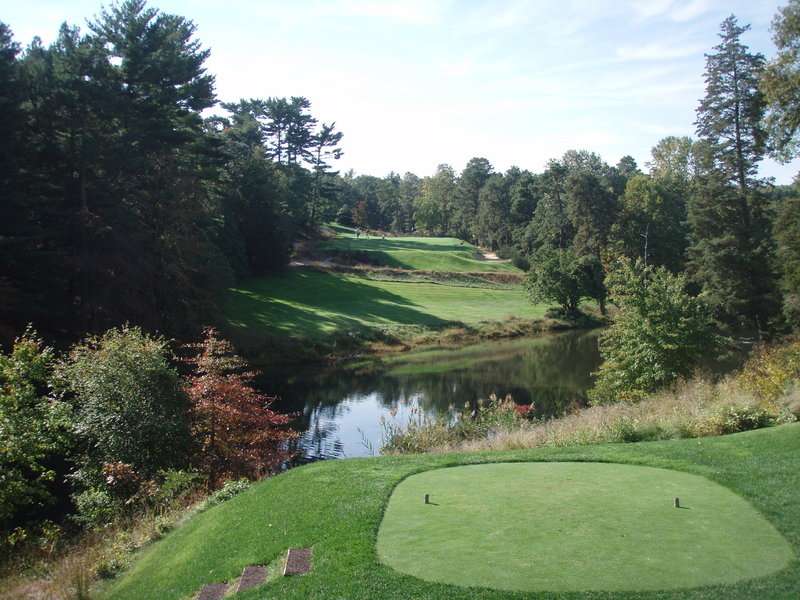
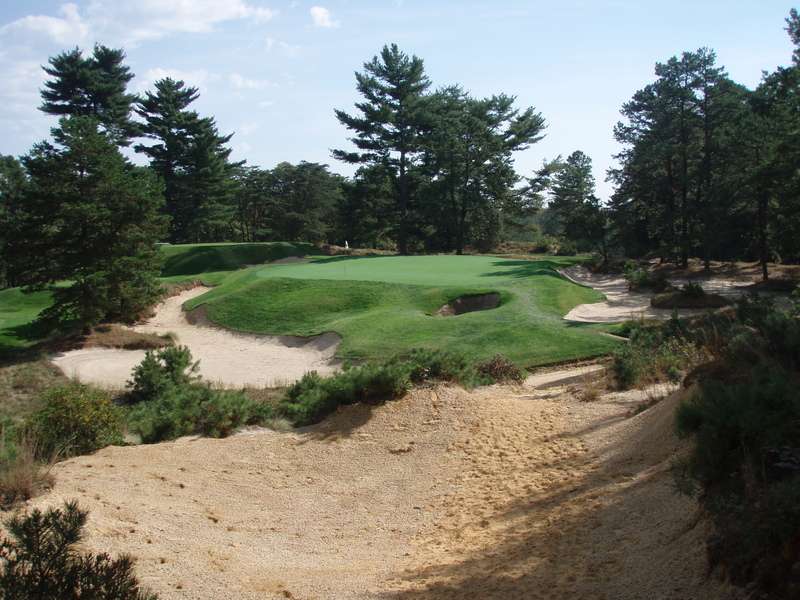
The fearsome 5th plays at about 220 yards for members and alongside the similar 13th at The Addington is perhaps the best long par three I have ever played

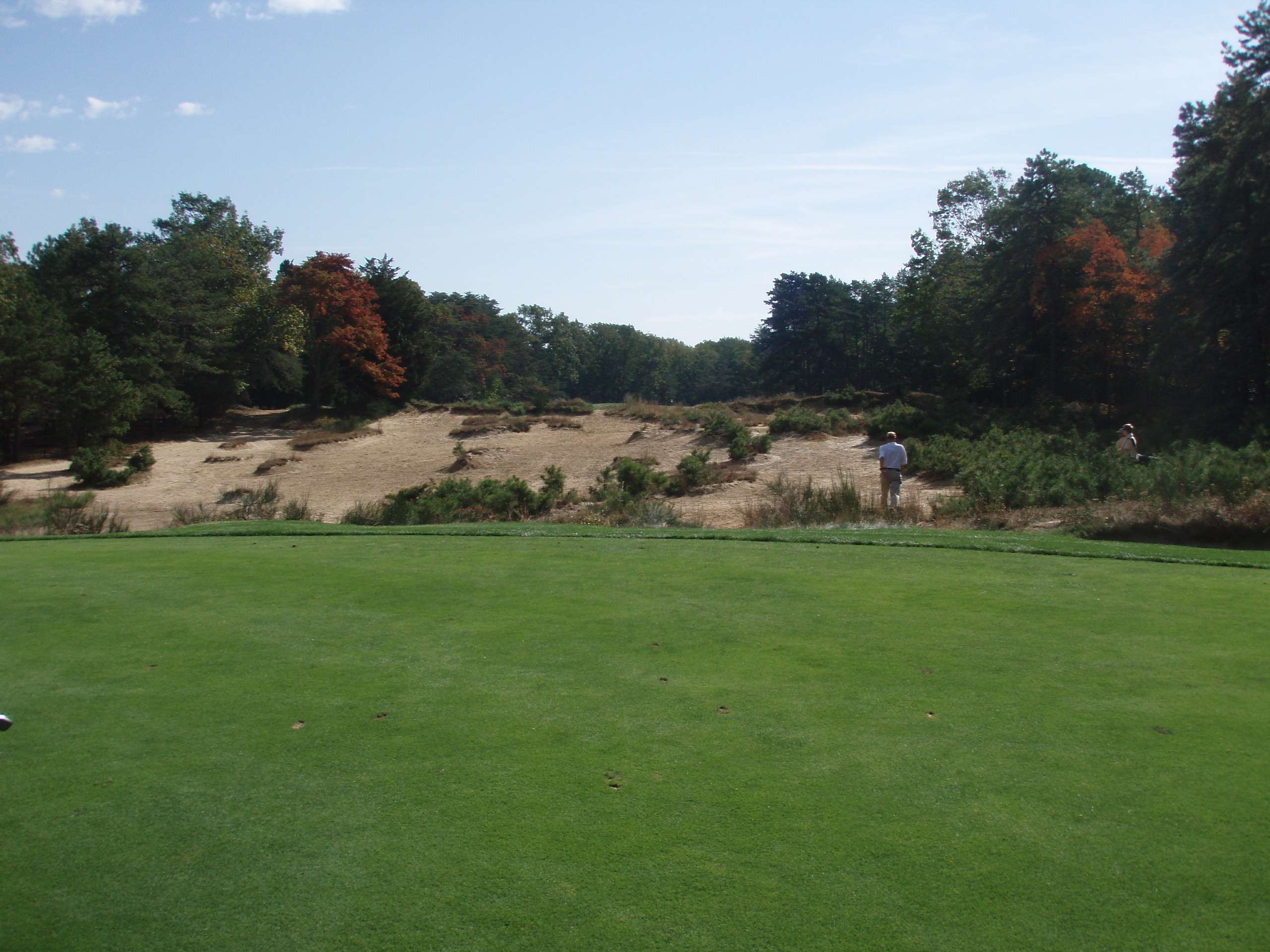
Hell's Half-Acre dominates the 7th hole, playing on your mind until you have crossed it with your second shot
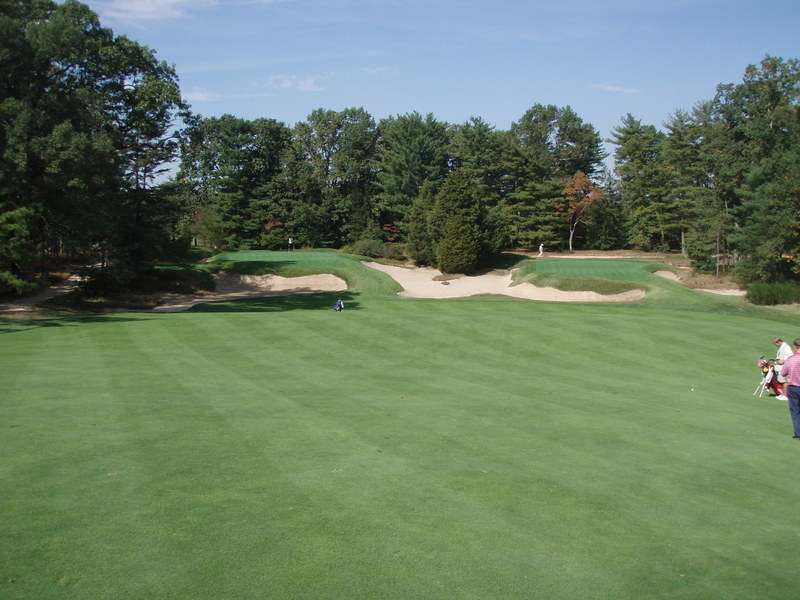

Approaching the 8th hole's diabolical twin greens
 

It's hard to overlook the par three 10th when selecting a favourite hole, but in reality about 10 or 12 holes were my favourite!

Playing the 13th was a dream come true, having first seen the hole in a book of the world's best courses at my grandparents' house when I was a child

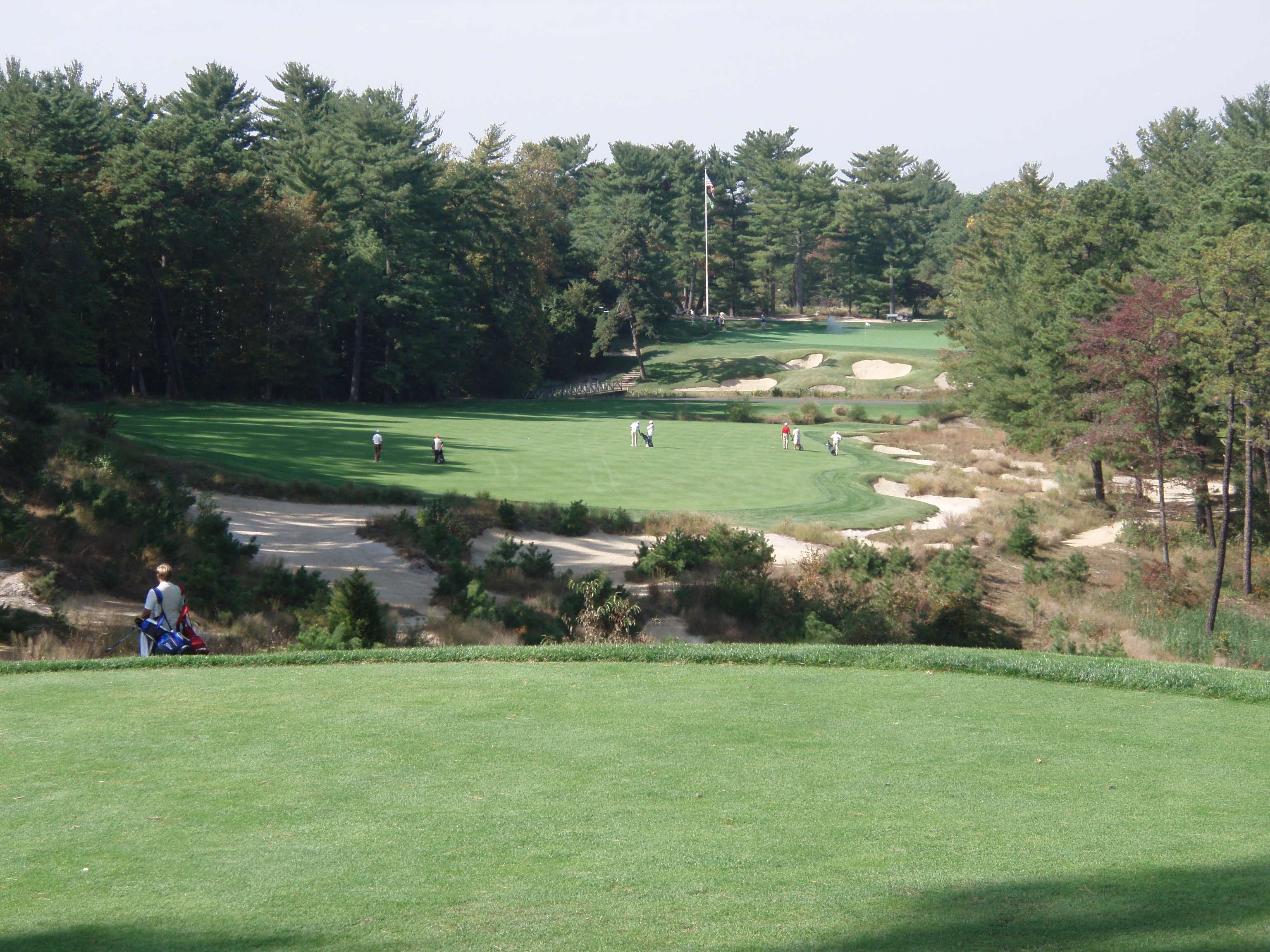
Looking up the 15th fairway and across to the 16th green

The 18th hole: almost at the end of an indescribable experience

Course name: Pine Valley
Location: Clementon, New Jersey, USA
Four Word Course Review: 18 magnificent golf holes

From the moment I was invited to play Pine Valley, I started to dream about it: driving down the secluded road, seeing the front gate, walking onto the 1st tee, trying not to fan one right on the 5th, flying Hell's Half-Acre, dodging the Devil's Asshole, drawing one into the 13th, tensing up on the 15th... that is a lot of dreaming!

So it's saying a lot that the reality is even better, significantly better, than I had imagined it would be. The magic of a day at Pine Valley can't be described, but I'll still try!

Spotting the amusement park on Berlin Road, a massive smile arrived on my face. As I spied the first green through the trees beside East Atlantic Avenue, I nearly drove off the road. Crossing the railway line and seeing the club logo at the gate, my heart hit 200bpm. It didn't seem to slow down all day and that smile never did go away.

First stop was some breakfast in the clubhouse, which reminded me of my grandparents' home: remarkably comfortable but not the least bit pretentious, great food, a warm welcome. Everything a great club should be.

Next stop, the range. Double-ended, distances measured to all eight to 10 flags from every bay, short game area nearby. I am not a practice range guy, a lot of the time I don't even bother with a practice putt, but if all ranges were this good I'd put in half an hour before every round.

But of course it's really all about the course, which is where Pine Valley really put itself ahead of everything else I have played. There isn't a single hole that comes close to being weak. And further, the holes gel together perfectly to create a cohesive course.

The corridors are very wide and the carries over sandy waste area are really quite short, meaning the visual intimidation is far greater than the reality of the shots you face. Perhaps the most difficult aspect of playing Pine Valley was the sensory overload. There is just so much to look at regardless of where you are on the course that it is hard to maintain concentration. I have never seen, for want of a better term, so much architecture on the ground - so many features that can come into play and that draw your eye and your mind to them.

The first four-hole loop may not feature any of the most famous holes on the course, but it introduces you to what is great about Pine Valley. The drives don't demand too much of you, but it's essential to put the ball in very specific places to allow the flag to be attacked, staying midful of the least damaging places to miss (usually short). The greens are bold and unique. Not one green at Pine Valley is forgettable, nor could any green be mistaken for another. The steep terrain is utilised perfectly.
It's hard to believe as you walk off the 4th green that the course is about to step up a notch, but it immediately does, with the long par three 5th justifiably one of the most famous holes in golf, playing uphill to a benched green with nothing good on offer if you miss the steep green to the right (nothing good happens if you miss most of the fairways or greens anywhere, to be fair!).

With only two par fives on the course, I love that both are genuine three-shotters. The 7th has only been reached and held in two shots once in almost 100 years thanks to its length and the fearsome Hell's Half-Acre that looms about 300 yards from the tee. The 15th, meanwhile, required a driver and two hybrid shots for me to get pin high - 570 yards climbing uphill and tightening towards the green. Again, the two holes are completely unlike one another, something George Crump achieved across the board even on holes of similar length or on similar land.

The 8th is just a tick over 300 yards, but may be one of the toughest pars on the course due to its blind drive that will likely leave a downhill lie approaching a tiny, two tiered green surrounded by sand (the hole has two greens, adjacent to each other and both very similar in size and design). I have heard of top amateaurs making both 2 and 11 on the hole, and if scoring spread is any indication of quality, it doesn't get better than that!

The 9th is a more muscular par four also featuring two greens that takes you to one of the course's most famous holes, the short 10th with its legendary Devil's Asshole bunker short of the green - deeper than it is wide! Any miss is punished by the many bunkers that ring the green, but I have never seen anything as fearsome on a golf course as "the DA".

The back nine keeps the pace going with the often overlooked but brilliant par four 11th playing through a valley to an amphitheatre green, before another par four at the 12th that although short packs a punch due to its tricky green.

The 13th might sum up Pine Valley perfectly. There are safe options on every shot, but the green, following a good drive, sits tantalisingly in a sea of sand, demanding a long hook and refusing to be ignored. To play to the right, pitch on and two-putt secures an easy five, but the lure of a birdie or par is just so great that I am sure very few players take that route when in range of the green.
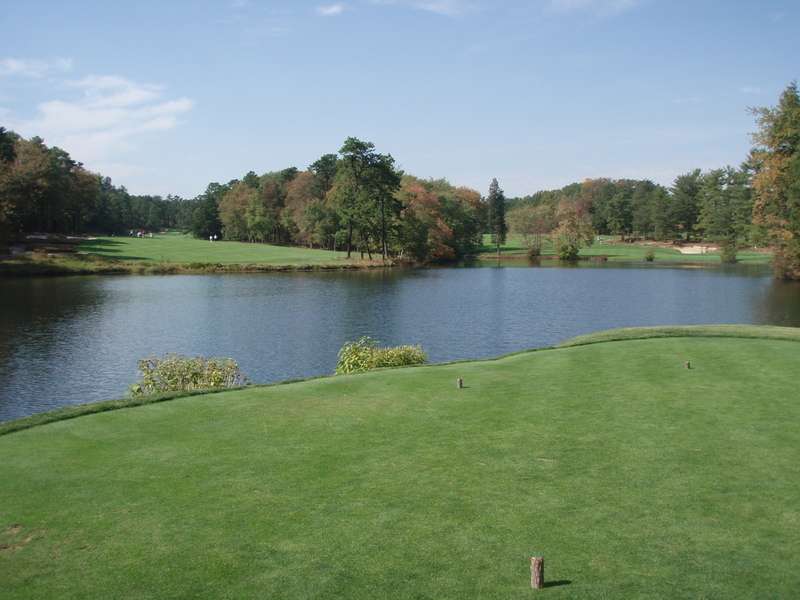
Some choose the drop shot 14th hole as the weakest at Pine Valley, but I for one really liked it. The final par three, it completes a set of one shot holes that have remarkable variety in length, terrain and shotmaking challenge.

Following the ball breaking 15th is another unsung hero of Pine Valley, the 16th. Like the 6th, a sandy waste creates a diagonal driving hazard, with the approach shorter and the angle better the further right you aim, lengthening the carry. If you steer one left, your approach is directly towards the flanking lake, which you have just driven over at the 15th.

With two holes to go, Pine Valley throws up a fourth short par four, ostensibly a huge birdie chance close to home. But as with all of the holes here that are short for their par, the challenge is far greater than the length suggests, with the approach played blind to a green set atop a hill and guarded on all sides by bunkers. The surface itself is steep and fast, making that birdie less likely again.

And so, well before you'd like, you're standing on the 18th tee, looking at one of the best vistas on a course filled with them and wishing it wasn't almost over.

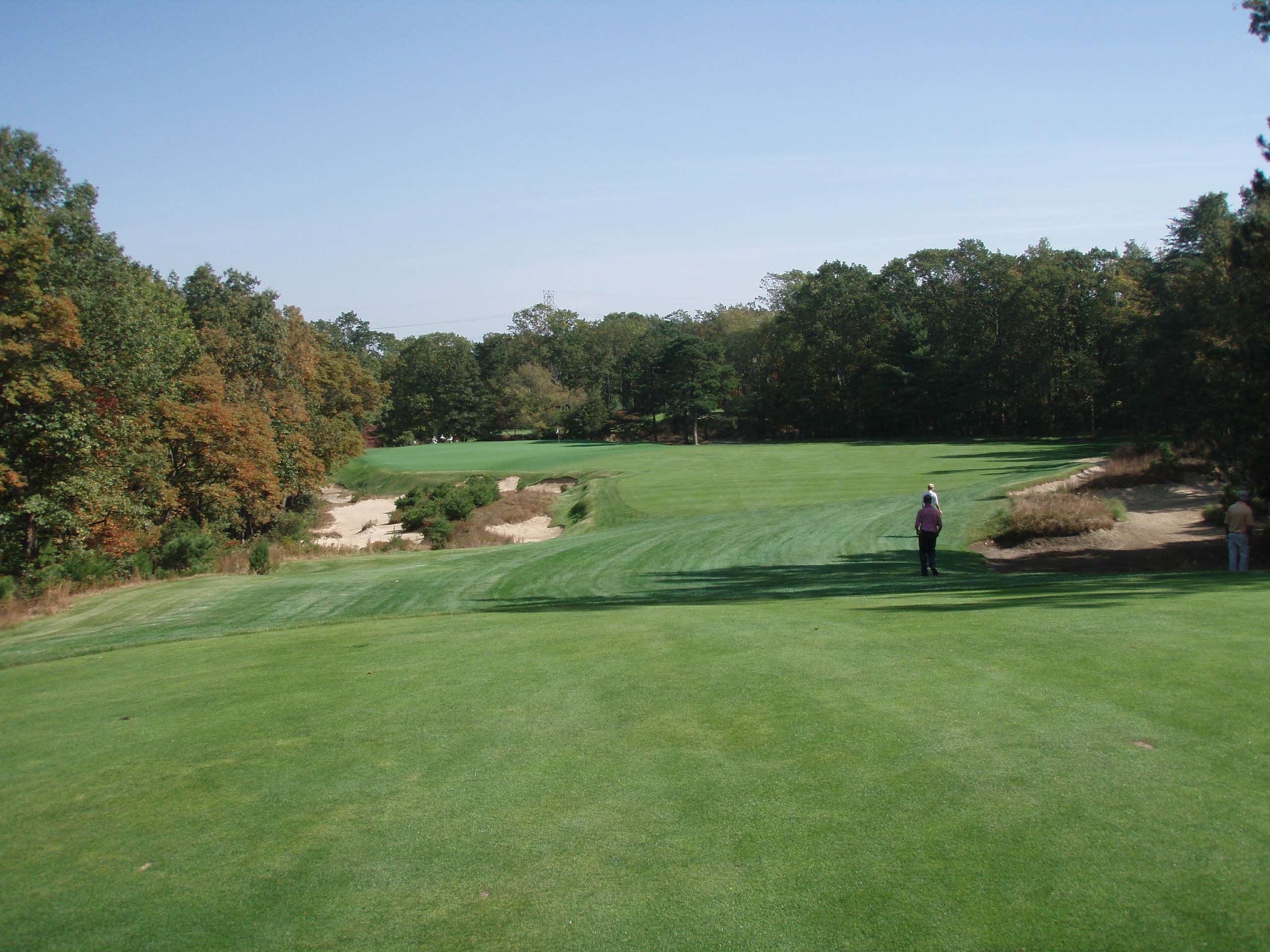
The drive is downhill to a wide fairway, setting up a second back uphill ever so slightly to a collecting green fronted by a hillside of sand and a creek. For the width of the drive and friendliness of the green gathering balls that hit its edges, this is one tough hole, calling for a steely nerve as you stand in the fairway most likely holding a mid or long iron.

And just like that you've shaken hands and it's over. Inside to tally up the (surely dispiriting) numbers and enjoy a bowl of the club's signature turtle soup (which tasted surprisingly good!).

If I have never felt so excited driving into a golf course, I had never been so disappointed to be leaving one as I drove back across the home hole and out the gate. Nothing in golf is perfect, but Pine Valley is without doubt as close to perfection as I have ever or, I suspect, am ever likely to see and until I return I will dream of it constantly.