Wednesday, May 19, 2010

Brora


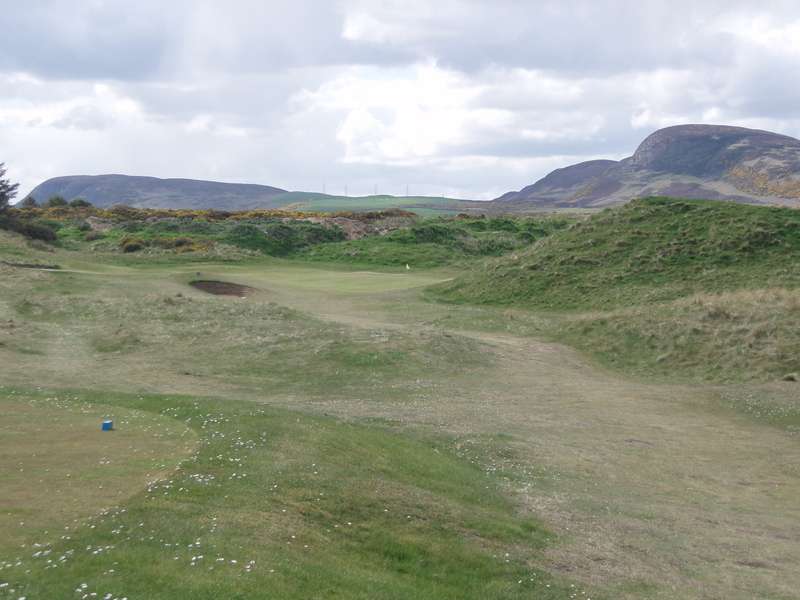
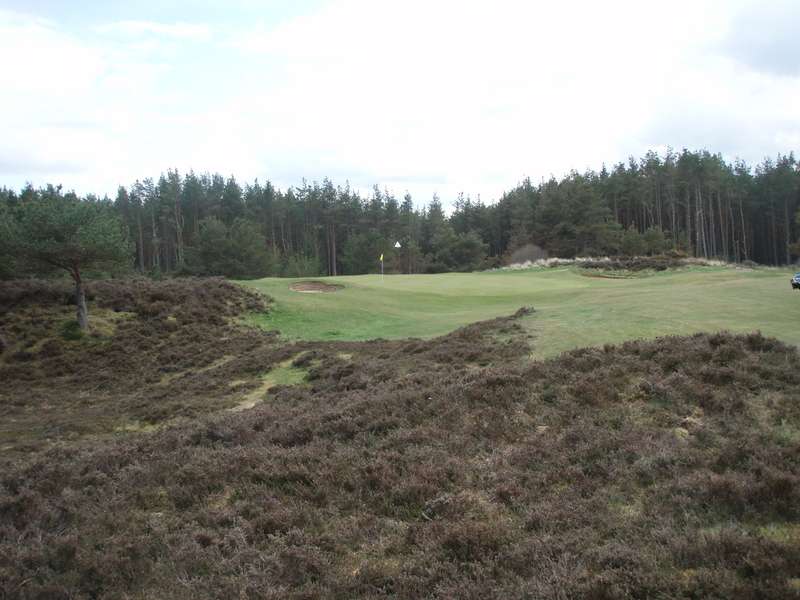
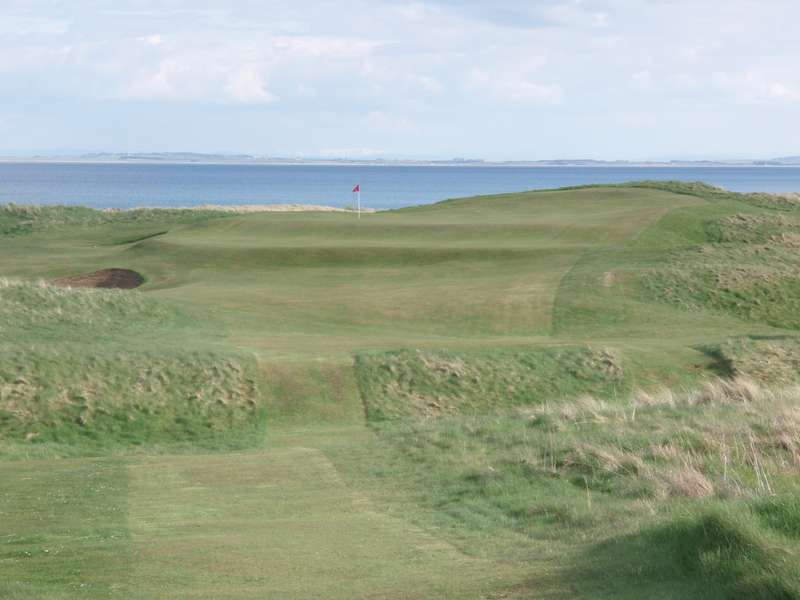
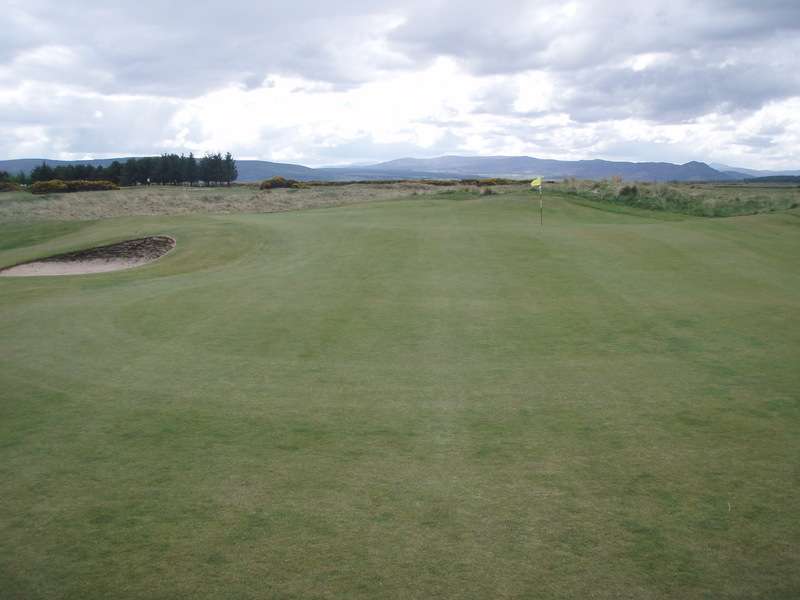
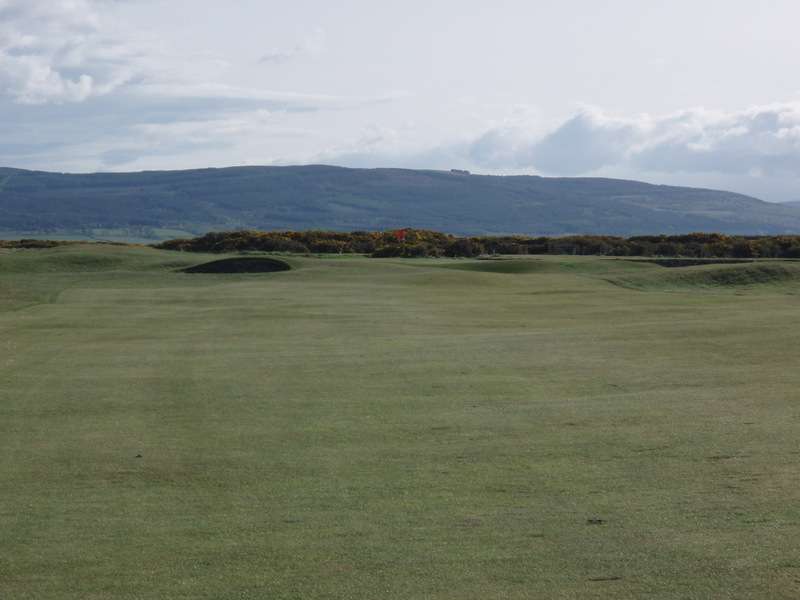
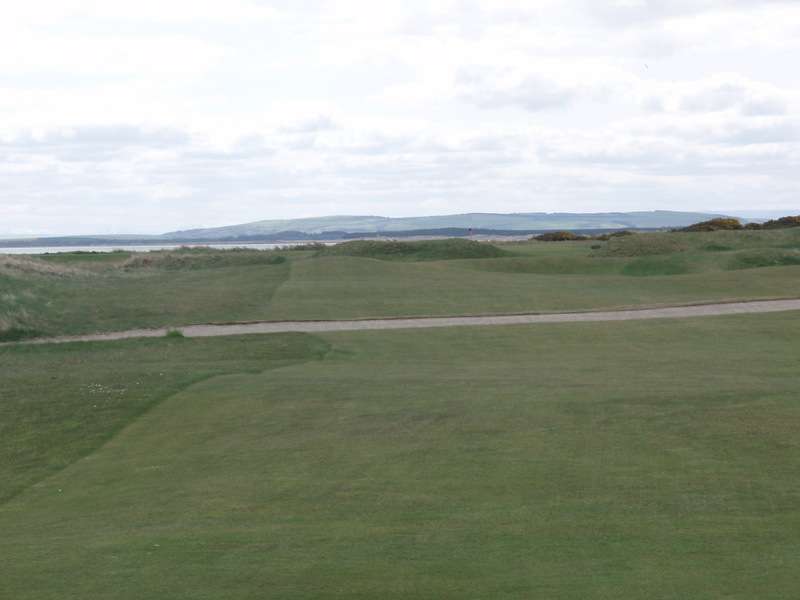
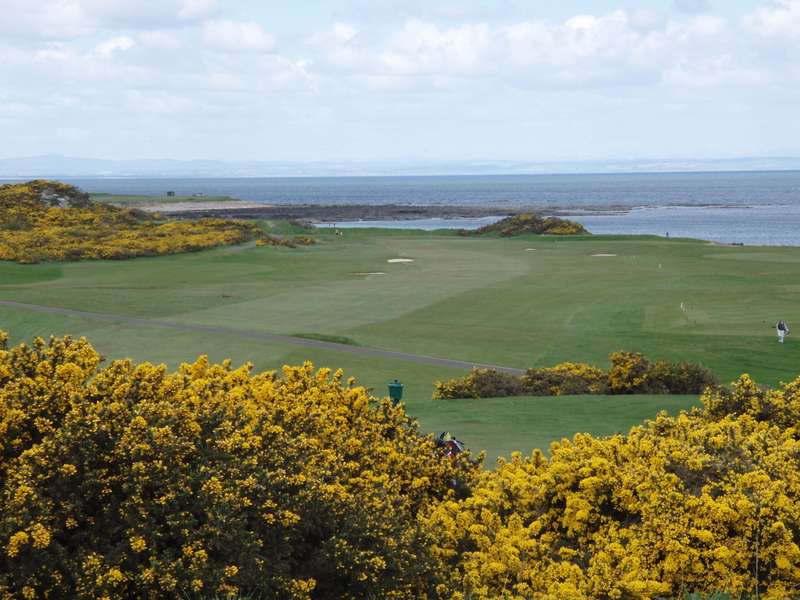
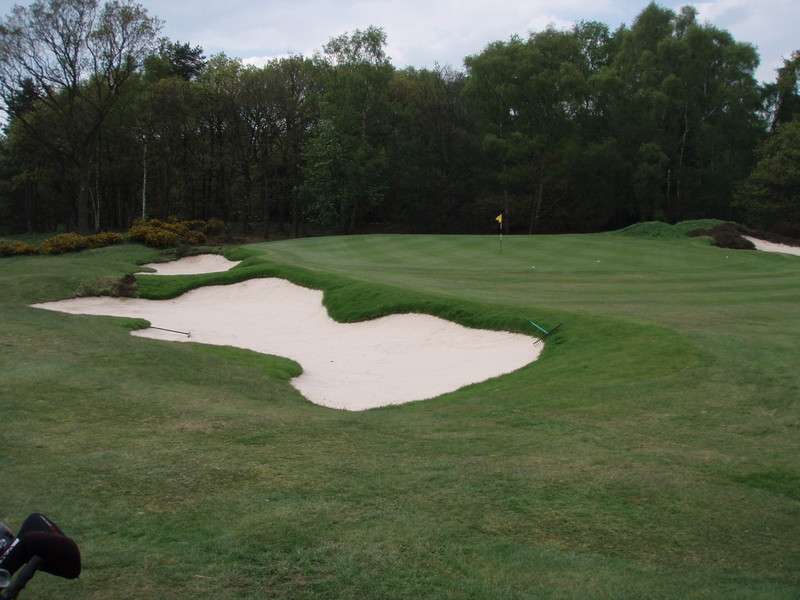
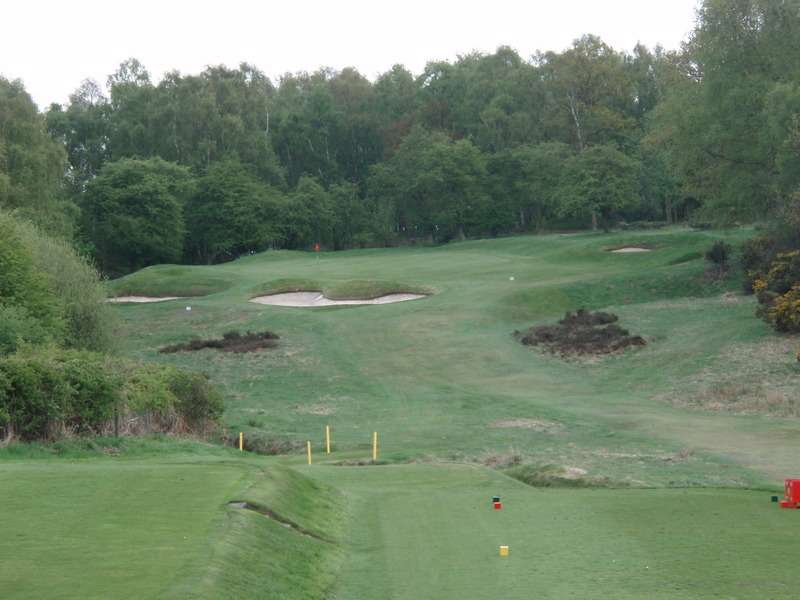
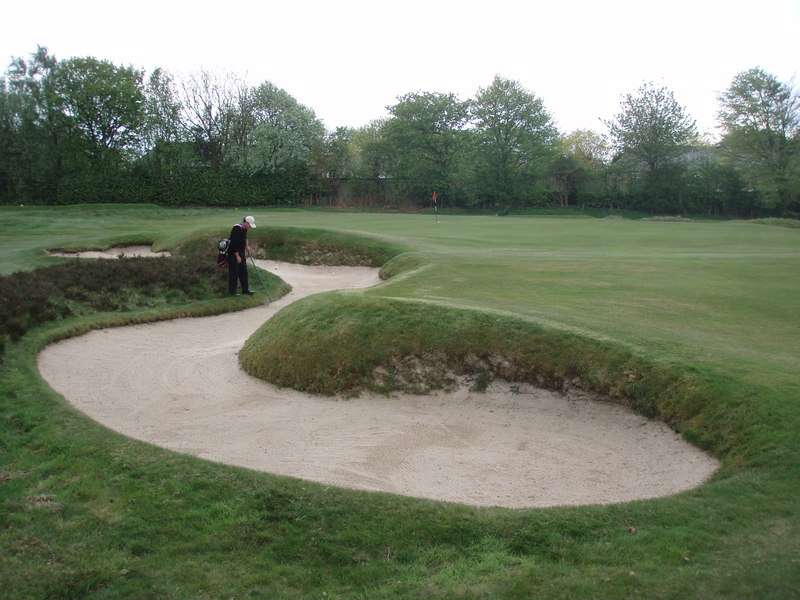
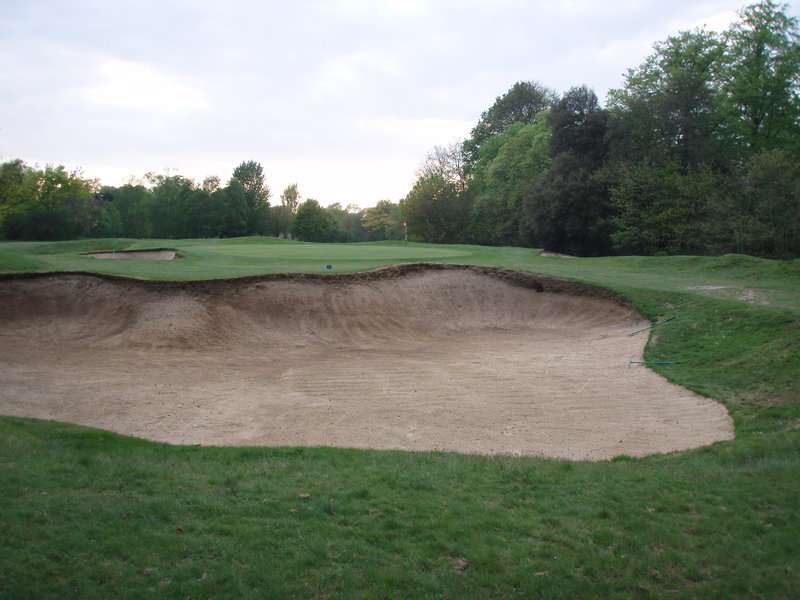
The 9th may be a fairly straightforward hole, but the setting is as fantastic as they come and the slight right-to-left tilt of the land feeding the bunker on the left of the green adds some interest

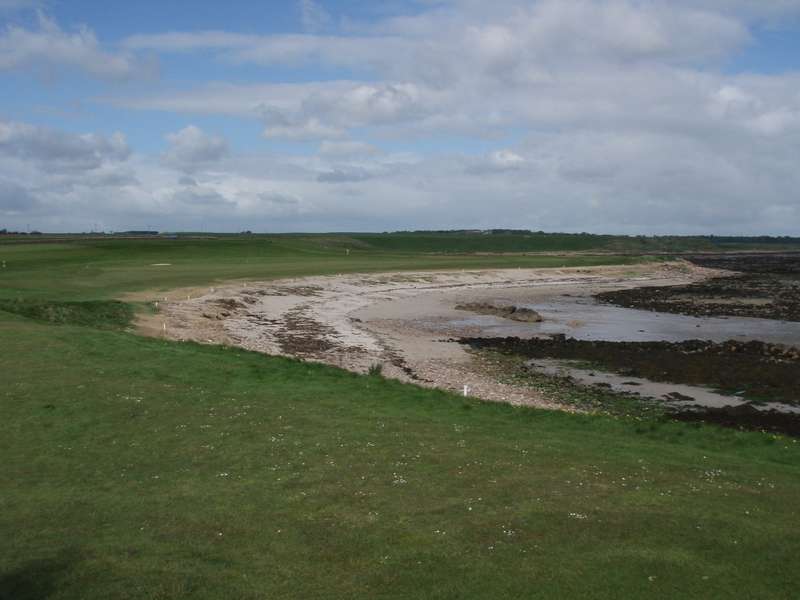
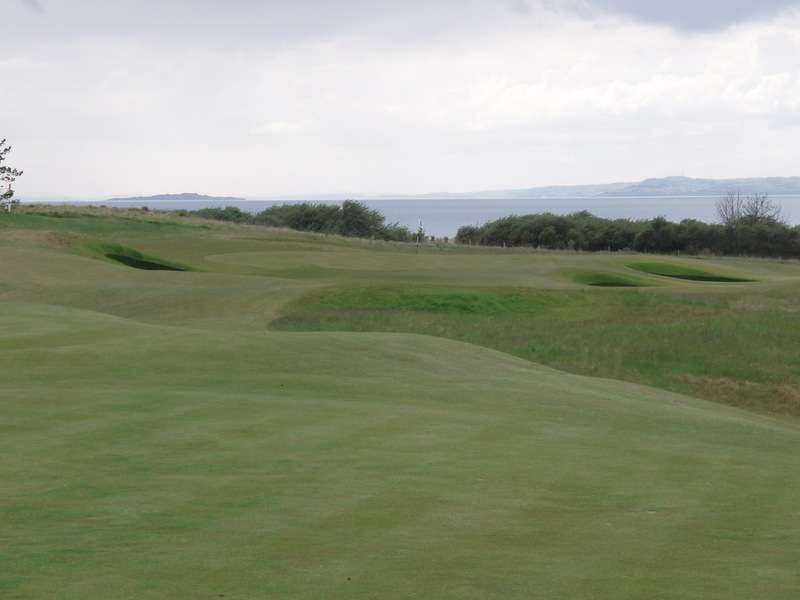
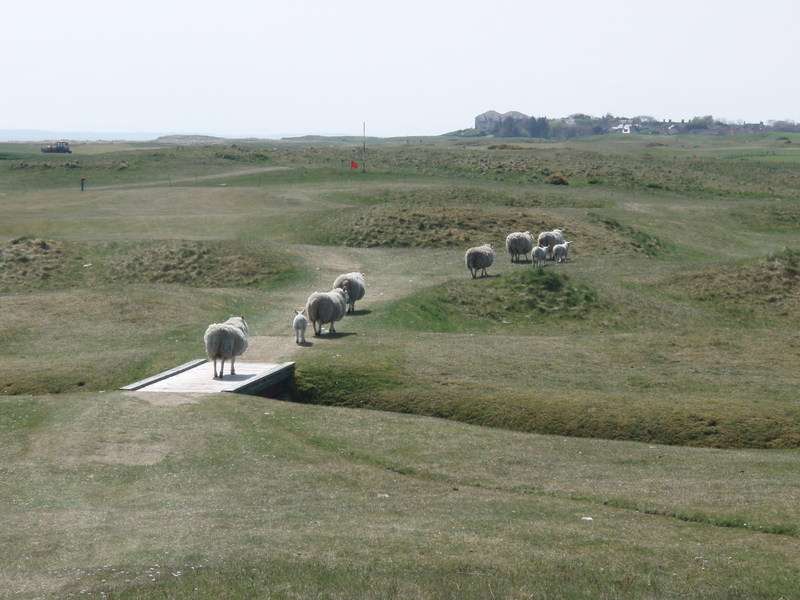
The locals walk to the 11th green. The farmboy in me came to the fore playing in such natural surroundings that reminded me of golf on my grandfather's no-frills nine hole course built over land on his sheep farm, where I learned the game

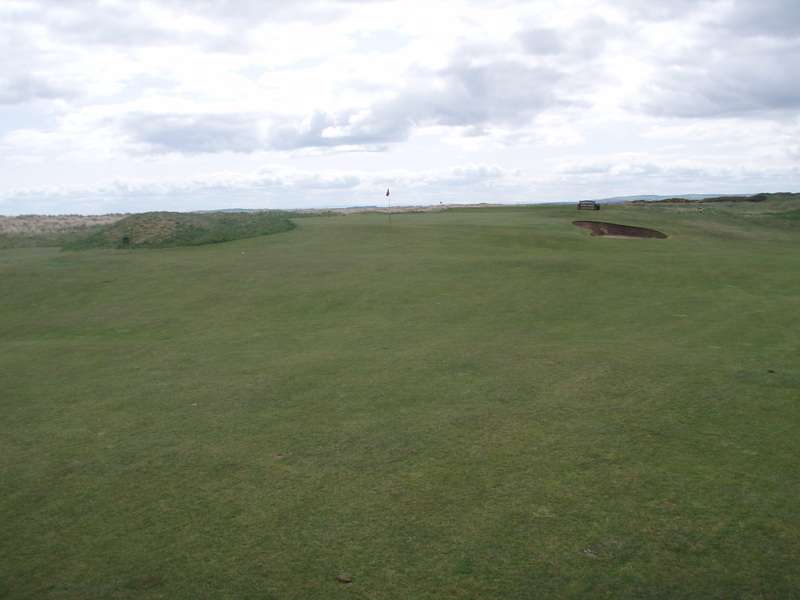
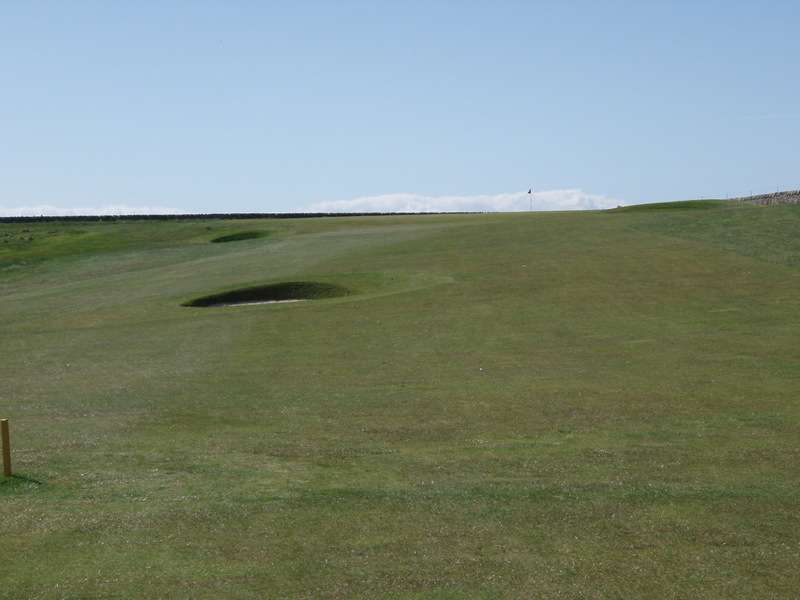
Proof that length isn't the only way to make a hole tough comes at the 13th - just more than 100 yards tee to green but filled with interest, especially as the breeze grows stiffer

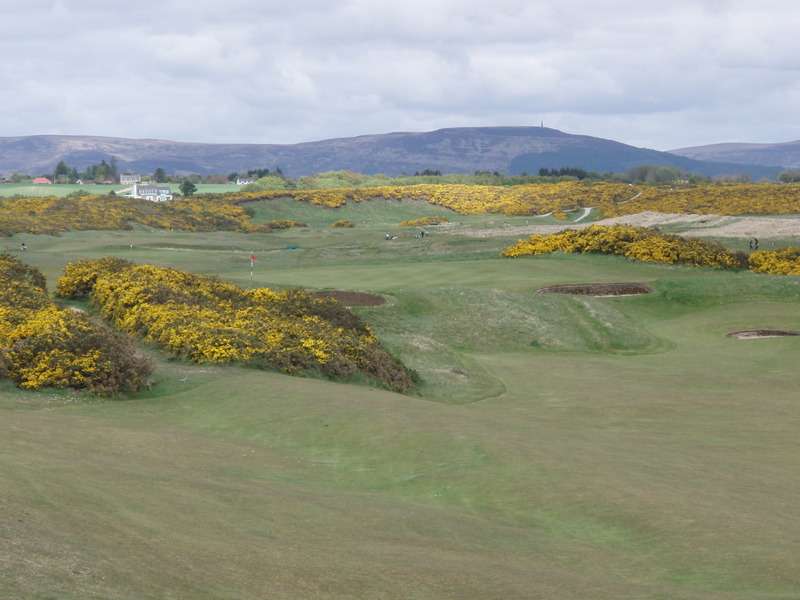
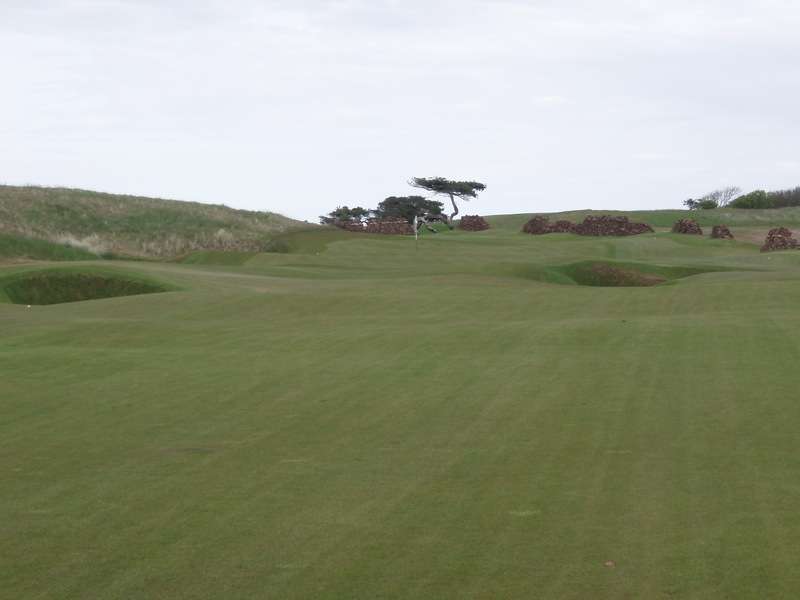
The approach to the skyline green on the 16th, with a good example in the foreground of how short the sheep keep the rough

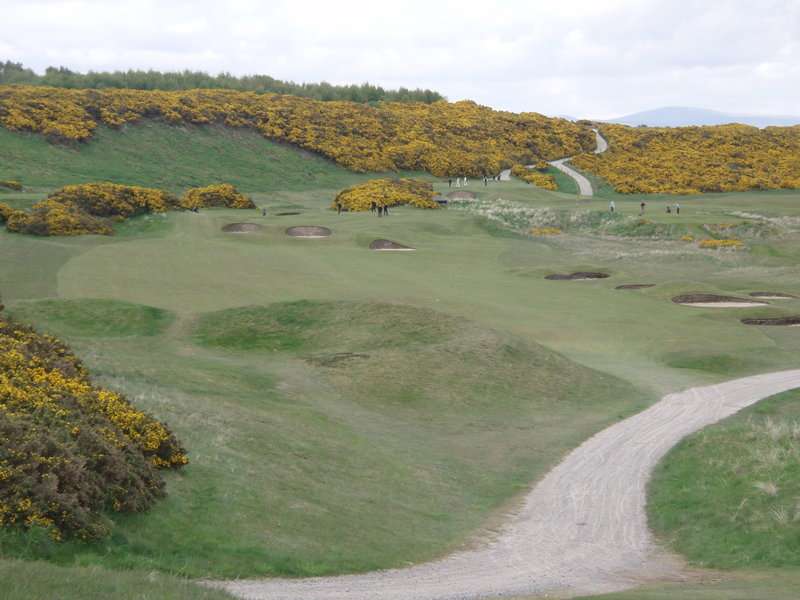
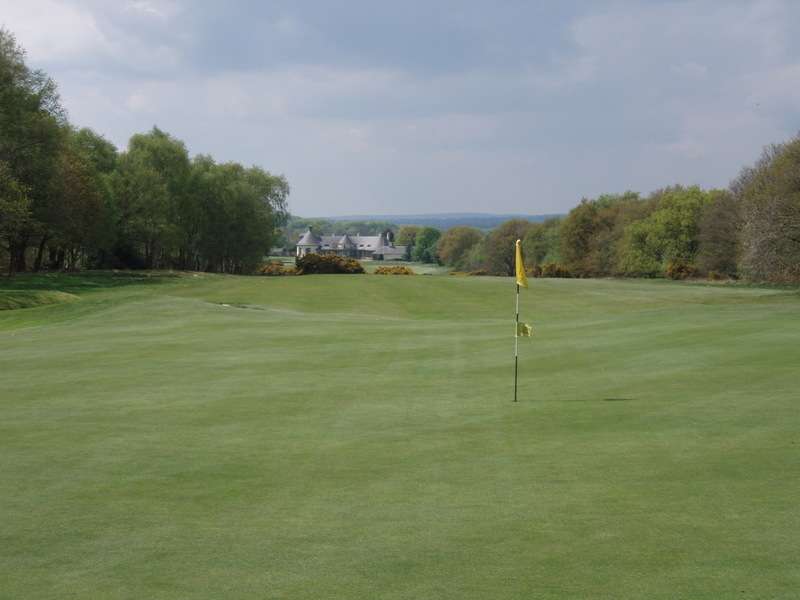
Options galore present themselves at the par four 17th, played to the red flag in the centre of the shot (the yellow flag in the top right belongs to the sharp dogleg-right opening hole)

Course name: Brora
Location: Brora, Sutherland, Scotland
Four Word Course Review: The definition of natural

I have never played a course as natural at Brora. It's too hard to pick favourite holes when they are so unique, and when the highlights are so great and plentiful.

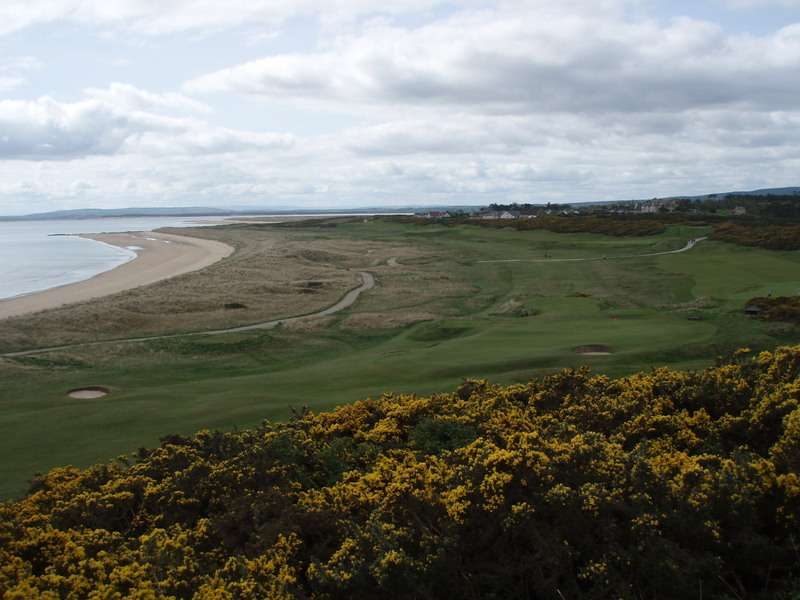
The first four holes were fun without knocking me over, but then came the great long iron second shot to the 5th, guarded short right by a brilliant dune and long by a steep slope, the first of the one-shotters at the sixth, a tough blind drive on the course's sole par five (the 8th) and one of the most beautiful settings in the world for a golf hole at the par three 9th - draped alongside the sea with a steep hill of heather and gorse off in the distance. It's the furthest point on the course from the clubhouse: Brora is a true out-and-back golf course.

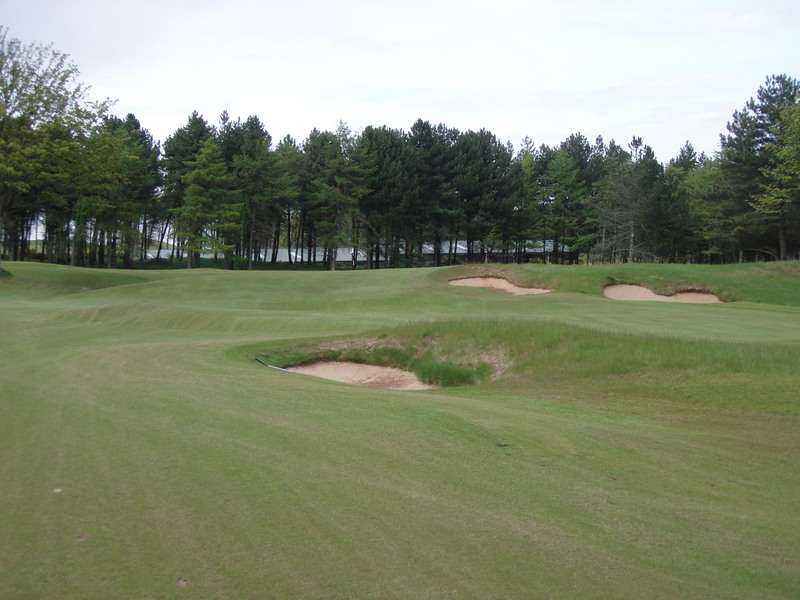
Turning for home, the golf steps up a notch, ensuring the inland stretch loses nothing against the seaside front nine.

The 10th green is set in a great site at the foot of a steep dune, the 11th plays over dramatic broken ground that is also a feature of the 4th and 14th and the 12th is the final piece on a trifecta of great par fours: reachable, but with brilliantly-placed bunkers that add a ton of strategy.

The 13th is a tiny par three played to a green adjacent to the 6th, but playing in the opposite direction, crossing a snaking burn twice. Combined with the 9th and 18th holes playing away from each other at opposite ends of the property, it makes for four one-shotters playing in opposite directions and perfectly spaced at both the ends and middle of the course. Just part of Braid's design genius.

The 14th is a slightly perplexing short par four, but then comes an awesome four-hole final stretch tumbling over (the 15th), up (the 16th), along (the 17th) and through (the 18th) dunes that seem to have been crafted for golf.

Along the way is a combination of memorable features, such as a contender for the steepest approach to the world's highest seaside skyline green at the 16th and a split fairway at the 17th where both routes to the hole appear to have equal merit.

All this looks to have been designed with an absolute minimum of artificial shaping and by employing the absolute minimum of bunkers.

Another feather in its cap is the sheep that patrol the rough (one-strand electric fences ring the greens to keep them off), keeping it low enough that four of us playing 36 holes and hitting some pretty bad shots in the process didn't lose a single ball between us.

You couldn't build a golf course like Brora. Despite the lack of length it remains a super fun and challenging course thanks to its terrain and smart design. Add in the high-teens temperatures and blue skies we enjoyed, with a sporting breeze out of the north, and it made for a day of golf equal to anything else I have enjoyed.

Tuesday, May 18, 2010

Golspie


At the par three 6th, the landforms surrounding the green almost perfectly match those in the far distance

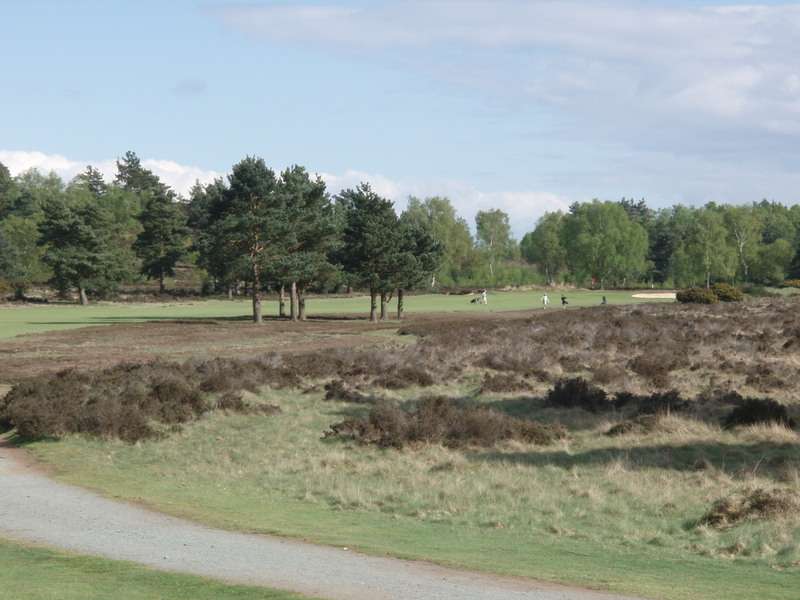
The heathland 9th is a thrilling two-shotter that wouldn't look out of place 500 miles south in Surrey

The brilliant par three 16th is one of the best holes in the Highlands

Course name: Golspie
Location: Golspie, Sutherland, Scotland
Four Word Course Review: Remarkably cohesive considering variety

It amazes me that of all the people who've told me that I must make sure I get to the Scottish Highlands to play Dornoch and Brora, no one ever mentioned Golspie.

Bookended by the two more famous courses, Golspie is north of Dornoch and south of Brora, with the town boasting the only traffic light in all of Sutherland.

Turning down a quiet back street, you soon see the very humble clubhouse. The course begins in a similarly understated vein, with a short par five to a nondescript green over meadowland, but from there it rapidly shifts through the gears.

The par three 2nd has a brilliant wavy green that sets a high standard that the other one-shotters maintain. If there is one lasting impression of Golspie, it's just how consistently impressive and varied the short holes are. They're arguably on par with the set down the A9 at Dornoch.

From there the course turns 180 degrees and moves onto the genuine linksland, with the next three holes - a mid-length par four, par five and driveable par four - heading south along the sea shore, each featuring broken ground that impacts on either the drive or approach.

The second par three comes at the 6th, the green set at the foot of a mammoth dune that houses the wonderful 16th green, before the dramatic green of the 280-yard 7th ends the stretch of linksland holes.

The 8th and 9th transition smoothly from open heathland to a pine forest, the latter hole worthy of comparison with the very best of the London heathland.

The par three 10th has a green to rival the 2nd, it's just a shame about the man-made pond that fronts it, the only truly regrettable thing about the course - and it's an absolute wonder why the club uses it on its promotional material. Were that the one thing I was shown before deciding whether to include Golspie on my itinerary I wouldn't even consider stopping there.

The 11th is a gorgeous natural par four through the thinning forest, taking you back to the open heath of the short par four 12th and 13th, each with quality greensites and some movement in the fairways.

If there was ever a story that sums up the passion for golf in this area, it comes here.

A friend playing this stretch - I forget which hole exactly - hooked a drive onto the road that flanks the course just as a police car appeared around the corner. Predictably, it hit the car straight on, the rozzers screeching to a swift stop and jumping from the car.

As the guilty golfer and his playing partners walked up towards the scene of the crime, they saw the two officers scurrying around in the bushes and assumed they must have been keen to collect the ball as evidence of the cause of the damage to their car.

Getting close enough that he was preparing to begin his grovelling apology, the golfer and his mates saw the enthusiastic Constable turn and shout: "I found it. It's sitting alright and you've got a shot to the green!"

The course moves back onto the meadow grass for the par five 14th and par four 15th, both boasting interesting greens, before the final transition to links for the final three holes.

The aforementioned 16th is one of the finest links par threes I am ever likely to see. The green sits high, two tiers of terror a good mid to long iron from the tee. The view is also first rate: playing south east you have the blue of the ocean and golden sands stretching out before you.

The 17th is the final par three, the green 200 yards away over bold dunes that render it blind. It reminded me a great deal of the 16th at Trevose in Cornwall. An even bolder dune dominates the last hole, with the second shot to the long par four forced to fly a towering rise.

Aside from the great one-shotters and general variety of holes, what's great about Golspie is how smoothly and naturally it transitions from meadow to links, through open heath into a forest, back out to meadow via open heath and then into the linksland again.

I couldn't imagine before playing Golspie how the four distinct environments could possibly be woven into a cohesive whole, but there is no doubt Golspie achieves that.

If you are planning a Highlands fling, be sure to include a round at Golspie. If you've been there before and snubbed the little course that could, give yourself an uppercut: you missed one of the great hidden gems of British golf.

Monday, May 17, 2010

Royal Dornoch (Struie)

The 3rd green, which was among the new work done by Robin Hiseman, has great internal movement

The 15th green is a good example of the features being placed well to take advantage of the minimal undulation on the ground that houses 3, 4 and 15-17

Course name: Royal Dornoch (Struie)
Location: Dornoch, Sutherland, Scotland
Four Word Course Review: Interesting greens, great views

One of the benefits of spending some time in the one place on a golf trip is the chance to play the lesser courses that still offer plenty of good golf.

Dornoch's second course, the Struie, is a patchwork quilt of golf holes, with some having always been part of the course, others absorbed from the main course after WW2 and five new holes (9-13) having been built by Robin Hiseman earlier this decade.

While a clearly inferior younger brother to the main course - Stephen Baldwin to the Championship layout's Alec - there are some really good moments.

The opening hole, one that was initially on the main course, pit sets your expectations a tad high for what follows, with only the 3rd, 4th and 5th greens (all after fairly pedestrian tee shots) and par three 8th offering exciting golf to match it on the rest of the front nine.

The stretch of 11-13 is fun, a long par four followed by a 240-yard two-shotter over a natural wetland and then a well-bunkered par five with a wonderful green.

The 16th is the last of the highlight holes, doglegging right to set up the approach to a wildly sloping green.

To be fair, many of the holes I've not mentioned are far from poor, the standard set elsewhere on the property is just that high.

What's most enjoyable about the Struie is how it contrasts with the main course. Where the famous Dornoch greens up on the higher linksland are massive, with gentler undulations and domed edges that parry the ball away, many on the Struie have more wild interior contours and smaller overall size.

The views are also a real joy, looking back towards the town from the far reaches of the course, which run along Dornoch firth. There's a great touch on the 12th with the spire of the town's cathedral rising up from the middle of the green as you stand on the tee.

There's also a nice contrast of setting on the 6th and 7th as the course moves into a pine wooded area.

Most of the world's 30,000-odd golf courses can't hold a candle to Dornoch's championship course, so it's no insult to say the Struie falls into that camp, but it has enough highlights for it to be worth a play if you're spending a couple of days in town.

Royal Dornoch (Championship)


A group of visiting golfers I know of asked in the bar before their first Dornoch round: "What's the hardest shot on the course?" An aged member, sitting by the window with a malt in hand, didn't hesitate. "The second shot to the 2nd hole," he said. The group headed off to play and when they got to the 2nd and saw it was a par three they thought the old bloke must have got mixed up. None of them hit the green. By the time they were walking to the next tee they understood!

The 5th is a brilliant, challenging hole whether you can drive the ball 150 yards or 300

The 6th is as wonderful as it is picturesque

Overlooking linkstopia from the 7th tee

The small dune and bunker that frame the opening to the 12th green make the hole great fun and emphasise the importance of earning a good angle on the drive

The 15th doesn't get many plaudits, but it was among my favourite holes

The 17th is one of those holes you could happily play all day long, then come back the next day and find new challenge in as a result of the pin being moved and the wind switching

Course name: Royal Dornoch (Championship)
Location: Dornoch, Sutherland, Scotland
Four Word Course Review: A religeous golf experience

Dornoch is a cathedral of golf if ever I saw one.

I arrived in town the evening before my first round on the famous links, as the sun dropped low and cast long shadows through the town. I thought that was gorgeous enough, but then I made the walk up Golf Rd, past the bowling club and there it was.

The light was a rich gold by that late hour, and the shadows thrown across the 1st and 18th fairways were incredible, while the flowing gorse was a blaze of bright yellow. Overlooking it all was the humble clubhouse.

The feeling of Dornoch is unlike anywhere else I have been in the world of golf and I'm not sure I can adequately describe it, other than to say the feeling that washed over me from my first glimpse of the course to my last look back over my shoulder as I left three days later was very much like being inside London's St Paul's Cathedral or St Peter's Basilica in Rome, where you experience such a sensory overload, coupled with the weight of history and realisation of just how far many have come to worship at that location.

The course itself is filled with some of the most memorable shots I've faced.

The 2nd is a brilliant par three to a push-up green from which a par is almost impossible should you find sand or miss left or right, where steep banks make it hard to decide what type of shot to hit, let alone execute it. The fear of the ball stopping on the hill and then making its way back to your feet can easily cause a nervous jab that sends the ball into the same predicament on the opposite side of the green.

The gentle angle and slight blindness of the putting surface on the 5th secured it in my mind as one of the best short par fours I've seen, a hole similar to the 6th at Deal and 12th on The Old Course in that on the tee it seems a good chance to make birdie but 10 minutes later you're walking to the next hole feeling pretty good about having made par.

The 8th and 17th are similar holes in their topography: playing along a plateau that drops steeply at a 45 degree angle around 180 yards from the tee with the green set in a small punchbowl, but the small differences in strategy set them apart and convinced me there was room for both on the same course without repetition being an issue.

The angled green at the 12th, set between a front left mound and front right bunker showed me how subtle angles and features can make a hole play so much more difficultly than it seems it should. Yet another hole - and this might be my strongest lasting memory of Dornoch as a whole - that shapes up on the tee as a birdie chance before imposing its smarts on you and making you earn a par.

Foxy - the 14th hole - is another exercise in angles, calling for a long, drawn drive to even earn a shot at hitting the massive green in two, before insisting you reverse your shot shape for the approach. That is poses such challenges without a single bunker is a testament to the wonderful land.

Following Foxy is one of Dornoch's unsung heroes. The 15th is a reachable par four with a rough-covered dune in the middle of the fairway about 200 yards from the tee. Once past the dune, either by flying it, squeezing down the left or using the wide fairway to the right that can't be seen from the tee, the approach to a slightly domed green is much more difficult than an 80-yard shot should be.

Those seven holes had probably the strongest effect on me, but that's not to discount the other 11, which all offer something unique and bring new and different challenges to the table.

So massive are the greens that there seems to be an infinite number of pin positions that change the holes completely, especially when changes in wind strength and direction are added to the mix. Those enormous greens coupled with ideal golf land made me think that more than any other, Royal Dornoch is a course that could have all its bunkers removed and lose very little of its charm and challenge.

Getting to Dornoch is not the easiest thing in the world. It is a long way from pretty much anywhere. But few pilgrimmages are more worthwhile.

Sunday, May 16, 2010

Crail (Balcomie)

The beauty of the course is evident from the moment you step onto the first tee. The picture above shows the opening hole (left) and 14th (right) in the foreground, with the par five 2nd skirting the eroding shoreline in the distance

How much of the beach - which is out of bounds rather than a hazard - do you dare cut off with your tee shot at the 4th?

The 10th is arguably the best hole on the course, with smart decisions and well executed golf shots - the approach shot from a sidehill lie - required to earn a three or four

With the gorse flowering in May, there are few better views in golf than from the tee of the 17th, and with the wind into you, probably few tougher pars

Course name: Crail (Balcomie)
Location: Crail, Fife, Scotland
Four Word Course Review: Unconventional, delightful holiday golf

The rich and lengthy history of Great Britain never ceases to amaze me. Case in point: The Crail Golfing Society is older than the country I grew up in! When Captain Arthur Phillip led the first fleet ashore in Sydney in January 1788, the golfers at Crail had already been playing as an organised society for two years.

The Balcomie links at Crail didn't follow until 1859, with the rudimentary course refashioned in 1895 (still five years before the settlers in Australia's colonies got around to Federating and becoming a proper country...) when Old Tom Morris laid out nine holes. He returned in 1899 to extend the course to 18 holes.

111 years later, what stands on the shore of the North Sea is a great example of what holiday golf should be.

Crail's Craighead links, designed by American Gil Hanse in 1998, provides the club with a "championship" course and the Balcomie remains a delightful, if not monumentally taxing (though 2-5 and 16-18 have some serious teeth), way to spend a few hours playing golf by the seaside, with the water visible from every hole on the course.

There are many remarkably memorable shots out there, including heroic drives across the beach at the 2nd, 4th and 5th (although there was an element of sameness about the latter two), while the semi-blind par three 3rd along a clifftop would hold its own on any course.

I also enjoyed the ridges that cross in front of the green at the short par four 1st and 7th, adding some spice to otherwise straightforward short approach shots, and the options and strategy of the 9th, dominated by the most fearsome bunker on the course guarding the green - and all that's just in the first nine holes.

It's a quirky layout, encapsulated by the unconventional back nine of 4, 5, 5, 3, 3, 4, 3, 4, 3. Despite so many back-to-back holes of the same par, there's no sameness.

The 10th starts the back nine in great style with a gentle downhill drive to a fairway that will kick everything left. The goal is to have your drive come to rest between the centreline bunker and the left rough, providing the best angle for the steeply uphill approach off a hook lie to a plateau green.

The two three-shotters play in opposite directions up and then down the same hill, the 11th to a skyline green and the 12th crossed by a burn that dominates the second shot whether you're going for the green or laying up. The 12th green has a fantastically bold ridge running up its centre that makes the approach perhaps the most important on the course to hit on the correct line.

After the steeply-uphill 13th and postcard 14th, which plays down to the shadows of a historic lifeboat station over a vicious front bunker, the course disappears around the corner for a thrilling finish, overlooked by the club's brand new clubhouse - its floor-to-ceiling windows making the dining room a great place to watch the field try to hold their cards together.

The 15th is reachable in one lusty blow, but the ocean laps at the left side of the green and sand is everywhere on the right. You then face a likely long iron, unless the wind favours you strongly, uphill over gorse at the 16th - one of many holes in these Isles named Spion Kop.

The closing two holes each vie for the title of toughest on the Balcomie links. A punishing par four and yet another par three over gorse to a steep green that offers very few easy two-putts.

The great quality of the Balcomie to me was just how thick and fast the thrills kept coming. It may not - in a technical breakdown - compete with the very best in Fife but that's fine because it's not a course that's trying to go toe to toe with the likes of The Old Course or Kingsbarns.

What the Balcomie does, it does very well. There are many championship courses that belt notchers are keen to play in Scotland, but any itinerary concerned with fun and variety should include this golf course. I defy anyone to regret experiencing it.

Saturday, May 15, 2010

The Renaissance


The "L"-shaped 3rd green features a bunker set in its elbow that collects misplaced balls from the putting surface

Doglegging right, the 7th invites you to try a tee shot threaded between the right side bunkers and the centreline hazard to shorten your second to a tricky ridge-top green

The 9th is an attractive par three played towards the Firth of Forth, with the severity of the green hidden from view: a rear tier drops away sharply, making it hard to get close to a back pin

A massive mound short right of the 10th green dominates the strategy of the hole, creating - in tandem with the back downslope - one of the best greens on the course

The 11th green slides naturally off a dune, creating slopes around the putting surface that send the imagination into overdrive with a chipping club in hand. The lone tree standing sentry at the back is just one of the examples of Doak aligning landmarks and features with the greens

The green complex is a highlight of the brilliant 16th, with its confounding slopes, devilish bunkering and panoramic views out over the previous holes

My favourite par three was the 17th, which plays between 160-odd and 200+ yards depending on your choice of tee and has its surface sunk below the level of the ridge in front of the green. As with the 11th there are options aplenty around the green for recovery shots, with a strong slope visible at the back of the green helping to feed the ball on

Course name: The Renaissance
Location: Dirleton, East Lothian, Scotland
Four Word Course Review: I'm on a Doak!

For the past decade Tom Doak has been the king of golf course design, turning out a succession of the world's best new courses - Pacific Dunes, Old Macdonald and Ballyneal in the USA, St Andrews Beach and Barnbougle Dunes in Australia and Cape Kidnappers in New Zealand among them.

Until now, I'd not experienced first-hand what the masses have raved about. After playing The Renaissance Club, his first UK design, I am a convert. Although Renaissance is not spoken about as being among Doak's best three or four, that's no insult, in fact it's probably the golf design equivalent of being a middle-tier Victoria's Secret model!

Knowing Doak is a fan of using width, short grass and wild greens to challenge the golfer, I was expecting to like what I saw, but even that prior knowledge hadn't prepared me for just how wide those fairways would be, how much fun could be had on and around the greens and how many different angles could come into play.

After an inland loop of eight holes that returns to the clubhouse, the final 10 are set in an "M" shape, close to the Firth of Forth and tumbling over far more dramatic land than the opening stretch is blessed with.

That said, the front half holds its own with some great visual deception, appealing greensites and strategic options, as well as some subtle undulation over otherwise flat land.

At the permieter of many greens are slopes that will deflect anything not on the right line, with bunkers and sloped chipping areas waiting to collect the ball as it's swatted away from the hole: among the best examples is the putting surface feeding straight into a bunker set at the elbow of the "L"-shaped 3rd green.

With a chipping club or putter in hand, the greens are so playfully difficult that anything less than great shot planning and execution will be punished. I say "playfully" difficult because even when you are having your heart broken by them, they are so much fun to play.

Generally I found the slopes separated pretty sedate sections of green. If you hit an approach into the same sector of the green as the pin, the putts had surprisingly little break in them. Speaking from my own experience and listening to our forecaddie discuss lines with my playing partners, rarely did such a putt have more than a couple of balls' worth of break, a foot or so perhaps on a 20-30 footer. The massive break came when you'd played your approach or recovery shot to the wrong area of the green.

The width of some holes has to be experienced to be believed. Rarely have I seen such bad places to hit your ball within the fairway cut. It takes some careful concentration from the tee to select where to place your shot, because there is often no obvious visual difference (ie. sand or long grass) between position A1 and purgatory.

Bold landforms are a feature of several holes - a fairway kickpad to buy you some extra length off the tee on the 6th, a ridge atop which the tricky 7th green is set, an awe-inspiring green at the 10th that I'll describe in more detail later and the 12th greensite, which offers vast views over the back nine, the firth and Edinburgh in the distance.

On the 8th you play over an ancient stone wall for the first time, a relic of the land's previous use, as is the case down the road at North Berwick. The hole is full of great features: the wall, rumpled ground and a steep false front ensuring the approach, although likely to be played with a pitching wedge or less, will punish anything not well planned or executed.

The stone walls are also utilised at the 11th, where one flanks the green to the right, and the 18th, where it plays a part in the second shot whether you're laying up near it or trying to clear it. Two new holes (more of that further down) will also interact with a wall.

Bunkerless beyond the driving zone, the 10th has an all-world greensite, guarded short right by a massive mound that both blocks your view from the right of the fairway and kicks forward anything landing short of the green. Behind the green is a downslope of similar ferocity that will account for a shot struck too strongly. Unless you can manage to park your second shot hard left, the mound will dominate your choice of shot for the approach.

It's in the middle (and possibly the best) of a run of six consecutive brilliant greens (7-12), each very different to the others.

In this part of the round is where three new holes are to be built on a firth-side strip that was recently acquired in a land swap with Muirfield's governing Honourable Company of Edinburgh Golfers (which wanted woodland behind Renaissance's 10th tee to extend its 9th hole for The Open Championship).

Two par threes will play parallel in opposite directions to adjacent greens located either side of a stone wall, while a par four will run east along the water's edge.

From there a hole playing from the current 12th fairway to the 13th green will be built, replacing the par four 12th and par three 13th currently in play.

Further to that, there are plans to build a new par three in woodland behind the 15th, allowing the 16th to become a short par five rather than a mid-length two-shotter. The current line of thinking is that the first three holes will be taken out of play to accommodate the new holes, but I am told that is not yet definite.

So despite the course's youth, a lot of change is on the immediate horizon.

As it stands, the 16th was perhaps my favourite hole on the course: the drive played over a left-to-right sloping hill that becomes blind the further you hit it. A centreline bunker and right-hand bunker need to be split for the best angle in to a green that drops to the left and is guarded on that side by sand.

The land short of the green also leans towards the firth, giving you the impression that the green will also kick the ball that way, but it's an optical illusion. Also, the greenside bunkers are perhaps the deepest on the course.

Generally, the bunkering felt to me that it got deeper and more brutal as the round wore on, something Tom Doak has revealed was governed not by a desire to increase the challenge gruadually, but by a higher water table on the inland holes that come earlier in the round.

If The Renaissance Club left me feeling something was lacking, it was perhaps those one or two unique, memorable shots that you replay in your mind after the round. Perhaps the new holes, with their enviable land, will fill that void and allow the course to hit a crescendo it deserves.

But that's a small factor next to the wonderful interest, fun and variety that is my lasting impression of The Renaissance Club.

Friday, May 14, 2010

Alwoodley

From behind the 2nd green, the golfer can look back over the 700 yards of tight heathland turf, heather and gorse that comprises the opening two holes, heading in a straight climb up and away from the clubhouse

New bunkering at the par three 7th shows the style the club hopes will maintain its early 1900s aesthetic

A golfer looking to reach the par five 10th in two shots needs to follow his slinging hook off the tee with a brave long iron, hybrid or wood over the water and sand that guard the steep green

The par three 11th plays uphill to an attractive green benched in a hillside - a post-1907 hole that was made possible after the purchase of land on which the 10th green also sits

This snaking expanse of sand guards the green at the difficult 16th, which is part of a card-wrecking home stretch consisting of a 200-yard par three and four two-shotters averaging 432 yards each!

Course name: Alwoodley
Location: Leeds, Yorkshire, England
Four Word Course Review: MacKenzie's statement of intent

I was sitting before my round in a quiet room of Alwoodley's very handsome clubhouse with my host and playing partners, drinking tea and talking about the history of the club, dating to 1907 when Alister MacKenzie began his long and distinguished design career by laying out the club's 18 holes through rolling Yorkshire heathland.
"This is amazing," I thought to myself. "Just think of all the amazing folk - MacKenzie and Harry Colt just for starters - who must have sat in this same room, drinking tea and making the decisions that led to this club and course becoming so great."

Almost as if reading my mind, one of my partners piped up: "They really did a great job building the new clubhouse in the nineties, didn't they? Sitting here, you'd never guess it's so new."

So that swiftly ended that fantasy...

MacKenzie may have gone on to design courses more acclaimed than Alwoodley, but as his debut design effort it's fascinating for the features that show his vision and perhaps inspired famous holes to follow, such as the tee shot at the par five 10th that asks for a brave slinging draw skirting trouble if you hope to reach the green in two, just as on the 13th at Augusta National. The second shot then dares you to hit a long approach over a fronting hazard (water right, sand left) to a slick, steep green.

In fact the current greensite was not part of MacKenzie's original design because the club didn't own the land, but a drawing exists in which he plotted how the hole could be designed if the land were available. When the purchase was made in the 1930s his vision was realised (though by then his association with the club had ended). In fact, his original plan of the course, hanging in the clubhouse, shows just how little it has changed in 103 years.

The other 17 greens all sit where MacKenzie placed them and it's a testament to his foresight regarding golf equipment technology that his ethos of walking forward from green to tee is still in place on most holes, despite the extra length added to the course by building new tees. Seeing that such a move would be necessary, a buffer was left to allow tees to be moved back without the golfer having to trek backwards.

Less seen at Alwoodley are the dramatic greens MacKenzie built at the likes of Pasatiempo and Augusta National, but the 15th green is a pointer to what was to come at those and other courses. The green as a whole heaves left with a severe false front, but a narrow portion of the right-hand side rejects balls on that side and the rear of the putting surfaces tilts away from the fairway.

The subtlety and great use of the land stood out to me most: the two-tiered 3rd green of which the lower left side is hidden until the golfer gets within 100 yards of the green, the slight tucking of the 4th green behind a gorse-clad hill and over undulations that could wreak havoc on the running approach most golfers will have to employ to reach the green in two, the lateral spread of tees that changes angles and strategies and the open mouths to all greens bar the 11th that soften the challenge for lesser golfers.

The bunkering was a mixed bag of more rustic heather-trimmed traps and newer bunkers - many of which the club is in the process of restoring to an early 1900s look. Two that stood out to me as functional and eye-catching were S-shaped bunkers of different sizes that guard the front left of the 13th and 16th greens.

The sidehill par four 5th was also bunkered in a both functional and attractive fashion. Likewise the par three 7th, which was rebunkered last winter, and the brilliant par five 8th, which narrows 160 yards from the green thanks to a vicious bunker surrounded by heather that originally stretched all the way across the parallel 8th and 9th holes.

Alwoodley Golf Club has definitely moved with the times to ensure its course remains the test of decision making and shotmaking its creator designed it to be, but not at the expense of the wonderful and rich history it possesses.

It was a highlight for me to have visited a course with such a unique place in the game, and the experience has me more keen than ever to see more of MacKenzie's best work.

Friday, May 07, 2010

Royal Mid-Surrey

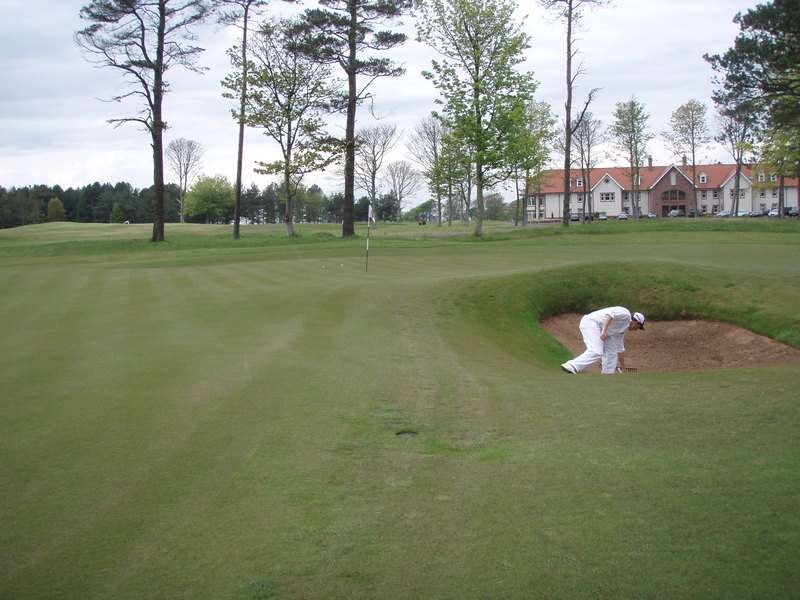
A massive and rugged moat bunker fronts the green of the par three 5th (Outer) and wraps around both sides of the putting surface

What looks like a sliver of sand from the tee turns out to be a cavern of a bunker on the par four 6th (Outer)

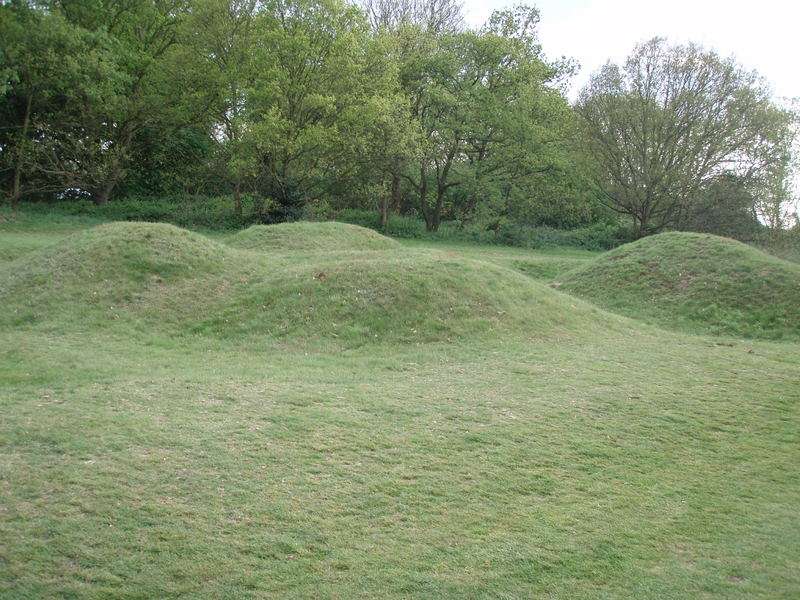
 The apline mounds and surrounding hollows are big and bold, with very few good lies to be had

Course name: Royal Mid-Surrey
Location: Richmond, London
Four Word Course Review: The birthplace of alpinisation

Royal Mid-Surrey, which has two courses designed by JH Taylor, doesn't often get a mention in discussion of the London golf landscape.

With the gems of the nearby heathland on the city's south western doorstep that's probably fair, but that certainly isn't to say the course is not important and interesting in its own right.

The Outer is the main course, originally designed as the championship course, while the Inner was designed for those seeking a bit less challenge from their round. I played a composite called the Taylor Course - which combines the front nine of the Outer and a predominantly Inner Course back nine.

Among the notable things about Royal Mid-Surrey is that it was the first course where Alpinisation was used to add interest and challenge to a very flat piece of land.

The humps and hollows are said to have been softened somewhat through the years, but they remain dramatic in many places and add good interest to many holes, guarding the ideal driving zones and causing headaches around the greens, where they can block the way and also cannon balls away from the green if an approach lands on the wrong side of the apex.

It looks as far from natural as I've seen on a golf course, but it works. I think the secret is in the boldness of the features. There's nothing half-hearted about their size or shape, which gives them the personality they need to assert themselves strategically and aesthetically.

Likewise, there is a lot of big, bold bunkering that is able to dominate several holes because the flat land is not screaming for attention itself. Great examples come at the 5th and 6th on the Outer course.

Another great example comes at a short par three played as the 16th of the Taylor Course. It measures less than 120 yards, but the green is only about 12 yards wide at the front and narrower towards the back where flanking bunkers pinch it to about seven yards. A bunker short looks to be abutting the greenfront when viewed from the tee, before being revealed to be about 20 yards short. On a piece of dead-flat land with absolutely nothing to recommend it, it's a brilliant piece of design.

Other bunkering strategies are similar to those employed by Tom Simpson to add interest to New Zealand GC's flat site: bunkers short of greens that distort your distance perception, bunkers that appear from a distance to be much smaller than they are and bunkers raised above the surrounding land to create blind areas.

It also boasts some very sandy soil and was bone dry and firm underfoot despite recent heavy rainfall, defying its unkind nickname of "Royal Mud Slurry", alluding to the suggestion it is always damp.

The club adjoins the River Thames and Kew Gardens less than half an hour by tube from the centre of London, with a massive clubhouse that bucks the trend of modern clubhouses by actually being a very appealing-looking building that, with its ample glass, appears to give a subtle nod to the wonderful greenhouses over the fence in the famous botanical gardens.

The terrain almost certainly ensured Taylor's two courses wouldn't be world class, but the inventiveness of his grass hazards combined with the bold bunkering makes Mid-Surrey a course worth playing for anyone interested in seeing how to get plenty of good golf out of a property not blessed with ample (perhaps even any) undulation.

Wednesday, May 05, 2010

Hankley Common


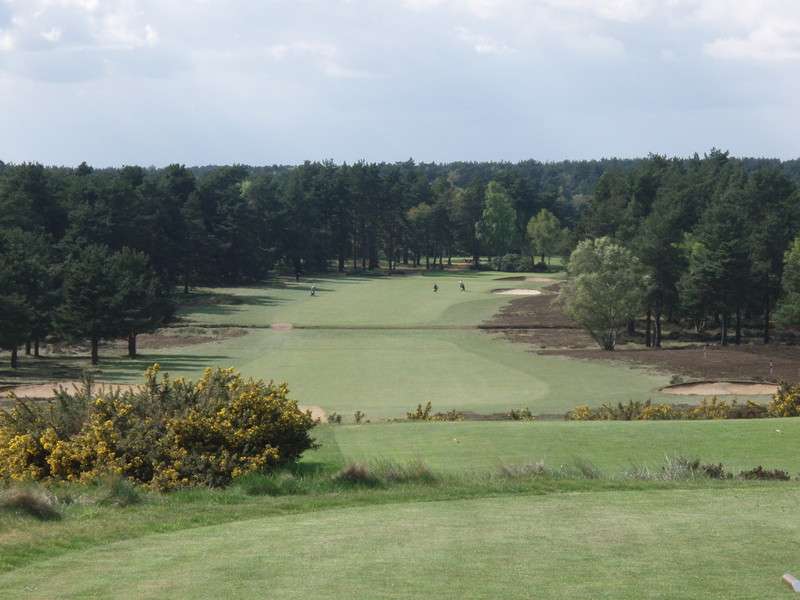
The best hole at Hankley - probably one of the best holes in Surrey: the par three 7th

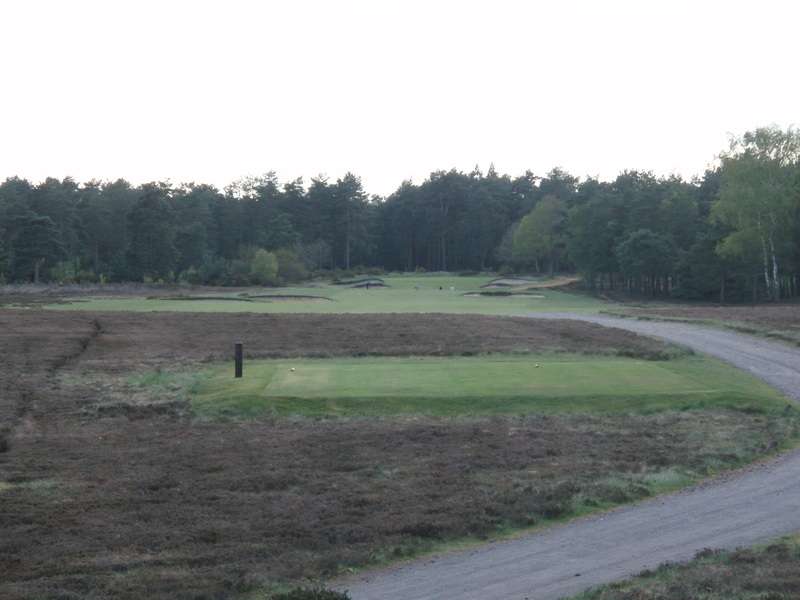
The par five 8th is all there before you, flanked by heather, from your perch on the elevated tee

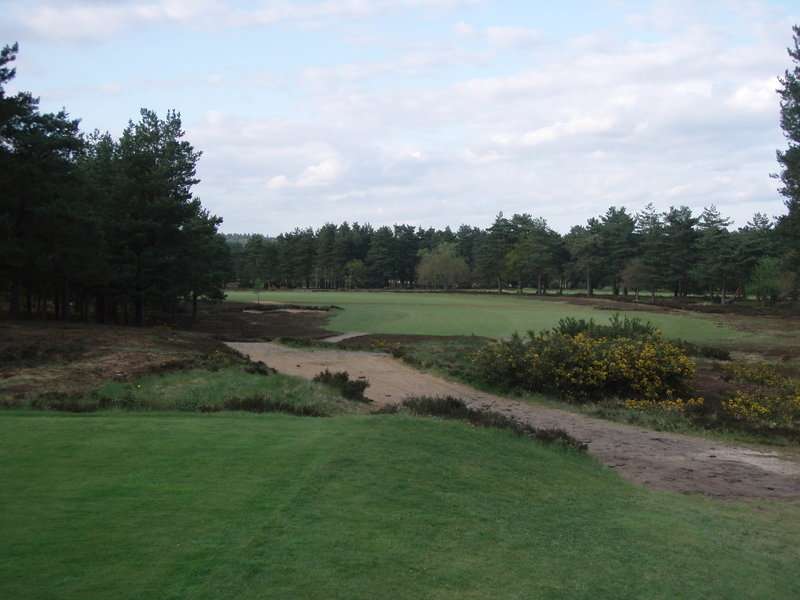
How much heather do you dare to bite off with your tee shot on the 10th?

The par five 13th traverses gently undulating land that allows for a tricky green set over a small valley

While most of the course enjoys vast open views, the 14th is cut through a thicket of pine

Hugging the trouble on the left side of the fairway pays dividends at the 17th

Course name: Hankley Common
Location: Farnham, Surrey
Four Word Course Review: More than mere beauty

From one course off the beaten tourist path to another.
A year or so back I asked some well-travelled golfers if they could recommend a few non-Top 100 courses worth seeing. Many suggested Hankley Common, and were shocked to hear it was on the Golf World list (#74 in GB&I). Incidentally, Silloth also got mentioned.

I can see how they could have thought Hankley was outside that group. It seems that with few exceptions, perhaps with good reason, Top 100 courses are very widely known. The obvious conclusion is that they are well-known because they are on the Top 100 lists and therefore attract a lot of visitor and tourist play.

But lately I wonder if perhaps the opposite is true: they aren't all well-known because they are in the Top 100, some are simply in the Top 100 because they are well-known, while better courses either miss out or end up lower on the list through anonymity.

Rated higher? A matter of opinion. What I will say is that Hankley Common deserves to be much more well-known and regularly visited.

Built on 800 acres but utilising less than 150 of them for golf, it's easily the most secluded place I have played, with rolling fields of heather as far as the eye can see, the occasional ribbon of green fairway cutting through.

The routing is the star of the show at Hankley, with the holes laid out in a series of triangles and U-Shapes (1-4, 6-8, 10-12, 13-15) to ensure the wind is constantly hitting you from a different angle. Joining those loops are linking holes that take you between the best sections of the property.

The terrain is largely similar to Walton Heath (Old) - not wildly undulating but with sufficient movement, while remaining an easy walk - and the open vistas are reminiscent of the same course. There's something fantastic about seeing the next hole open up as you walk towards the green of the one you're playing.

Benefiting from the greatest change in elevation are two of the three par fives, the 6th and 8th. The former climbs a steady hill to a green set in a steep hillside that hides its surface from view, while the 8th tee offers sweeping views across the course and a grand drive downhill over a field of heather.

Linking them is the brilliant par three 7th, a 183-yard journey set across a valley (naturally covered with gorgeous heather) to a skyline green that is brilliant for more reasons than the aesthetics and recovery options. The green itself consists of four equally-sized segments. The lowest of the four is front-right and they rise steadily in a clockwise direction finishing weith the highest tier at the back-right. Truly an all-world hole where just hitting the green feels like an achievement but is in reality only half the assignment.

Thanks to the lack of trees blocking your views, a number of dogleg holes allow you to see the flag fluttering far out of reach with nothing but heather in the way. Despite knowing it's too far to reach, it has the effect of drawing your eye and inevitably your clubface. The outside of the dogleg offers the best angle in, but only the most resolute golfer will be able to force himself to aim there.

It's an effective design trick that Braid (who converted Hankley to 18 holes in 1922) also utilised on the 10th at Cinque Ports.

Speaking of comparisons, the 1st at Hankley bears a striking resemblance to the opening hole at West Sussex in the way it uses some pretty ordinary land to get you away from the clubhouse.

The variety is what shines through most after playing at Hankley Common. The par threes and fours vary wildly in length, some holes are out in the open and others cut through thickets of pine, the approach shots are played uphill and down and the constant changes of direction ensure the wind never stays with you, against you or across you for too long.

In my mind the Surrey heathbelt is amazing not for how good its best courses are, but for the sheer depth it possesses. The quality of the courses that most golfers have never heard of is astounding.