Tuesday, September 28, 2010

Le Touquet (La Mer)

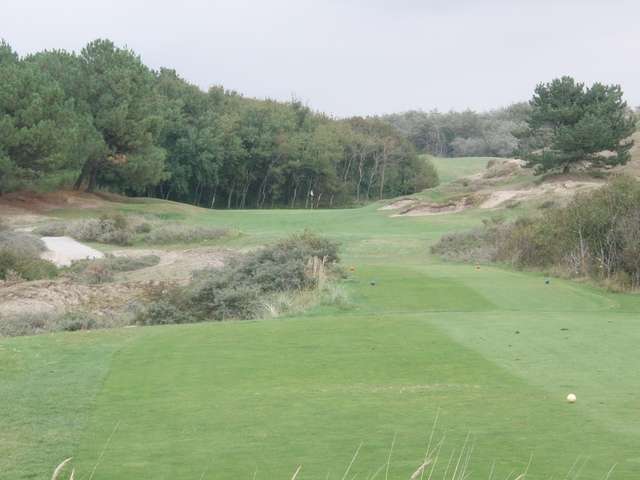
 The par three 2nd sets a high standard for the one shotters that follow, and they meet the challenge

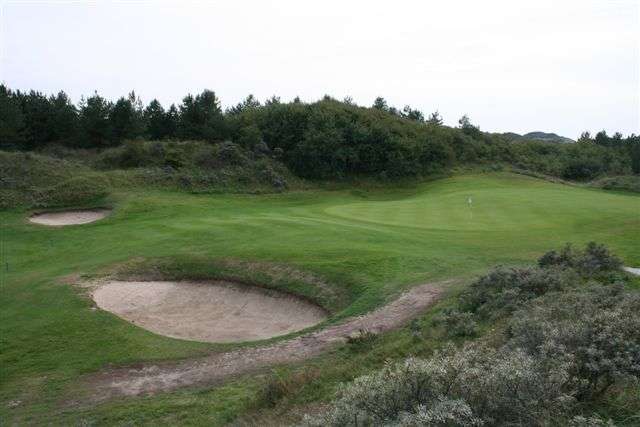
The approach to the par four 11th must carry these bold bunkers to reach the green, which is hidden behind the fronting dune

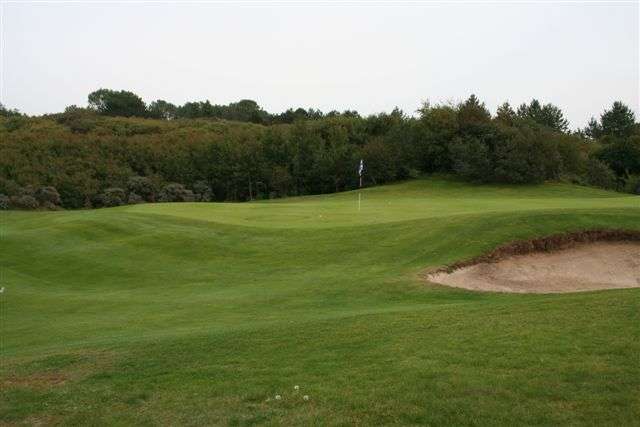
The 16th is a prime example of the quality sites Colt chose for his greens at Le Touquet

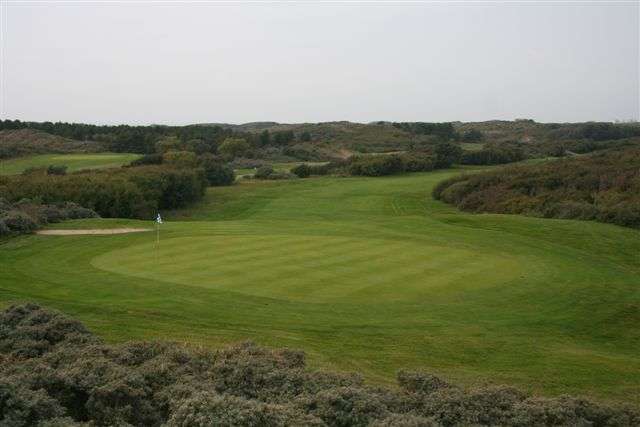
Looking back down the dramatic par five 17th, which rises steeply near the green

Course name: Le Touquet (La Mer)
Location: Le Touquet Paris-Plage, Normandy, France
Four Word Course Review: Greensites the major attraction

Just 45 miles from Rye, where he started his design career, Harry Colt designed La Mer (The Sea) course on the other side of the English Channel at Le Touquet in 1931 to complement Horace Hutchinson's 1907 course, La Foret (The Forest) in the French resort town.

It's remarkable that the course sits so close to the likes of Rye, Littlestone, Deal and Sandwich, with thick saltscrub vegetation lining the playing corridors completely unlike the English seaside courses, though the terrain is very similar. Just a few miles north, a pine forest abuts the seaside, again completely at odds with the vegetation across the Channel.

As with everything else I have seen by Colt, the par threes are an obvious thing to note first up. Four very good one shotters, and all different from one another. The long 2nd threads between two dunes, the 7th plays slightly uphill to an angled dune, bunkered at the front, the 10th is a mid iron from one dune to another over a valley much like the 5th at Rye and the final short hole, the 15th, is a more subtle hole like Colt's 8th up the coast at Royal Zoute, but calling here for precise play late in the round.

The par fives are relentlessly competant without blowing you away - interesting doglegs and well-defended greens for the most part, with the possible exception the 17th, which stands above the others in the memory by climbing spectacularly over the last 150 yards to a blind green.

Of the par fours, the most notable are the 11th, playing from an elevated tee to a green obscured behind a well-bunkered cross dune, 12th with its bunkerless green slipping off a dune and short 14th, flanked left by a creek before bending to the same side with the green fronted by cross bunkers.

Not surprisingly, many of these better holes named above occupy the most undulating land closest to the seaside, while the likes of the 4th, 5th, 6th and 8th are furthest inland where the terrain flattens.

Sections of the course were lost during World War 2, with an imposing machine gun placement next to the 13th offering a reminder of that time, though the club says Colt's original layout was reinstated during the 1990s.

At times the course becomes too narrow for the style of golf and the impenitrable vegetation, but largely this is very good coastal golf, particularly the final 10 holes.

Hardelot (Les Pins)

A long drive will leave a blind second shot from inside 200 metres at the par five 2nd hole

The fearsome drive at the otherwise sedate par four 8th

A diagonal ridge fronts the green of the par three 12th, flowing in fron the front right to the back left

The par five 16th is reachable, but good luck finding a way to access and hold the green with a long club on your second shot

Approaching the home green, with ample undulation beginning about 70 metres out

Course name: Hardelot (Les Pins)
Location: Hardelot-Plage, Normandy, France
Four Word Course Review: Trees choking Simpson's greatness

Les Pins is a 1930s Tom Simpson course at Hardelot, just south of Boulogne near Calais on France's Channel coast.

The great bunker placement and well-chosen greensites that Simpson is known for are present, but several holes are choked by trees, particularly the par three 5th and 17th holes. There's lesser land in the middle of the back nine, but the small amounts of interest in the ground are well used to build excitement - along with some great bunkering and tricky greens.

It's infinitely playable, moreso than London's heathland gems due to the absence of heather, and the undulating sand terrain and towering pines make it a great place to play golf.

It rained Biblically the day before I played, yet at 8am the next morning it was not only dry but very firm under foot. Exceptionally impressive as I had been worried the course might be sluggish, or even worse - closed.

The course opens with a pair of par fives, the 2nd reachable in two, but in driving long enough to have a go, the golfer renders the green blind behind a cavernous bunker, while his more judicious playing partner might hit a shorter tee shot that ensures the entire hole remains visible.

The two front nine par threes, both under 120 metres, are a highlight of the outward half, as are the bunkering at the par five 6th and the nerve-racking semi-blind drive at the short par four 8th, played over two sandy dunes that drop in from either side.

Making the turn, the driveable par four 11th poses a lot of challenge for its modest 280m, while the 12th continues the run of great one-shotters. After a slight lull - puctuated by another quality par three at the 14th, the final two holes raise the quality back to the highs of the early stretches.

All told the course plays to a par of 73, with six par fives and five par threes, leaving just seven par fours, and there's wonderful variety in each group of holes.

90mins or so from Paris, 45mins from Calais, the great resort town of Le Touquet (with its Colt and Hutchinson courses) just 15mins away, €75 midweek summer green fees... there really is no reason for UK golfers to stay on the boring side of the Channel all the time!