Wednesday, September 23, 2009

Royal St George's


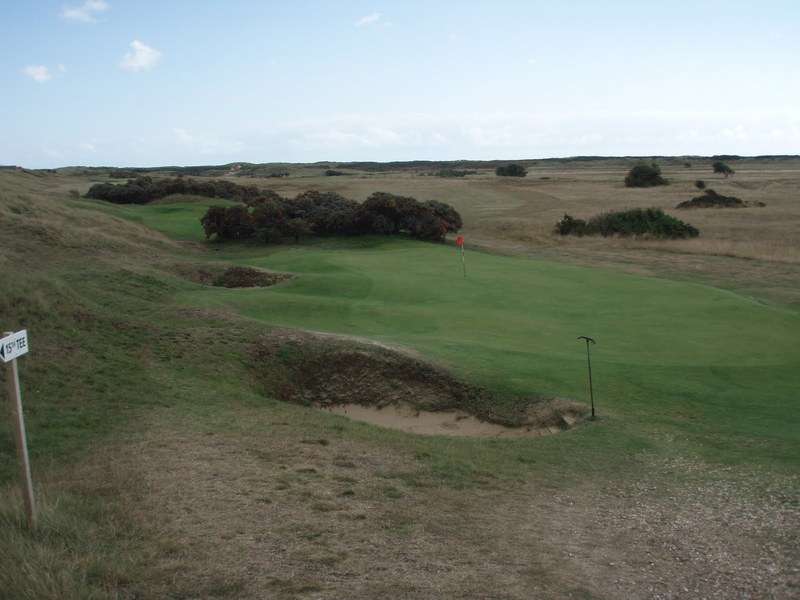
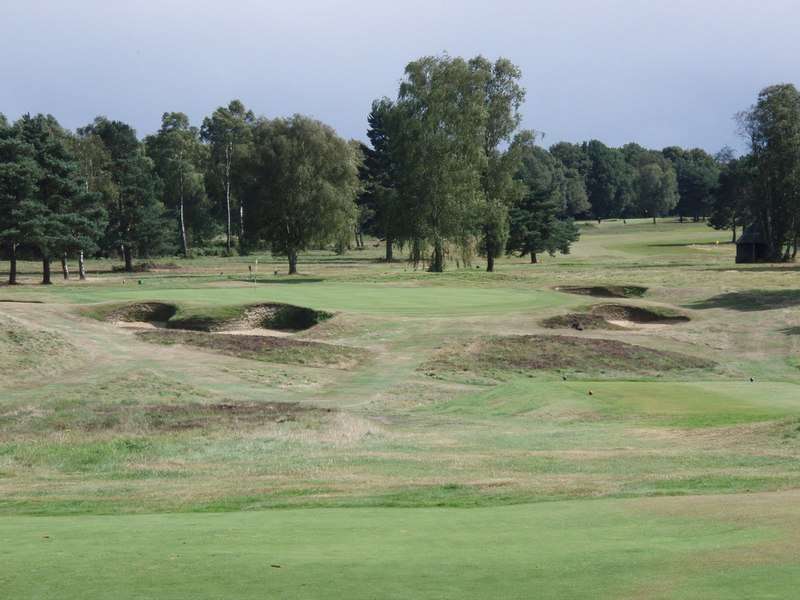
The 2nd green sets the tone early, with lots of undulation, a little blindness and playing surfaces second to none


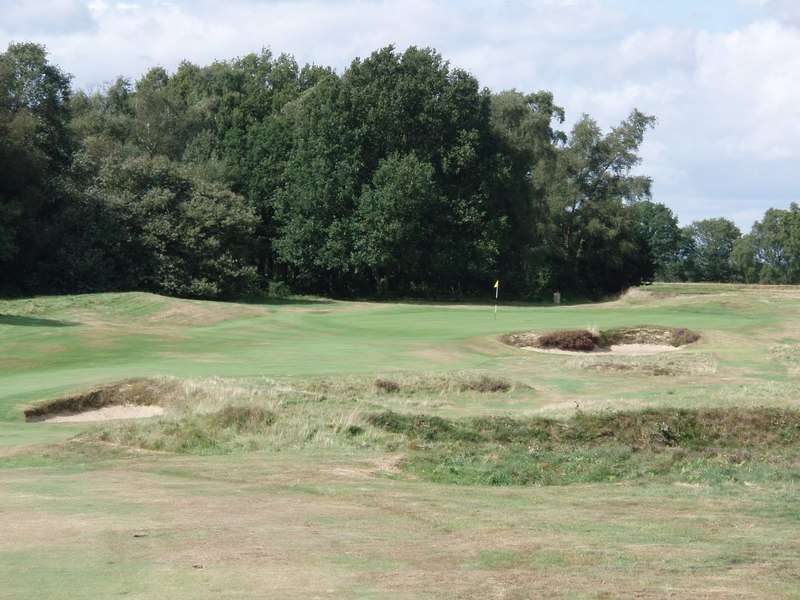
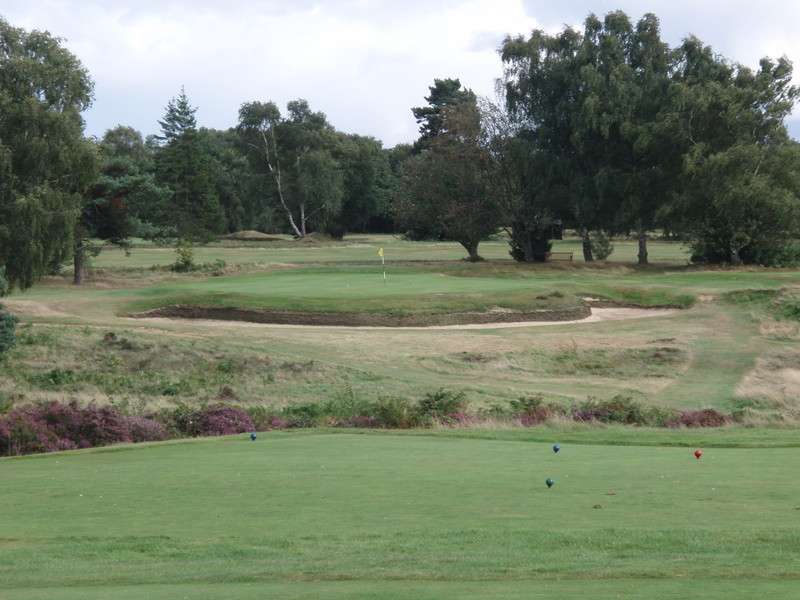
The natural movement of the 9th green is fantastic, with the right side repelling balls down a steep slope


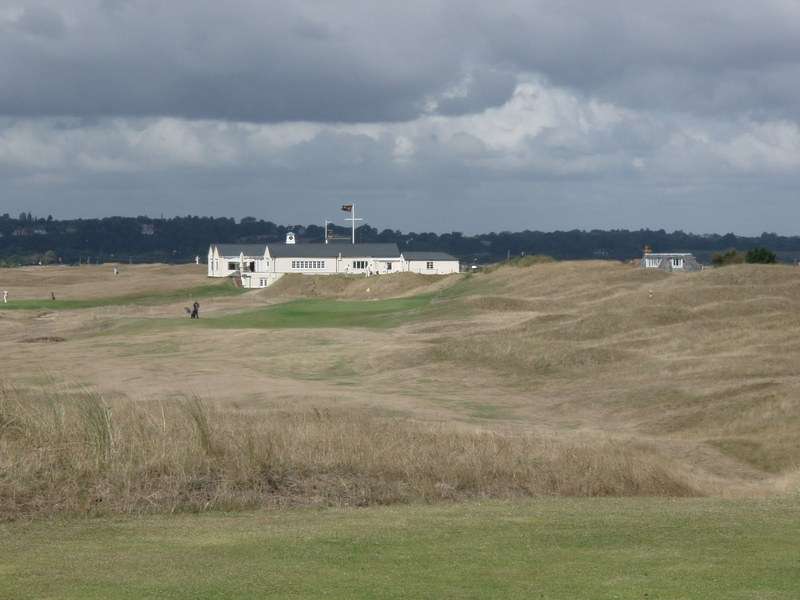
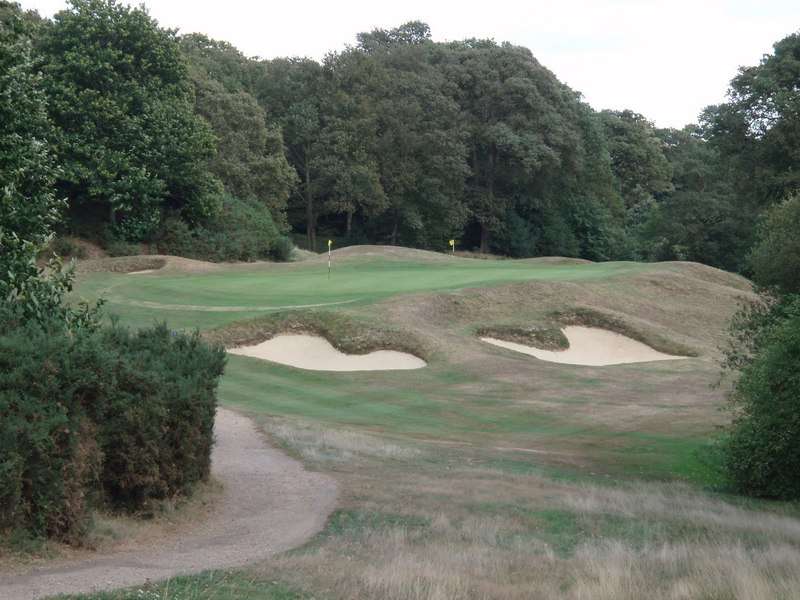
The skyline 10th green might be the best green complex on a course full of fantastic ones: a beauty to look at and a devil to play


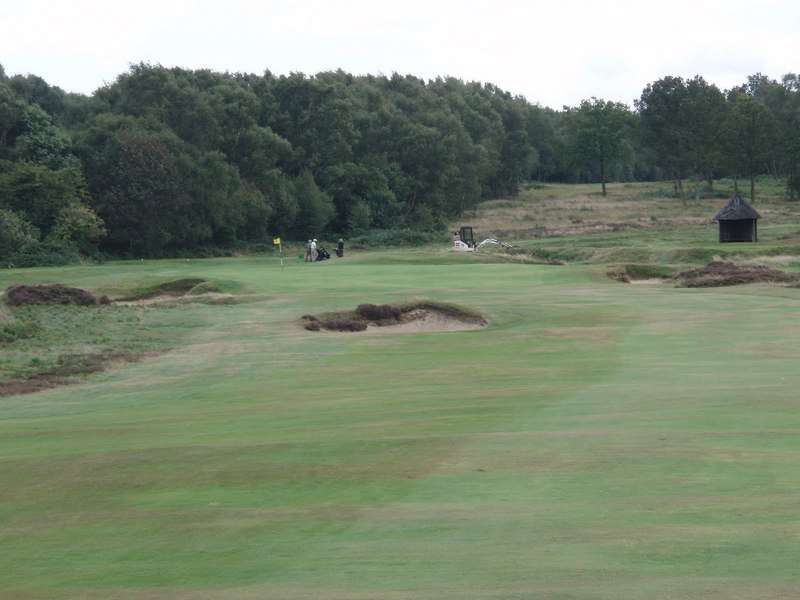
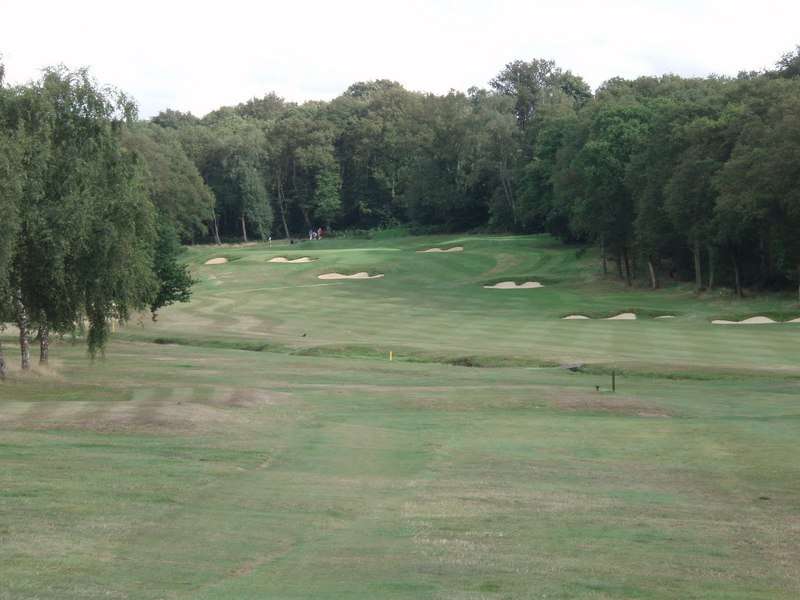
The hogsback fairway at the short par four 12th is a highlight of the back nine

Course name: Royal St George's
Location: Sandwich, Kent, UK
Four Word Course Review: Magnificent grounds for golf
 
In every way this is a magnificent place to play golf: sweeping, dramatic green complexes; rollicking fairways falling through, past and over the dunes, beautiful links bunkering; firm green turf contrasting beautifully with the thick, burnt rough... and not a bad hole among the 18.

Bernard Darwin put it as well as is possible when he wrote "Sandwich has a charm that belongs to itself. The long strip of turf all the way to the seventh hole that stretches between the sand-hills and the sea; a fine day... the sun shining on the waters of Pegwell Bay and lighting the white cliffs in the distance, this is as nearly my idea of Heaven as is to be attained on any earthly links".

The straightforward opening hole introduces many of the features you will enjoy in the coming four hours: rumpled fairways, interest at the green and bunkering that skews your perceptions and frames the fairways and greens beautifully.

From there the course quickly gathers pace: the semi-blind approach to the 2nd; the par three 3rd green and its treacherous tiers and slopes; the all-world 4th - full of amazing, steep dunes and the terrifying wall of sand that dominates the tee shot; the par four 5th that weaves tightly through tall dunes with the English Channel close by; the 6th green set so naturally between the dunes; the blind drive to the 7th; the second shot and number eight and the 9th green, tumbling off a high dune on the left to a run-off on the low right-hand-side.

This is truly links golf at its finest and most thrilling - even without a set of clubs and a golf ball it would be an invigorating walk, with them it becomes something other-worldly, impossible to articulate in mere words.

Walking through some of the tallest dunes on the property to the 10th tee you wonder how long the course can keep this up. Look right and almost 400 yards away sits a skyline green that matches, if not eclipses, all that has come before it.

From there, as befits a championship venue, the challenge becomes even more stern. If this is the back nine on an Open Championship Sunday, you'll need to be firing some good arrows. Even if it's just a casual Tuesday match against friends, this is the time to knuckle down.

The 11th 13th, 15th, 16th and 18th are difficult pars for even the best of golfers, with length, tricky bunkering and confounding greens combining to test you at every turn.

The 12th, 14th and 17th are the best birdie chances, but their individual tests (the 12th's hogsback fairway, the 14th's tight out of bounds and Suez Canal cross hazard and the 17th's tricksy green approached into the prevailing wind) can also lead to a swift bogey. The back nine may not hit the highs of the front, but it makes very good use of land inferior to the outward side.

By the time you walk off the 18th you have encountered every challenge, had the wind hit you from every possible angle on a routing that twists and turns so dramatically and regularly that orientating yourself accurately is nigh on impossible and been amazed by a course that ticks every box required to achieve absolute world class status.

Sunday, September 13, 2009

Rye

The bunkering at the par three 14th is indicative of what Rye dishes up

The short par four 9th, showing off just how fast and firm the course plays in summer

The 5th hole is a one-shotter played from dune to dune

Course name: Rye
Location: Rye, East Sussex
Four World Course Review: Majestic holes along ridge
Well, it finally happened. Some mates have constantly told me I will have reached a new stage when I play terribly at a new course but can still appreciate it. At Rye, that happened. Despite hitting it sideways, doing little right and generally playing the sort of golf that would have had a lesser man thinking of taking up lawn bowls, Rye blew me away.

A bold, steep ridge that runs through the centre of the property dominates the design, with holes generally running along its base or threaded along the ridgetop as if they are walking a tightrope, but it's the holes that cross the ridge - the par fours 6th and 13th and 16th - and the par three 5th, which jumps from one dune to another across a low-lying no-man's-land, that stand out.

The par three are generally a highlight. There's some great natural ripples utilised to make the greenfronts difficult to judge, such as at the 2nd where a diagonal rise runs diagonally toward the tee from the front-left of the green and the 7th's deep and steep dunes that make the green loom terrifyingly. Rye's bunkers are probably the most penal I have encountered, deep on all sides, necessitating stairs into most of them.

They also use angled floors and deep sand that ensures most balls that enter don't settle on a flat lie. Instead, many balls stop on hanging or downhill lies, making escape even more difficult.

Of course Rye is not without weakness. The 10th and 11th are built on flat land devoid of few natural features and don't add much to the rest of the course, and that got me wondering if the very best courses are such because they have superior sites that gave their designer enough to work with for all 18 holes.

Lunch, a jacket and tie affair, in the clubhouse was an experience in itself, browsing the club's collection of golf books and the famed President's Putter.

Volumes of books in the lounge catalogue every membership application since the club's early days, and I am not joking when I say there are members of the Royal Family who have waited years to be accepted, to give an idea of just how exclusive Rye is.

Saturday, September 05, 2009

Walton Heath (Old)


The viciousness of the 5th green isn't evident this far out, but its beauty is - one of the major strengths of Walton Heath is how well the greens fit their locations 


The par four 10th's green is expertly sited. It's said Fowler first perused the property on horseback. This site seems so natural for a green now it's hard to imagine even his mount didn't pick it when they happened upon it, but like most things, the masters surely make it seem much easier than it is


The 11th continues the fun, complete with a sucker pin that scares you to look at, but is just tempting enough that you might take dead aim 


Having made a par up 15 into a gale, then reached the 16th in two before two-putting for birdie, I dropped my ball in the 17th tee and flushed a seven iron close and rolled in the putt. On a course such as Walton Heath, the thrill of play like that is amplified
 
Course name: Walton Heath (Old)
 Location: Tadworth, Surrey
 Four Word Course Review: Consistent, thrilling, beautiful, brutal
 
I have never seen anything quite like Walton Heath. An inland course so open and inviting, but with a sea of heather separating the holes, defining the corridors and providing immense beauty at the same time.

After opening with a relatively pedestrian long par three, play moves across the road to the main paddock where the other 35 of the club's holes are located. The next five holes are all par fours, but the variety ensures they don't blend in. From the 235 yards that separate tee and green at the 3rd to the tour de force of the 4th and cunning beauty and frighteningly-difficult green of the 5th, each has a personality all its own. Holes swing right and left, play straight, head uphill and cascade down.

The cunning continues at the par three 7th, where deep grass bunkers hide short left in what seems to be a good place to bounce your shot in, before the 8th tempts you with a birdie chance, but utilises OOB left to keep you from playing completely without a care.

The 9th heads back downhill, bending left to a green so natural in its placement it looks to have been there for centuries, before the dogleg is reversed, but MO retained at the 10th - a two-shotter to one of the most gorgeous spots on the course.

Deep bunkers make the 189-yard 11th a knee-knocker, but the 12th is a mere drive and pitch.

The course gives, the course takes away. I think that really grabbed me in. Walton Heath Old let you score well with smart play, but it also dictates terms at times, testing your patience. There are plenty of chances to be aggressive and make birdies, but just as many shots that are best played on percentages. The challenge at times was working out which was which!

Back-to-back par fives at 13 and 14 were good holes without really standing out, but they serve to get the golfer to some of the best terrain on the course.

The flow of the holes felt to me that it was superior to that of any other course I have set foot on. They varied consistantly in length and shot shape, in bearing to the wind and in width. You were constantly assessing what was called for and what strategy was wise, as the questions being asked changed so often.

The great courses, the truly top-notch ones, continue to evoke a feeling in my chest that sets them apart from even the very, very good ones. I can't yet provide an explanation for what that feeling is, so I guess I'll just have to keep playing great golf courses until I work it out!

Wednesday, September 02, 2009

Royal Wimbledon


The par three 13th, with the very similar 17th sitting in the background


The par four 15th is a thrilling hole, inviting you to flirt with the fairway bunkers from the tee to open up the angle into the green. It's also remarkably picturesque

Course name: Royal Wimbledon
Location: Wimbledon, London
 Four Word Course Review: Repetition diminishes the fun

The risk when you are seeing so many really good/great courses, certainly the amount I have been lucky to see in the past few months, is that when you go through what you thought of them, you either just list all the things you didn't like or rave like a maniac.

So let me get down that Royal Wimbledon was a bit repetitive. On a macro level, 3, 15 and 16 (and to a lesser extent 4) are effectively the same hole - par four from a high tee to a well-bunkered or otherwise defended valley fairway to a plateau green set at 45 degrees and bunkered/defended on the side to which the green angles. Likewise 5, 13 and 17 - slight uphill one-shotters, bunkered at the front set into the side of a ridge.

So that grated a little, but both "templates" are great holes, so who can blame Colt for banging them in where they fit before retiring to the Fox and Grapes down the road for a feed and a pint?!

What I did like was how few flat lies there are around the greens. Even on the safe side, it was rare to find a kind, level chipping area. It added a lot of interest to missed greens because the dips, ridges and grass bunkers weren't too severe, but significant enough that you had to think hard about the best route to the flag.

I liked the reachable par fours at 6 and 9 - all the more that 6 is about 235m tee to green as the crow flies, yet defends itself without using a single bunker.

The property is a great one for its undulation and wild look. I have long enjoyed a walk in Wimbledon Common, across the fence, to relax, so introduce a really fun golf course into that walk and what's not to love?

The clubhouse really is something else (Colt wouldn't have to go down to the F&G these days!), with its sprawling lawn dotted with picnic benches overlooking a practice putting green that must have about 30 holes cut.

When I arrived in the early afternoon there were women, men, children and dogs all around, many enjoying lunch and a pint while the kids played putting games and the dogs lazed in the sun.

It seemed a really friendly, well-utilised club, and in such a beautiful part of town it's not hard to understand why. In a crazy, busy place like London it really did feel like a sanctuary.

Like Woking and New Zealand, Royal Wimbledon is a great members club. The house feels like a big, welcoming living room, not to mention a refuge from the busyness of the city and the office, while the course challenges without overpowering and gives you enough chances to make that birdie or two to share the tale of afterwards with your mates.

Tuesday, September 01, 2009

Batchworth Park

 
The tee shot on the 3rd is played to the middle hill, which looks about 15m long from the tee, but in fact measures about 50m


The green of the par three 4th is among the highest points on the course, so wind is always a factor

Course name: Batchworth Park
Location: Rickmansworth, Hertfordshire
Four Word Course Review: Bunkering functional, not pretty

Batchworth Park is a relatively new Dave Thomas course just south of Watford. I made the mistake of heading up the Central line on the tube to check it out on the same day as the Notting Hill Carnival! But once the crowds decamped at Notting Hill Gate, it wasn't long before I was standing outside Batchworth's elegant clubhouse enjoying the last day of summer, with sunshine and expansive views.

I was really impressed and quite surprised by the course. There are some seriously cool golf holes out there. Located on a street named Batchworth Hill, you expect some undulating terrain, and that's exactly what is serves up. But not only does is run along and between the ridges and valleys, holes like 3, 4, 7, 9, 11, 13 and 17 are routed over the hills - which are really steep in sections.

My one complaint might be that the bunkers are over-countoured, but unlike the Thomas course I played last weekend (Traditions GC in Surrey), the back edges aren't covered in rough, so a ball approaching at any decent pace will still find the sand. What I didn't like that the mounding behind many bunkers meant you couldn't see them from either the tee or the fairway as you approach. Not only would the strategy be a bit clearer, the aesthetics would be enhanced.

It's not overpowered yet by trees, and here's hoping the club management stops the trees encroaching, because the feeling of space is one of the great joys of the course. It marries parkland, downland and heathland features nicely, and while it definitely feels "new", I don't mean that in a bad way.

The par 5s are standouts. The two on the front are quite short (I hit a 5i and 7i for my second shots), but on the back, both measure over 550yds (I hit a full 7i and a full PW for my third shots). They sit on some of the most interesting terrain, which is utilised well. The short par fours also stand out as quite memorable. 2, 4, 8, 10 and 17 all reward a perfectly-struck driver, but also give some love to the canny golfer who hits his long iron or hybrid into the right position.

The 4th is the sole par three that stands out, with the others cut from the "let's get them with length" cloth. Shorter can be better! It's a drop short calling for no more than an eight iron unless the winds are strong in your face (and the position atop Batchworth Hill means the wind is often a factor), but bunkers await anything short or right, with any really bad slices or pushes often kicking down to a cavernous trap some 25m right of the green. From there you'll gladly take a four and move on.