Tuesday, April 21, 2009

Leatherhead

 1st hole was a fun short par five that had a creek running in from the right about 80m short, with a bunker in front of it, creating a few decisions for the golfer whose drive leaves them 200ish out
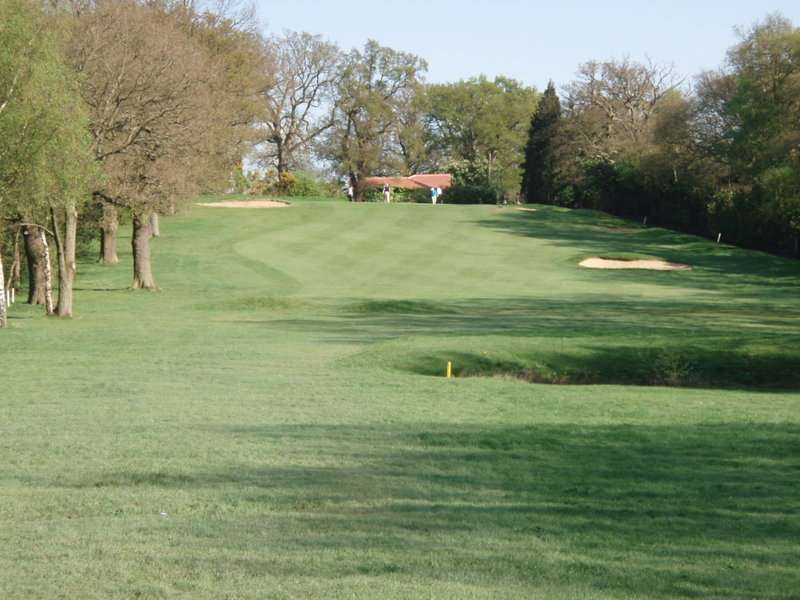
The 11th is a par four of 260 yards or so with a plateau green that makes the second shot one of the more difficult 40-yard flicks you'll ever play. The pin was cut on a small shelf at the back, with a bunker hugging the edge of the green and OOB behind it
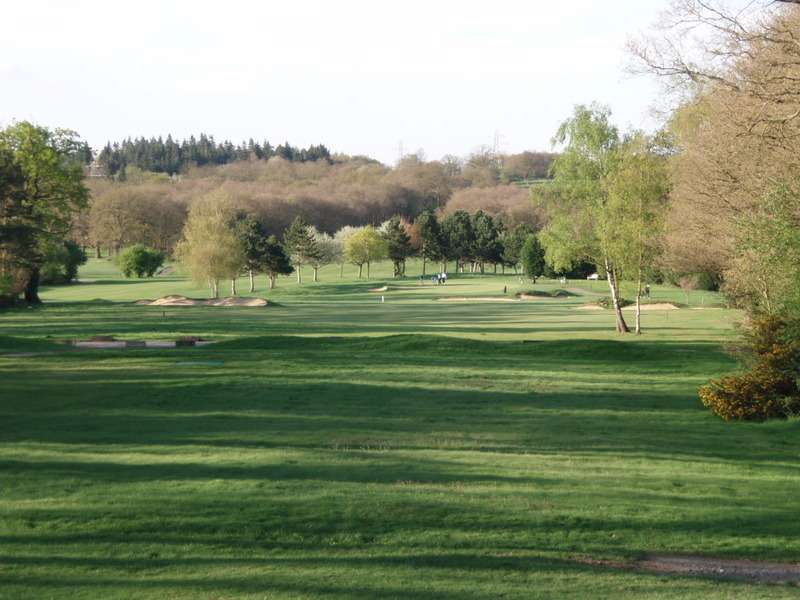
 The par four 17th, with a tiger tee moving the drive to a 45-degree approach from the right, tightening the fairway and bringing the bunkers more into play 

Course name: The Leatherhead Golf Club 
Location: Leatherhead, Surrey 
Four Word Course Review: Half-par holes galore 

All day long at Leatherhead - which twists and turns through thickly-wooded countryside - it seemed I was faced with decisions. 

Have a crack at the par five first in two (which didn't work out so well), or lay up? Risk the driver on the 5th to give myself a chip and a tap in for birdie (which did)? Take on the hill at the 270-yard 11th? Try to fly the green-front creek on the 260-yard 13th? Hit a high cut on the tempting 15th and 17th holes for a mere flick to the green, or play an iron to safety?

On top of that were 450-yard par fours, 210-yard par threes and tight doglegs that tempted you to reach for the driver when you knew it wasn't wise.

Even when the course offered up some pedestrian holes, there was enough there to keep me engaged - a 90-degree dogleg at the 7th, the par three 9th that strongly favoured a running, drawn approach, a scintilating plateau green on the par five 16th... The holes offered variety, difficulty that betrayed a pedestrian scorecard length and interesting bunkering.

My one major complaint concerns the mowing patterns. On the 3rd, the temptation to risk driving past the centre-fairway tree 200 yards from the tee is destroyed by the fairway stopping at the tree.

At the next - a 440-yard par four from the yellow tees - there is an inexplicable strip of rough crossing the fairway 140 out from the green.

A similar mowing style is emplyed on the short 13th and 17th holes, where ample bunkering and water are enough trouble in their own right.

All in all, a pleasant wander through the forest on a gorgeous spring day.

Monday, April 13, 2009

Royal Zoute

The par three 3rd, which isn't part of the original Harry Colt design, but a cracker of a hole - a short iron to a rollicking green

The island green 16th, surrounded by deep bunkers, 167m from the tips

Course name: Royal Zoute
Location: Knokke, Belgium
Four Word Course Review: Bravery rewarded, options aplenty.

I just got home from a fantastic long weekend in Bruges. One of the highlights, if not the highlight, was a trip 20 minutes north to Knokke (pronounced k-nok-eh) to play at Royal Zoute.

I enjoyed the round immensely: undulating greens that ran true and quick, engaging risk-reward holes, great conditioning and rough that was playable but uneven enough to wreak havoc with distance.

I seem to enjoy courses that let you find your errant ball (within reason), but then make it a really tough assignment to do something useful with it.

The land had plenty of movement that led to blind shots on five holes (three tee shots, the second on the par five 17th and the approach to the par four 13th) and the 6th, 14th, 17th and 18th greens had false fronts. The 18th was one of the best greens I’ve ever seen.

On the 5th, 10th, 12th and 14th, large dunes eating into the fairway (the first three on the left, the last on the right) provide the lion’s share of the strategy: fly the dune and get a much easier, more open and visible approach, bail out to the safe side and your approach will have to carry mounds, ditches and/or bunkers, and in the case of the 14th, you’ll be coming at the green across the false front.

On that hole, a 330m par four, the false front was combined really well, I thought, with a bunker behind the green. I’m not usually a big fan of bunkers behind the green, but with an approach from inside 80m (I had the wind behind me and had 50m for my second) the fear of leaving the second short and watching it roll back means that bunker is more likely to be in play, or at least play on the golfer’s mind.

I didn’t actually see it until I was on the green, so I guess that only really applies for those playing the hole the second time onwards.

Some would say that at 435m, the 5th is too short to be a par five, but the par four 13th played 408m back into the wind. Despite the distance difference I hit driver/5i into the former and driver/hybrid/wedge into the latter. Those two holes, along with the par five 12th, are as good an argument as I have seen that we should just forget about par and build fun golf holes of any and every distance.

1-7 and 15-18 are a more parkland style, and 8-14 had a lingering link to the original links style of the course. I couldn’t say which style suits the site more, but the combination of styles that existed on the 9th were probably my least favourite aspect of the course.

As well as that, it suffered a bit from bunker-left-and-right syndrome at the greens. The course was very lush. If it was dryer and mown tighter, the slopes and angles around the green would have come into play a lot more for running approaches.

It’s well worth a visit, and considering it’s 20 minutes from one of the most beautiful cities in Europe and Royal Oostende is just 15km west along the coastline, it’s a course it would be very easy to include in a romantic weekend with your partner.