Friday, July 24, 2009

The Old Course, St Andrews

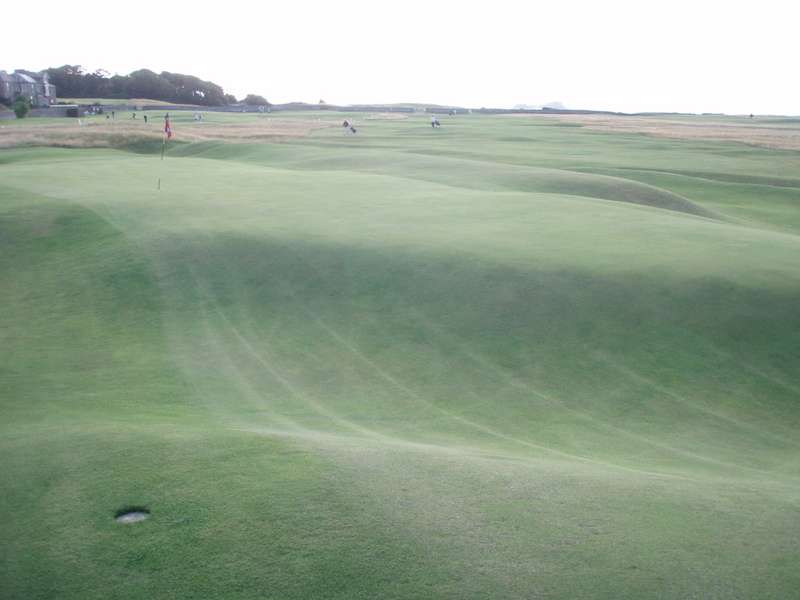
The 2nd green has a huge amount of undulation to encounter if you approach from the left hand side

The approach to the mammoth 5th/13th double green
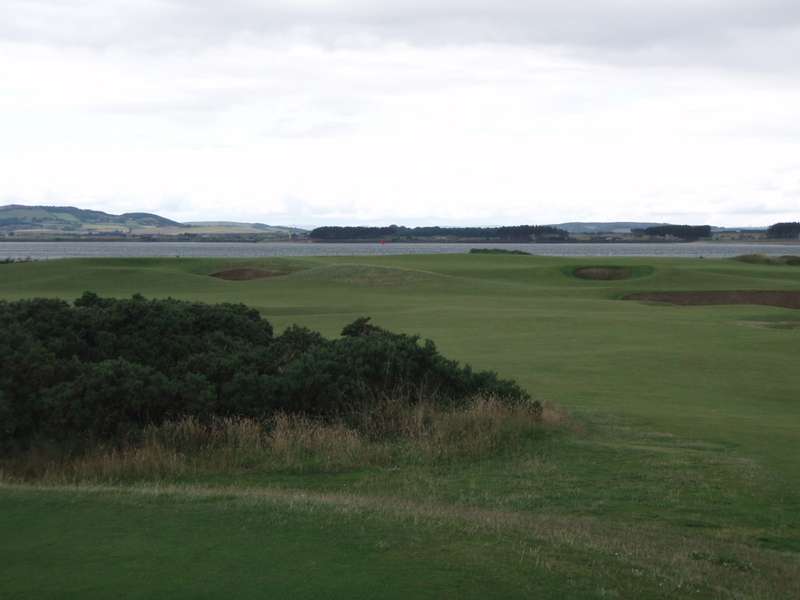
The Eden hole - High (In) - where I blocked my tee shot right onto the side of the double green used for the 7th and faced a 120ft putt across what felt like the edge of a cliff. I was pretty happy with three putts from there!
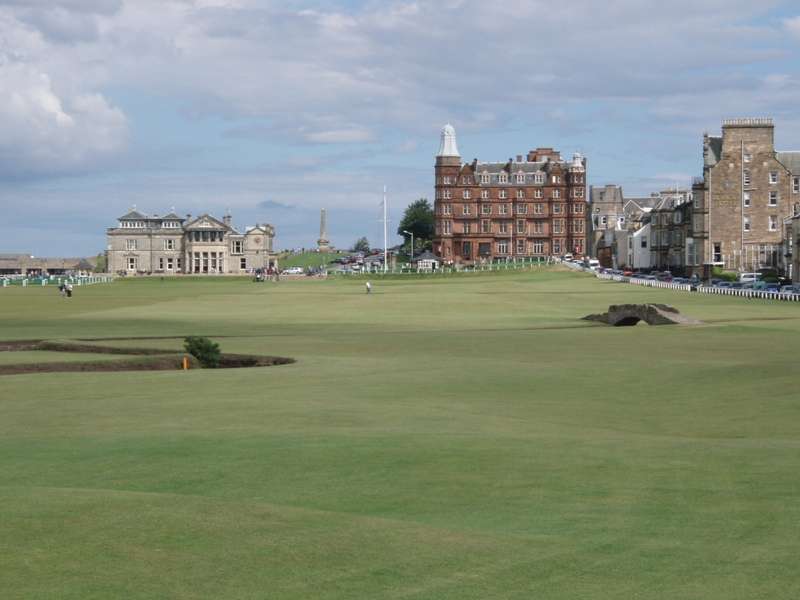
Almost home, but wishing it wasn't over! The 1st and 18th fairways, with the R&A clubhouse on the left, the Swilcan Bridge on the right, with the famous burn snaking across the two fairways

Course name: The Old Course, St Andrews
Location: St Andrews, Fife
Four Word Course Review: The Home of Golf

What to say here? You don't need me to tell you what the course was like. The holes of The Old Course are as famous as the game itself, Swilcan Burn is more famous than other waterways a hundred times its modest length and breadth, and the old R&A clubhouse is instantly recognisable.

The nerves on the first tee were enormous, and I almost emulated the infamous tee shot of Ian Baker-Finch, which came to rest somewhere in the town. It's a strange feeling standing behind that first tee shot. The double fairway of the 1st and 18th is 120m wide, but you are conscious of the out of bounds on each side. As it was, I parked my drive 25 yards inside the fence on the left side.

The four hours felt like half that time, and the round was over far too quickly.

The greens will stick in my mind most vividly. I drove left on the 2nd, nerves still on end and pulse racing at 100 beats per minute, and had to encounter the wrath of the moguls that sit short of and within the green. The 5th/13th green's epic length was amazing - 95 yards from front to back, and the slope of the 7th/11th green was mind boggling.

But the most perplexing thing for me was how to handle the false fronts, tiers and shelves on the 12th, 14th, 16th, 17th and 18th greens. In part I found it hard to work out a way to access pins cut just over the top of steep drop-offs while playing approach shots, with many balls reaching just a foot or two short of safety before rolling back to the front, and then once I had to putt over them, I couldn't find a way to stop the ball close.

For the difficulty I had with that, I putted well on the flat portions of the greens. I made a few big putts that gave me a thrill, and I'll admit to wondering what sort of cheers might have greeted some of my shots were they played during an Open Championship - my tee shot into a stiff hurting cross wind at the par three 8th, a holed 30-footer to save par at the 10th and a pitch from the valley in front of the 5th green to set up a tap-in birdie.

Crossing the Swilcan Bridge as I made my way as slowly as possible up the 18th, I felt a shiver down my spine to think of all the great champions - from Bobby Jones to Nicklaus, Faldo, Ballesteros and Tiger Woods - who have made the same walk en route to winning The Open.

St Andrews really is a special place, and I hope my travels will bring me back here before too long.

Thursday, July 23, 2009

North Berwick West Links

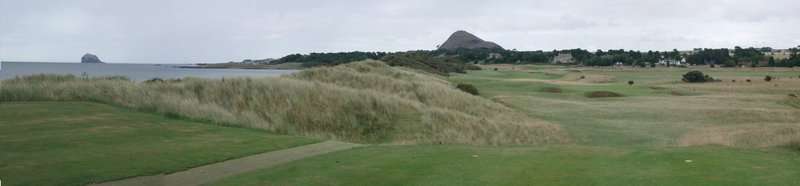
Looking over the 10th green from the tee at the far western end of the course. The beauty of the setting is obvious and the best holes are yet to come


On a course full of memorable holes, the 13th - Pit - is one that imprints itself indelibly on your memory. You also cross stone walls at less significant stages of the 3rd, 4th and 16th holes 


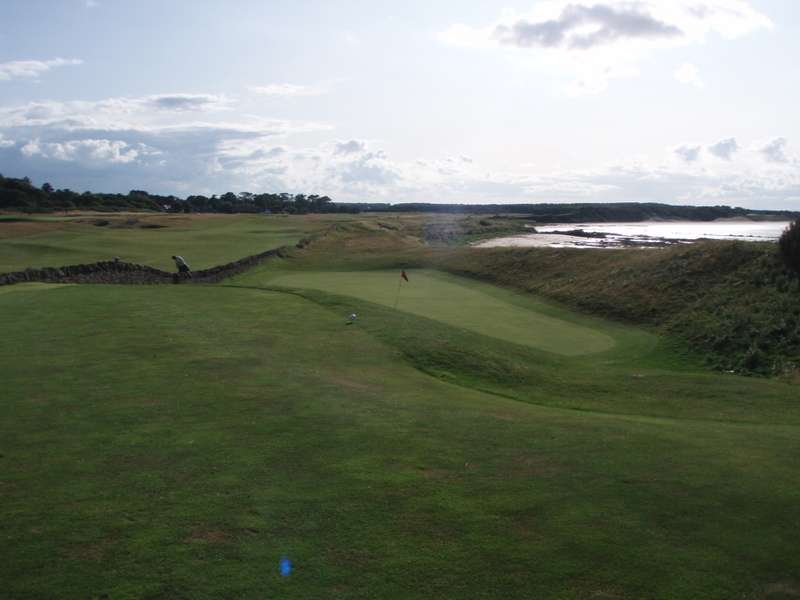
The Biarritz green at the 16th is one of the highlights of a back nine that strikes perfect note after perfect note from the 12th through to the 17th
 
Course name: North Berwick West Links
Location: North Berwick, East Lothian, Scotland
Four Word Course Review: Gate? Redan Biarritz? Check!

Okay, so I know the 16th is not a proper Biarritz, what with it being a 380-yard par four and not a 200 to 230-yard par three; and the green being set at an angle to the line of approach; and the flanking bunkers being absent. But look at that ravine in the green! Is that cool or what?

North Berwick was my favoutite day on a golf course to date. I had a beaming smile on my face from go to whoa. Just a collection of awesome holes, memorable shots and beautiful scenery.

The 13th, Pit, saw you play your short second shot over an ancient stone wall that stymied a running approach. The 14th, Perfection, is just as the name suggests, with one of the most beautiful green sites I have come accross.

The set of par threes, of which Redan (15th) is obviously the most famous, was all class. The 4th was a classic links par three with a dune feeding the running approach up to the flag, the 6th was played over a cavernous bunker and the 10th was a gorgeous heavily-bunkered slight drop shot with the Firth of Forth just metres to your left.

I was chuffed to play Redan just as intended - a drawn five iron landing on the front right and feeding down to 15 feet below the hole.

I also really liked the par fives - the 8th, 9th and 11th. The drive on the 9th was genius: a wide flat drive was made interesting through the addition of two centreline bunkers that offer a hero line down the left that cuts about 20 yards off the hole, but requires a drive threaded between the bunkers and the out of bounds fence.

Usually, if you placed three par fives within four holes of each other it was be a drag. Not so here. All in all, just a hell of a lot of fun. I defy you to ever tire of playing North Berwick West Links.

Wednesday, July 01, 2009

Canterbury


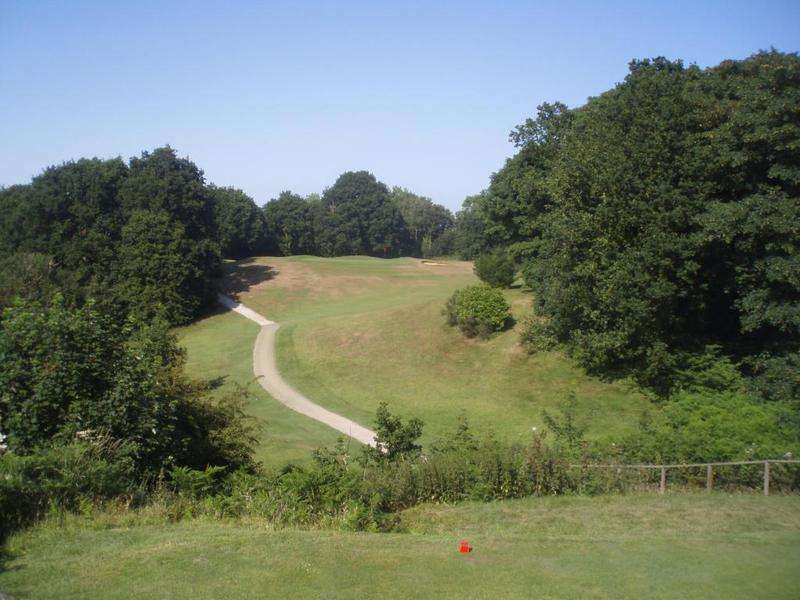
The second will kick away anything landing short or left, the former 'treating' the golfer to a great view of his ball heading 40 yards back down the hill, taking his chance of a par with it


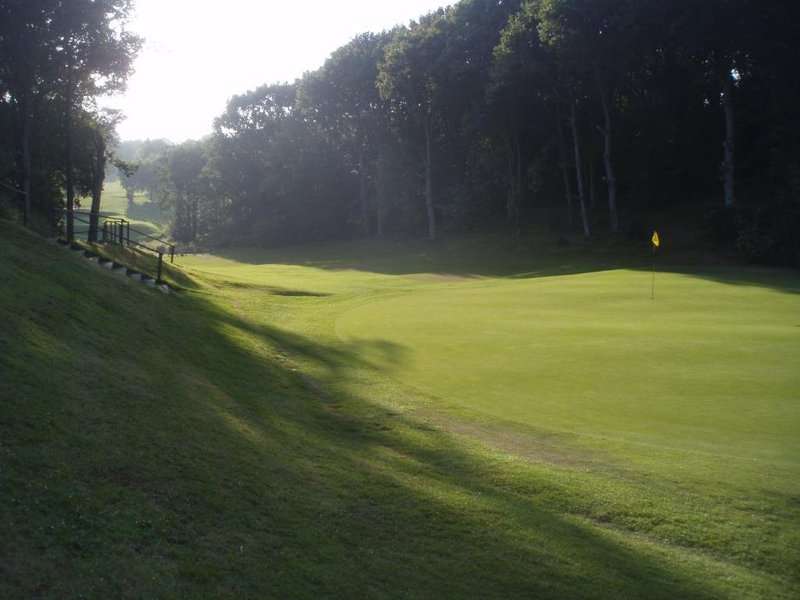
The 11th is a beautiful 180-yard par three that plays to an amphitheatre. The gorgeous visuals betray how difficult the hole is

Course name: Canterbury
Location: Canterbury, Kent
Four Word Course Review: Amazing one-shot holes
 
Two-thirds of the way from London to the famous links courses of Kent sits the historic town of Canterbury. Golfers headed to experience Sandwich, Deal, Rye and Littlestone might stop there to see the 12th century Cathedral, but few bother with Canterbury’s Harry Colt-designed golf course.

I stopped in on the way home from a morning round at Deal and the set of par threes alone was worth the visit. Only my third Colt course, but I am becoming quite the fanboy! Aside from the repositioned 4th green and 18th fairway, most of the course was faithful to what Colt designed.

The enormous greenside bunkers looked fantastic where many clubs have cut such hazards into two or three smaller traps, and I have not seen a course before with such extensive use of grass bunkers – the construction of some putting a skewer in the occasionally-heard claim that Golden Age GCA’s didn’t move much dirt.

On such sloping land, some large-scale excavation was needed to build up the low side of several green sites.
The 4th, 7th, 9th and 14th holes have each seen a single tree added to tighten the approach, and while my partner in crime - a Colt-spotter from way back - probably put it quite succinctly by commenting “I don’t think this is the sort of thing our friend Harry would have built”, in all instances they protect the holes from the advancement of technology, forcing the tee shot to be placed well for an easier approach to the green rather than merely bombed as far as possible.

There are some average holes on dramatic land not suited to golf, but by and large there is plenty to thrill, and even those average holes have some great features. Several par fours traversed or ran along steep hills down to a gorge that runs through the course. Through green placement or doglegging, each hole asks you to keep your tee shot as close to the high side of the fairway as possible. The 15th was one such hole, and its built-up green and bold bunkers were a highlight of the course.

The 2nd and 11th were the pick of the par threes, but there wasn't a weak one-shotter to be found. By and large, they reward only a well-struck and accurate shot, with very few kind landing areas off the putting surfaces.